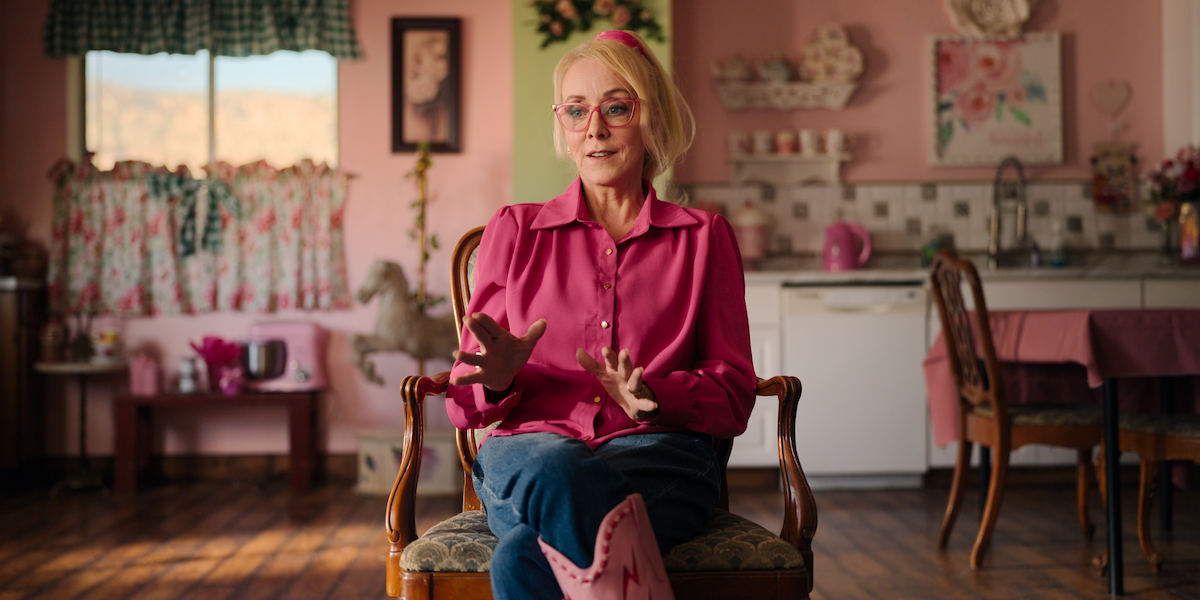
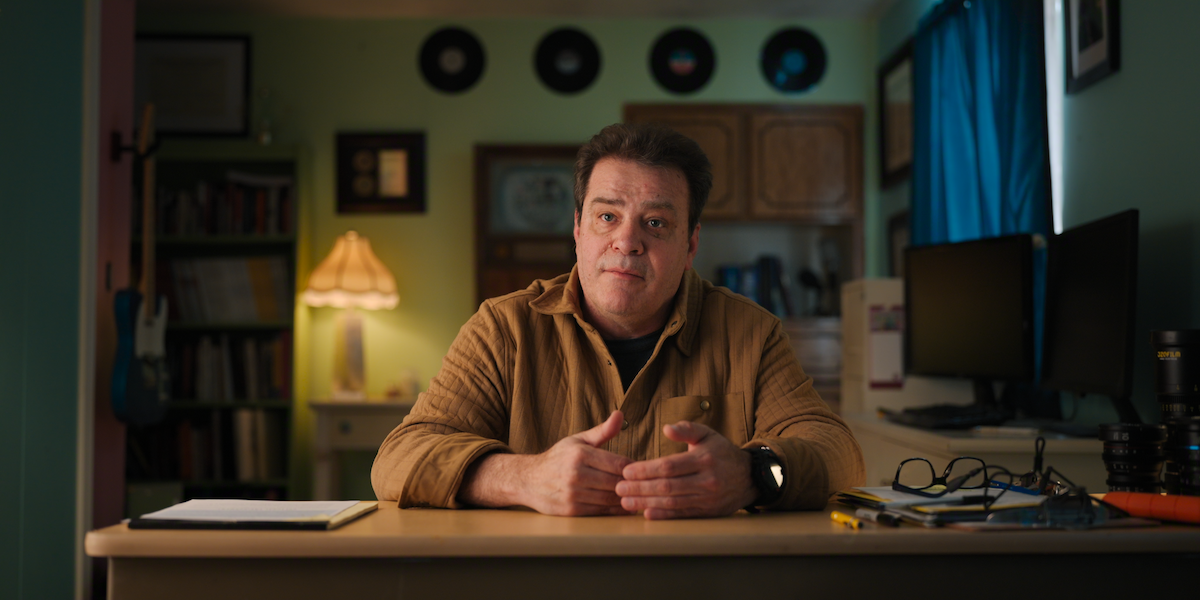
Trust Me: The False Prophet follows cult psychology expert Christine Marie and her videographer husband Tolga Katas, who moved to Short Creek, Utah, to document and support a community in crisis. In 2011, Warren Jeffs — leader of the breakaway Mormon sect called the Fundamentalist Church of Jesus Christ of Latter-Day Saints (FLDS), whose members practice polygamy — was convicted of child sexual assault and sentenced to life in prison. His imprisonment left the insular community fractured and adrift. As Christine and Tolga got to know their new neighbors, a familiar face resurfaced: Samuel Bateman, a former rank-and-file FLDS member who now proclaimed himself a prophet and began to amass followers and take multiple wives, including minors.
Directed by Emmy- and Peabody Award–winning filmmaker Rachel Dretzin (Keep Sweet: Pray and Obey), the four-part documentary is built largely from footage Christine and Tolga captured while embedded in Bateman’s inner circle. Believing they were making a documentary that would spread and uplift his message throughout the world, Bateman welcomed the cameras — unaware they were secretly gathering evidence of his crimes, including the sexual abuse of underage girls.
The docuseries culminates in a dramatic FBI raid on Bateman’s compound, his arrest, and later a brazen kidnapping plot he orchestrates from jail.
In December 2024, Bateman was sentenced to 50 years in prison for conspiracy to commit transportation of a minor for criminal sexual activity and conspiracy to commit kidnapping. Several of his male followers are now serving lengthy sentences. Some of his adult wives no longer associate with him; others still remain loyal. All of Bateman’s underage victims testified against him in court.
To unpack the documentary’s aftermath, where its subjects are today, and what comes next, Dretzin sat down with Tudum — alongside Christine Marie and Naomi “Nomz” Bistline, a survivor of Bateman’s sect.
Where are Nomz, Moretta, and Julia now?
At its peak, Bateman’s group included at least 20 wives, nearly half of whom were minors as young as 9. Christine first heard rumors that Bateman was married to children, but confirming what she’d heard proved difficult. “I was not permitted to be alone with the underage girls,” she says.
As seen in the series, it wasn’t until a November 2021 car ride that Christine captured something concrete on audio: Bateman admitting to crimes with underage girls, with his victims in the backseat confirming his account as he coached their responses in real time. While even this wasn’t the smoking gun that would bring Bateman down, the moment illustrated the depth of the psychological control the women and girls would have to overcome.
“Groupthink is so powerful,” Christine says. “It’s like superglue. You can’t just wake up when you’re getting your thoughts reinforced by other people you respect and love.”
Even after Bateman’s eventual arrest more than a year later, the dynamic persisted: the Utah Division of Child and Family Services, or DCS, placed all of his underage wives in the same group home. “The power dynamics continued because you had the stronger girls making the younger girls terrified of speaking to law enforcement,” Christine says.
The situation escalated in November 2022 when Bateman, from prison, orchestrated a kidnapping plot in which eight minors vanished from state custody. After they were recovered in Spokane, Washington by police, they were placed in separate foster homes.
“All the minors have come out [against Bateman], and the reason for that is very simple: They were all removed from the community and from their other sister wives and put into foster care,” Dretzin says. “Once they had the perspective of being outside the group, they were able to see what had happened to them and speak out.”
But the picture is more complicated for the adults. “The vast majority of the adults featured in this film are still followers of Sam Bateman to this day,” the director says. “All of the minors [in the documentary] have finally separated from Sam and ‘woken up,’ as we call it, but in many cases, their parents have not.”
Three women, however, broke free. Their stories reveal what it took to escape Bateman’s grip.
Julia
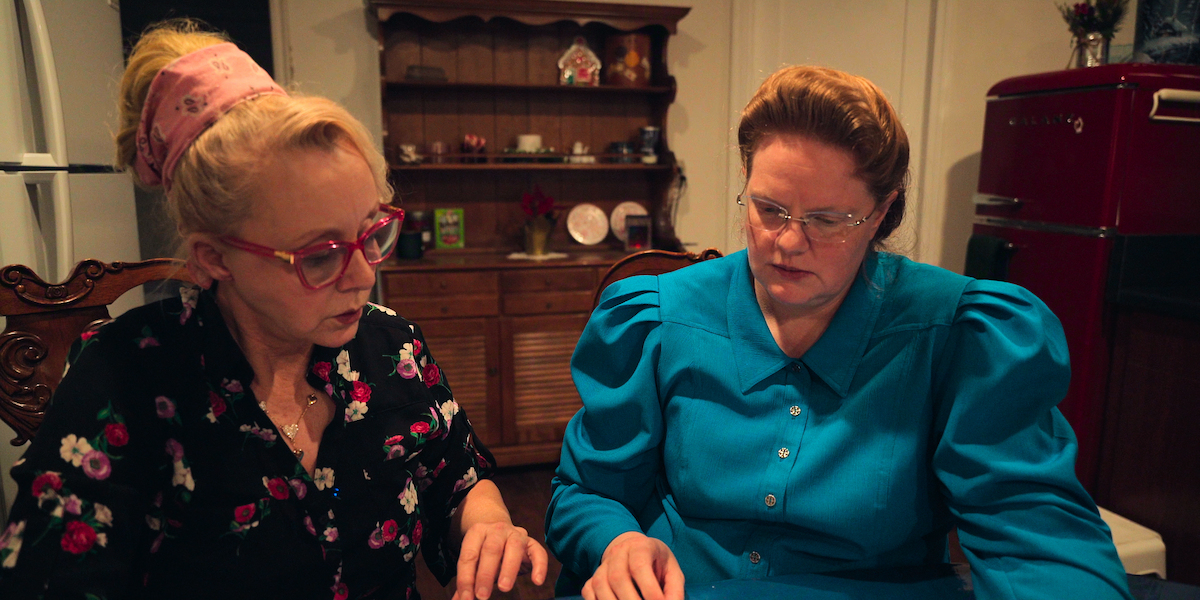
Julia Johnson’s involvement in the investigation was pivotal, and came at enormous personal risk. She was the wife of Moroni Johnson, an early Bateman follower who urged her to give four of their daughters, two of whom were underage, to Bateman as wives. In July 2022, she began secretly meeting with Christine, sharing firsthand accounts of his crimes.
“Julia did not give her children away,” Christine says. “Julia fought it and didn’t know what to do about it. She was crying, having mental breakdowns over it.”
Julia’s decision to break from Bateman meant confronting her husband directly. In the documentary, she recalls telling him, “We’re following a false prophet, and he’s leading us right to hell, and I’m not going to go there anymore.”
“Julia is extraordinary,” Dretzin says. “In many ways [she’s] the heroine of the film, because it takes so much for a woman at that age to turn against her husband and to risk what she risked in going for help.”
Julia and Moroni are no longer together. Moroni pleaded guilty to conspiracy to commit trafficking of a minor for sexual purposes and, in May 2025, began serving a 25-year prison sentence.
Christine and Julia remain in touch. “I have nothing but praise to heap upon her,” Christine says. “I am so proud of her.”
Moretta and Nomz
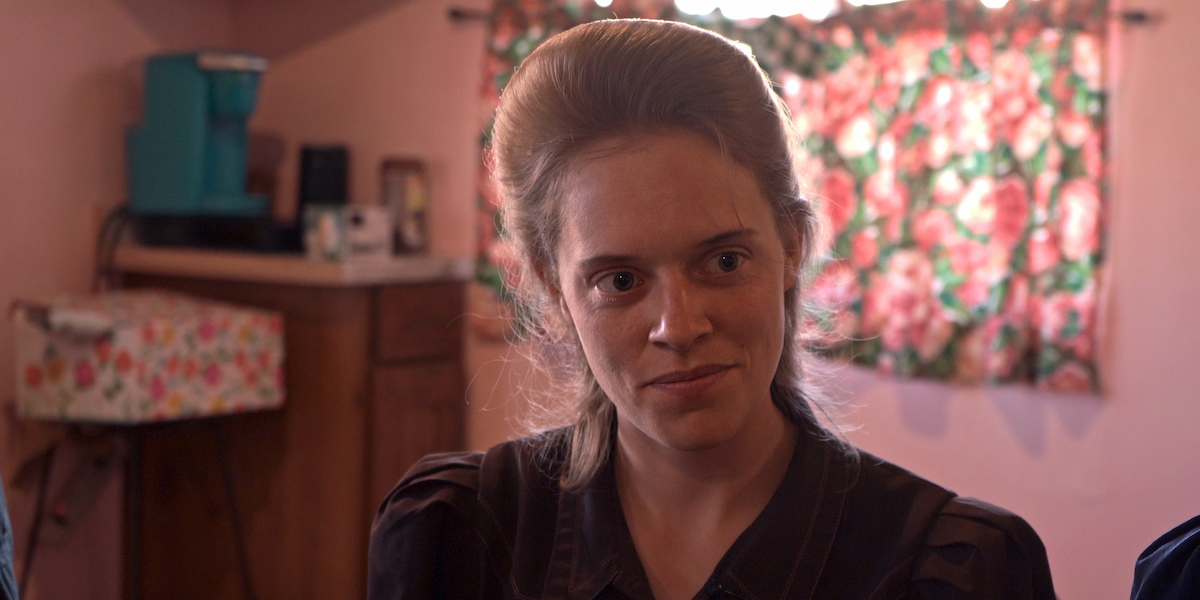
Moretta Johnson and Naomi “Nomz” Bistline were two of Bateman’s most devoted wives. Moretta, one of Julia Johnson’s daughters, was a minor when Bateman took her as a wife. Nomz, who is interviewed in the series, had been brought into the sect by her guardian, LaDell Jay Bistline, after 10 years in his care. Both were vocal defenders of Bateman before ultimately becoming the only two of his adult wives to testify against him in court.
“There was nothing compelling about him,” Nomz tells Tudum. “Every one of us really hated him at first. And then he would break us down and make us into what he wanted. It was a lot of abuse and coercion.”
Christine offers context for the fierce loyalty they displayed while under Bateman’s control. “If you are in a relationship with your abuser, you’re safer by doing whatever they want … by convincing yourself that you’re buying into it when, deep in your heart, you’re really not,” she says. “When I watched the documentary and I saw them, I could see the trauma bonds and I knew that that was not who they really were.”
Moretta and Nomz were arrested for their roles in the kidnapping plot and sentenced to prison time. For both, the separation proved transformative.
“Moretta had spent a year in prison,” Julia says of her daughter in the documentary. “Her words are, ‘Prison set me free.’ It helped her get into a thought process of her own.”
Nomz describes her time similarly. “Prison was the best and worst thing that happened to me,” she says. “It forced me to start thinking for myself. It forced me to start questioning things.”
Since being released from prison, Moretta has fully left the community, married, and started a family. “She and Nomz are very close,” Dretzin says. “They really support each other.”
Nomz has also dissociated from the FLDS community, and, after devoting so many years to the needs of others, is now finding joy in nurturing her own passions. “There’s so much that I didn’t even know I had a knack for,” she says. “I still draw a lot.” She’s dabbled in modeling as well, but music has become her focus. She’s been working with a vocal coach and meeting with producers and songwriters. “Music helps me process things,” she says. “It helps me let it out.”
Dretzin describes Nomz’s transformation as “breathtaking.” “She’s the only one of the young women who’s come forward publicly, and it took an immense amount of courage,” she says.
Nomz’s reconciliation with Christine — whom she had likened to the Biblical Judas after a DCS document leak revealed she was an FBI informant — came unexpectedly, when she listened to a podcast in which Christine shares her own story of surviving abuse at the hands of a false prophet. “That was when it all clicked,” Nomz says. “The parallels of our stories were so similar. … Since then, we’ve been really close friends. She’s a godmother to me, and Tolga’s a godfather. They’re the best people in my life sometimes.”
To hear more from Nomz, read her exclusive in-depth interview linked below.
-
Interview
“I’m willing to put my pain and comfort aside in order to bring awareness,” she says.
Can Samuel Bateman still contact his followers from prison?
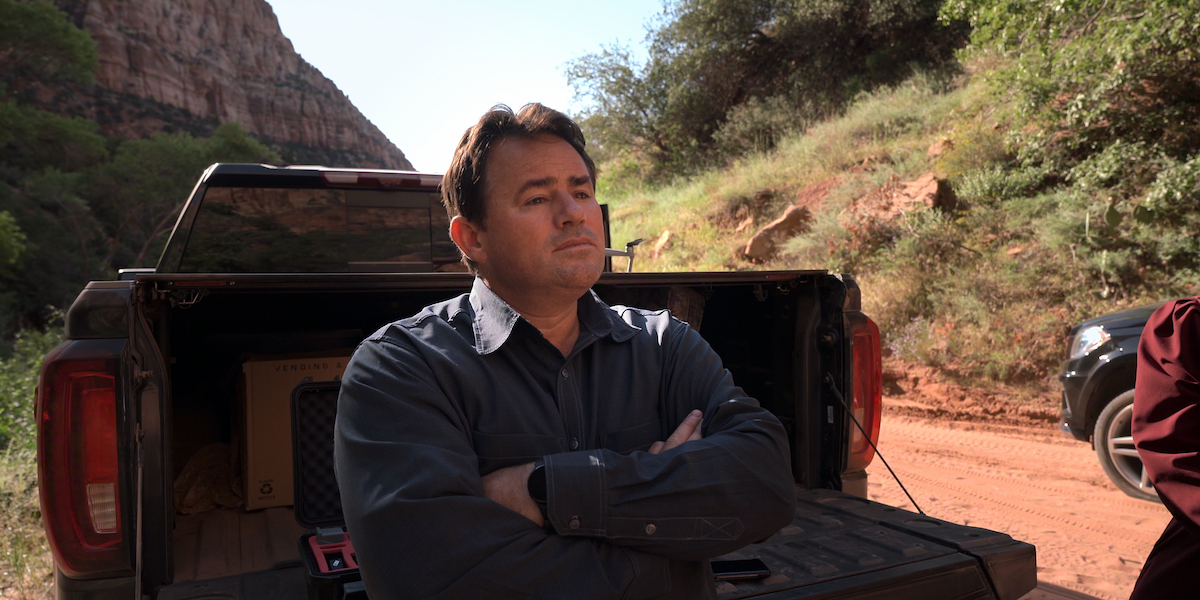
Yes. According to Dretzin, Bateman has maintained an unsettling level of access, and is able to make many daily calls from prison. While he’s no longer abusing them, imprisonment has only strengthened his hold on his followers, who consider him to have been “martyred.” And he reinforces that status through daily calls with his wives.
“That communication with him is like an IV of indoctrination,” Christine says. “It’s like they’re getting fed certainty right into their veins, their belief that he is talking to God so they can hold onto what they believe is certain.”
Christine believes that if Bateman’s access is severed, the spell can be broken: “Once they break from him and from the other people who believe in him, then they can say, ‘Wait, maybe I’m not so certain. Maybe he did make all this up so that he could get money, power, and sex — like every other cult leader.’ ”
What’s changed since Bateman’s arrest?
Several of the men closest to Bateman are now serving lengthy prison sentences of their own. Moroni Johnson is serving 25 years. Torrance and his brother LaDell Bistline were found guilty on similar charges and are serving 35 years and life, respectively. Of the men who were among Bateman’s followers, Christine says, “The only one of them to wake up is Moroni.”
But convictions alone don’t guarantee change. Dretzin, for her part, is cautious about the vulnerabilities that remain in the FLDS community.
“Unfortunately, for people who are born into a patriarchal culture in which there is as much control as there is in the FLDS, it’s a dynamic that creates vulnerabilities,” Dretzin says. “We have to continue to shine a bright light on what’s going on in these communities because they’ve been ignored for a long time.”
Is polygamy legal in Utah?
Essentially, yes. The legal landscape is complicated, as polygamy among consenting adults was basically decriminalized in Utah in 2020. It remains a felony if fraud, abuse, or force is involved.
“Polygamy — plural marriage — has gone from being a felony in Utah to being an infraction,” Dretzin says. “It’s not illegal to practice plural marriage in Utah. Most people do not know that.”
In her work in Short Creek, Christine, who was once an anti-polygamy activist, has come to see the issue in more nuanced terms. “I decided not to [participate in anti-polygamy activism] anymore,” she says. “I wanted to just help [members of the community] in their journey wherever they were at.” And she’s careful to note that the FLDS community is not monolithic: “Most FLDS did not follow Sam and thought what he was doing was heinous.”
In fact, some of Christine’s closest FLDS friends were among her greatest sources of support during the investigation — bringing her meals, offering comfort, and helping her through the most emotionally intense periods.
She sees the lessons from Short Creek extending far beyond the local community. “I hope that this documentary will help people recognize predatorial power dynamics happen when systems allow predators to flourish,” she says. “This isn’t just applicable in this community. Every city, every organization, every state, every country has groups where there was or is some sort of power-hungry leader that you can’t question, who then takes advantage of people.”
Where are Christine and Tolga now?
Christine and Tolga still live in Short Creek, continuing their work with the FLDS community. She hopes the series helps people understand the unique position she and Tolga occupied — as outsiders who were able to bridge a divide that insiders could not. “I had never been FLDS, so I wasn’t considered an apostate,” she says. “I was an outsider that could do something they would’ve done if they could, but they couldn’t because the people that were in shunned the people that were out. There was this big invisible wall between them. I just had this little opportunity.”
The mission was also deeply personal. Christine, a former “mainstream” Mormon, had once fallen victim to a fundamentalist man who convinced her he was a modern-day prophet, and led her into an exploitative and traumatizing situation. “When I got out of that, I spent a decade studying what the brain does that enables such irrationality to seem rational,” she says. While her own false prophet was never held accountable, Bateman’s 50-year sentence brought a measure of much-needed closure.
“It was so validating for me to make sure that these girls and women were safe. Even the women who still believe in him are a hundred times safer with him not in the house,” she says. “He could never rape another girl again. There was a sense of closure for me.”
For viewers who want to help anyone caught in similar cycles of abuse, Christine offers advice. “The relationship with the person they’re worried about is more important than trying to change their beliefs,” she says. “Keep that relationship strong. Rather than criticize their leader or their group, find out what’s good about it and what is keeping them there. Let them know that you’re there for them without judgment, no matter what — even if they stay. That way, if they want to leave, they can feel safe coming to you.”
And for those who may see themselves in the story, Christine points to Julia as an example. “Draw from the power of Julia,” she says. “She risked everything to find a way to get everyone else safe. There might be consequences, but you still have to do what is right. Be the strong one to stand up, even if people hate you and judge you. Save yourself first — then you can save the rest.”
Trust Me: The False Prophet is now streaming.
If you or someone you know has experienced sexual abuse, information and resources are available at www.wannatalkaboutit.com.
Additional reporting by Natalie Morin