



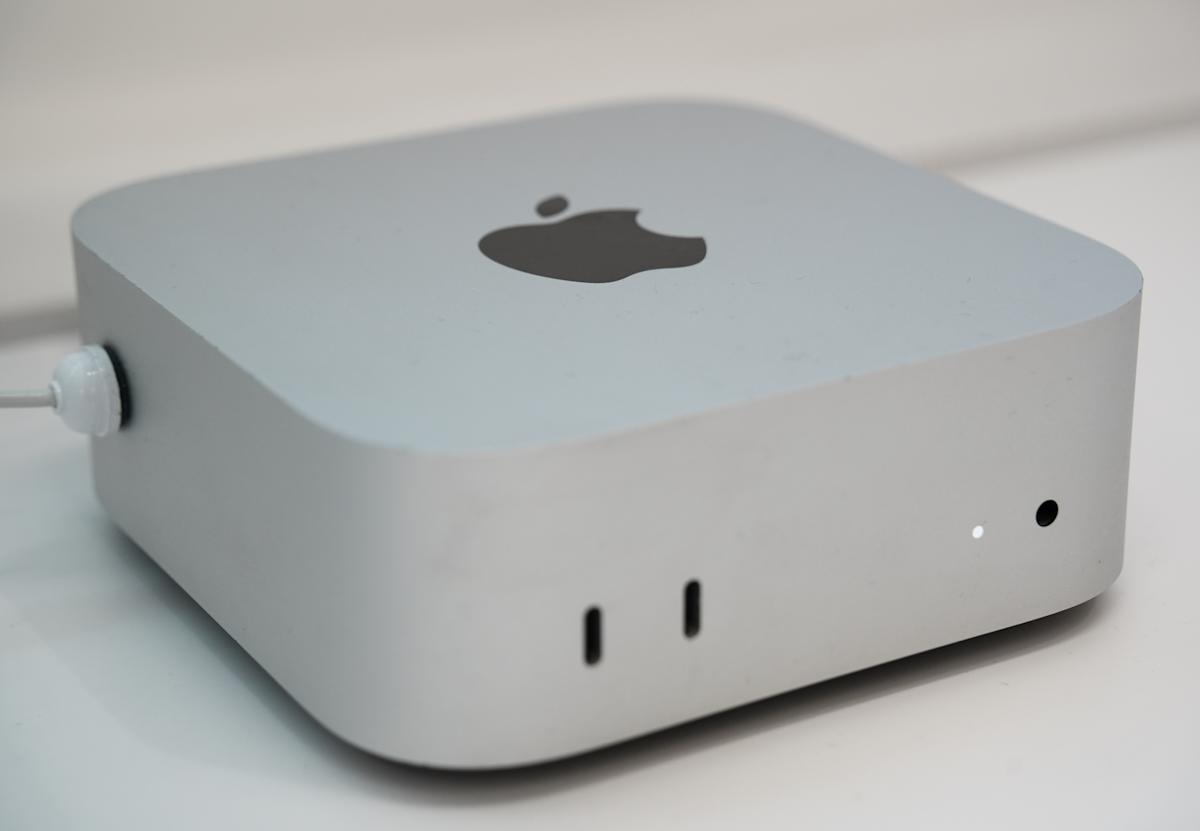
Silicon Valley’s favorite AI tool is making it harder to get Macs, and Apple (AAPL) CEO Tim Cook says it could take the company some time to catch up with demand.
AI developers and enthusiasts have been snatching up Mac minis and Mac Studios to run the AI agent platform OpenClaw, thanks to their relative affordability and ease of use. That’s made it difficult for some customers to get their hands on the compact, screenless desktop systems.
“The Mac Mini and the Mac Studio, both of these are amazing platforms for AI and agentic tools, and the customer recognition of that is happening faster than what we had predicted. And so we saw higher-than-expected demand,” Cook said during the company’s Q2 earnings call.
“We think, looking forward, that the Mac mini and the Mac Studio may take several months to reach supply-demand balance,” he added.
OpenClaw gained an enormous amount of attention among developers thanks to its ability to perform actions on your behalf from your own desktop using your own data.
The benefit is that you can customize it as you see fit, provide it with access to the information you want, and allow it to run tasks for you.
In the second quarter, Mac revenue hit $8.39 billion, up from the $7.94 billion Apple reported in the same period last year.
Like the rest of the computer and smartphone industry, Apple is also dealing with memory constraints caused by the global AI data center build-out. That’s driving up memory costs and, according to Cook, will have a greater impact on Apple in the coming quarters.
“I can tell you that beyond the June quarter, we believe memory costs will drive an increasing impact on our business, and we’ll continue to evaluate this. And as we’ve said before, we’ll look at a range of options,” Cook said.
Market research firm International Data Corporation (IDC) said that it expects to see PC shipments decline 11.3% in 2026 due to the memory shortage.
Cook, meanwhile, said that Apple’s iPhone is also facing supply constraints, but rather than memory, he pointed to the advanced processor nodes used for its A-series chips.
More broadly, IDC says global smartphone shipments declined 4.1% in the first quarter to 289.7 million units. That broke a 10-quarter streak of growth that began in mid-2023.
Premium smartphones like the iPhone, however, should be largely insulated from demand destruction.
Email Daniel Howley at dhowley@yahoofinance.com. Follow him on Twitter at @DanielHowley.
Read the latest financial and business news from Yahoo Finance.