



The Strait of Hormuz closure is not only driving up prices at the pump in the U.S., it’s also driving up the cost of delivering humanitarian aid around the world. That is particularly acute for Somalia, which is facing one of the most complex hunger crises in recent years. Nick Schifrin speaks with the World Food Program’s Matthew Hollingworth for more.
Amna Nawaz:
The closure of the Strait of Hormuz is not only driving up the price at the pump in the United States. It’s driving up the cost of delivering humanitarian aid around the world.
That is particularly acute for Somalia, which is facing one of the most complex hunger crises in recent years.
Nick Schifrin is back now with that report.
Nick Schifrin:
For more than a year, Somalia’s children have suffered from a looming famine and deep cuts to foreign aid, and now the war in Iran for them has become a matter of life and death.
Iran’s choke hold over the Strait of Hormuz has led to shortages of lifesaving foods and delays on deliveries by humanitarian groups. It’s just one example of the war’s impact well beyond the strait.
To discuss that is Matthew Hollingworth, assistant executive director for program operations at the World Food Program, who joins me from Mogadishu.
Thanks very much, Matthew Hollingworth. Welcome to the “News Hour.”
Just how much has the war, this choke hold over the strait affected your operations in Somalia?
Matthew Hollingworth, Assistant Executive Director, World Food Program:
We’re seeing already significant increases in food costs across the country.
We’re seeing as much as a 150 percent increase in fuel costs across Somalia. And it’s slowing things down when it comes to deliveries. We have just received in the last days a shipment that was due to come in 30 days ago and was 30 days delayed.
That means that, during that period, we simply didn’t have enough assistance, but it comes at a time when the country is already facing the impact of three consecutive failed rainy seasons and drought throughout vast parts of the country, where very significant numbers of people, more than two million, are facing very serious levels of hunger.
This all adds together and brings us the perfect storm in terms of the impact on Somalis around the country.
Nick Schifrin:
During your trip, you visited a village in Puntland, which has experienced, as you said, three failed rainy seasons in a row. What did you see there?
Matthew Hollingworth:
I mean, across Puntland, you see water reservoirs completely dried up. So there is no water available for their pastureland, no water available for their animals. So you see a lot of skeletons of dead animals, dead farm animals.
You see families that have lost all of their assets. This is a malnutrition hot spot in the world already, and it’s just getting worse and worse.
Nick Schifrin:
You visited a site for the internally displaced, where you’re providing emergency assistance and nutrition services. How much increase is there in the need, in demand since the war in Iran began?
Matthew Hollingworth:
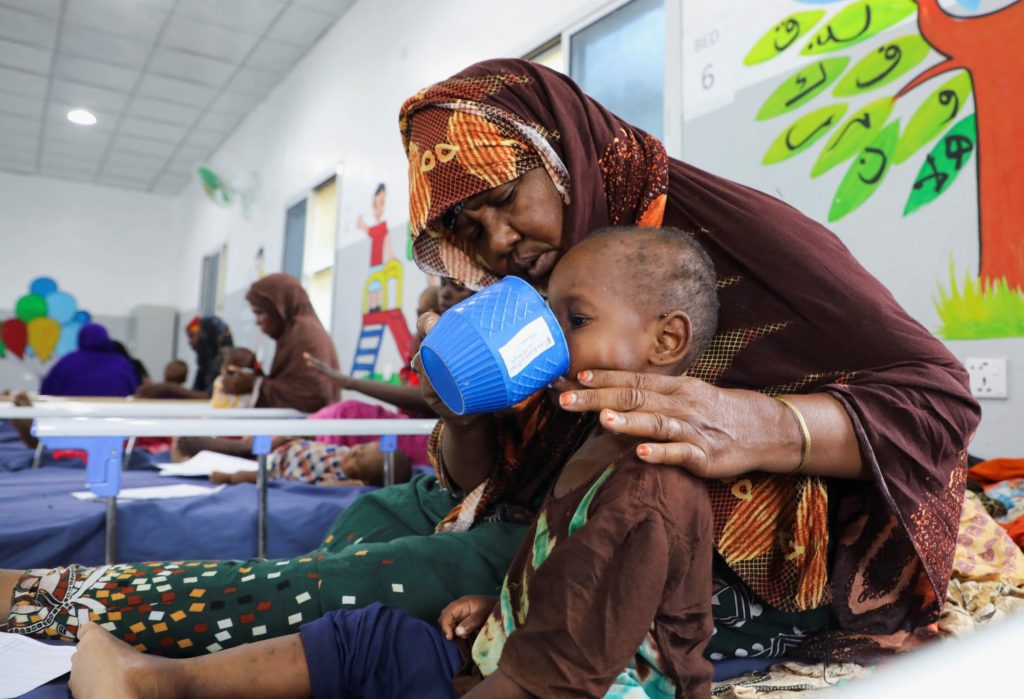
I mean, it was frightening to go to a mother and child health care center and speak to mothers of four or five children who know that in the months ahead we will no longer be able to help their children.
In this circumstances, when we don’t have the resources, we don’t have the stocks, we don’t have the food, we’re having to take tough, tough choices. But we can only actually help about one in 10 who we would typically want to assist.
And that’s down to yes, increased prices, yes, slowing supply chains and global supply chains around the world. But it’s also just a resource gap, because we don’t have the funds to help the most needy. And this is a crisis that is growing, particularly when it comes to nutrition or malnutrition in the under-5’s.
Nick Schifrin:
Talk about those people who you will not be able to help. What will happen to them?
Matthew Hollingworth:
They’re taking very difficult choices as families themselves. They’re deciding what to sell, if they have got something to sell, what to keep, which child goes to school, which child doesn’t go to school, who gets fed that meal today and who doesn’t.
And I have three children, I know I would do anything to make sure that they stay healthy and well. And when you think yourself how many days you could go without food, mothers are taking the decision, which child doesn’t eat today? It’s really not easy.
We need to be calling for a cease-fire or a more permanent cease-fire for a more permanent opening of the Strait of Hormuz, so that we can get past this issue of food becoming prohibitively expensive for the poorest around the world.
Nick Schifrin:
Explain why it’s important for the region for Somalis and Somalia to have what it needs in order to maintain stability in a key region?
Matthew Hollingworth:
More suffering, more displacement inside Somalia raises the concern of more displacement of people coming from Somalia outside, South Sudan, Sudan, Somalia, Ethiopia, Eritrea.
These are all countries that need stability moving forward. Without that stability, we know what that means for the rest of the world when we see countries where people are so desperate they’re willing to find a better situation for their children, for their families.
Nick Schifrin:
Matthew Hollingworth is the World Food Program’s assistant executive director from program operations.
Thank you very much.
Matthew Hollingworth:
Thank you.