



Water levels on Lakes Michigan, Huron, Superior and St. Clair are forecast to remain above last year’s levels through the boating season after a spring marked by heavy snowmelt and unusually wet conditions across northern Michigan, according to the latest U.S. Army Corps of Engineers outlook.
The Corps said Lakes Michigan and Huron rose 10 inches from March to April, reaching 578.58 feet above sea level — 3 inches above the same time last year. Officials described April precipitation as “well above average,” with water supplies across the basin reaching record-high levels.
March blizzard, April rains swell Great Lakes
The elevated water levels follow the massive March blizzard that hit the Upper Peninsula and northern Michigan, where National Weather Service offices reported snowfall totals exceeding 4 feet in parts of the western U.P. The subsequent spring thaw, combined with repeated April rainstorms across northern Michigan, accelerated runoff into rivers and tributaries feeding Lakes Michigan and Huron.
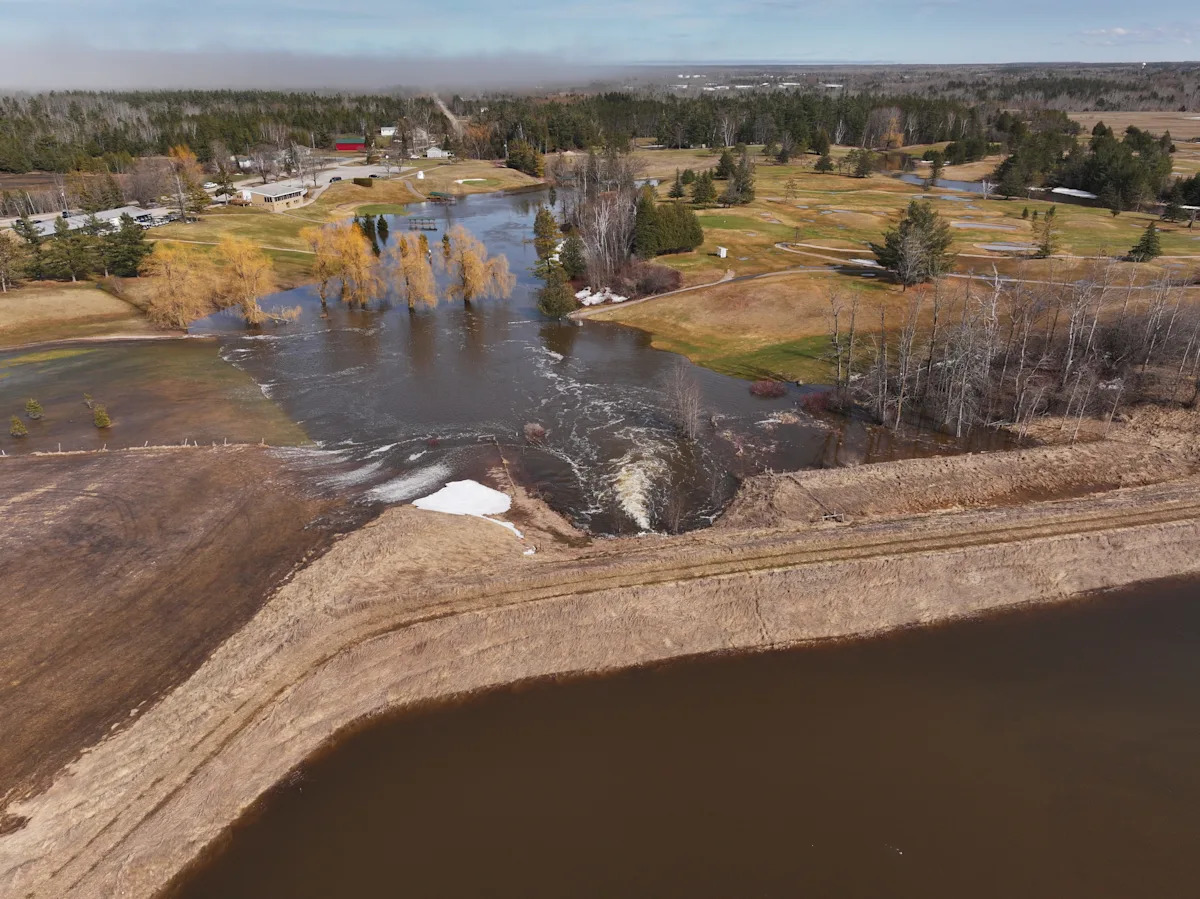
Heavy rainfall around Traverse City for the past four days has caused the Boardman/Ottaway River to overflow its banks and washed out the Beitner Bridge, south of Traverse City. Photo taken on Wednesday, April 15, 2026.
More: April 2026 was the wettest ever for these Michigan cities
The Detroit News documented flooding concerns along northern Michigan waterways in April as snowmelt and heavy rainfall pushed rivers toward flood stage and strained dams and drainage systems connected to the Lake Huron watershed.
From May through October, levels in Lake Huron and Michigan are forecast to remain 6 to 10 inches above 2025 levels, with the seasonal rise expected to continue into August before gradually declining in the fall. Even so, the lake system remains 37 inches below its record April high.
More: Flooding soaks northern Michigan lake homes upstream from Cheboygan dam
Lake Erie levels slightly lower
Lake Erie is projected to remain slightly below last year’s levels through most of the summer despite the wet spring. Erie rose 10 inches from March to April to 571.65 feet, though it remained 4 inches below April 2025 levels. The Corps again cited “well above average” April precipitation across the basin.
Forecasts show Lake Erie staying 2 to 3 inches below last year’s levels through June and about 1 to 2 inches lower during July and August before edging slightly above 2025 levels by early fall.
Lake Superior rises 3 inches
Lake Superior is also expected to remain above last year’s levels through October. Superior rose 3 inches from March to April to 601.12 feet, placing it 4 inches above April 2025 levels. The Corps attributed the increase to above-average precipitation and water supplies.
National Weather Service data from Marquette showed snowfall well above average entering April, with rapid warming later in the month contributing to accelerated snowmelt across the Upper Peninsula watershed that feeds Lake Superior.
The Corps expects Lake Superior to continue its seasonal rise into September, remaining near to slightly above long-term averages through the fall.
More: These 12 Michigan rivers under flood warning from rains, snowmelt
This article originally appeared on The Detroit News: Water levels on 4 Great Lakes forecast to remain above last year’s levels