



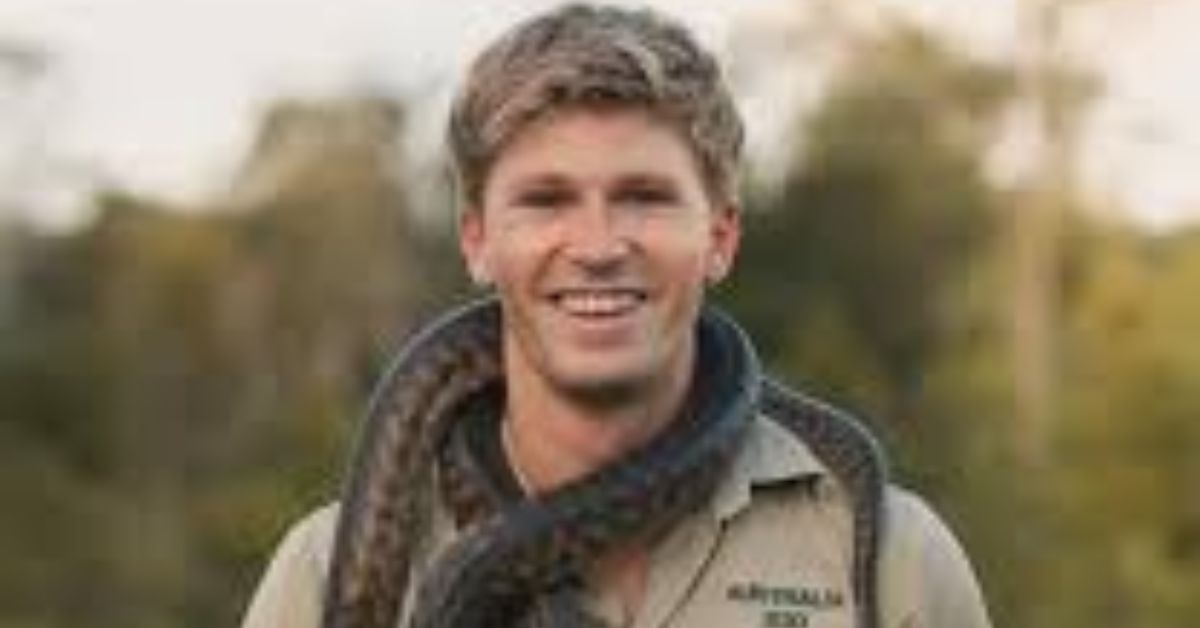
Robert Irwin has once again grabbed global attention after sharing a terrifying crocodile encounter that could have easily gone wrong. The Robert Irwin crocodile story, revealed during a recent appearance on The Tonight Show Starring Jimmy Fallon, shows just how dangerous his conservation work can be, even for someone who grew up around wild animals.
The 22-year-old conservationist, Robert Irwin, son of legendary wildlife expert Steve Irwin, described a moment where he was “death rolled” by a massive crocodile he had known since it was young. The incident has quickly gone viral under searches like Robert Irwin crocodile attack, Robert Irwin Jimmy Fallon crocodile story, and Robert Irwin death roll survival story.
Robert Irwin and the 14-Foot Crocodile Named Jimmy Fallon
During the interview on The Tonight Show Starring Jimmy Fallon, Robert Irwin explained that the crocodile involved in the incident was named “Jimmy Fallon,” after host Jimmy Fallon.
What makes the story even more surprising is that Robert Irwin named the crocodile years ago when it was still small. Today, that same animal has grown into what he described as a “boss croc,” measuring around 14 feet long.
Robert Irwin explained that the naming was part of his long-running conservation work, where researchers track crocodiles in the wild to better understand and protect them. This hands-on approach, he said, is something he learned from his father, Steve Irwin.
Robert Irwin Describes the Terrifying “Death Roll” Moment
The most dramatic part of the Robert Irwin crocodile encounter came when he described exactly what happened during the fieldwork.
Robert Irwin said that to safely study crocodiles, conservationists sometimes need to physically restrain them. In this case, he jumped onto the crocodile’s back to secure it.
That is when things went wrong.
Robert Irwin recalled:
- The crocodile suddenly began a “death roll”
- He was trapped underneath its body
- Around 700 pounds of pressure was on top of him
- His arm was exposed and vulnerable during the struggle
Robert Irwin explained that in that moment, there was a split-second realization that things could turn serious very quickly. Fortunately, the crocodile rolled back the other way, allowing him to escape unharmed.
This Robert Irwin death roll story has become one of the most discussed wildlife conservation incidents in recent memory.
Robert Irwin and the Legacy of Steve Irwin
The bravery shown by Robert Irwin is deeply tied to his upbringing. He is the son of Steve Irwin, widely known as “The Crocodile Hunter,” who built a global legacy of wildlife education and conservation.
Steve Irwin’s work focused on teaching people to respect dangerous animals rather than fear them. His life was tragically cut short in 2006 during a stingray incident while filming at the Great Barrier Reef.
At that time, Robert Irwin was just two years old.
Despite growing up without his father, Robert Irwin has continued to carry forward the mission alongside his mother Terri Irwin and sister Bindi Irwin, managing the Australia Zoo and expanding global conservation awareness.
Robert Irwin has repeatedly said that his goal is simple: continue what his father started and make him proud.
Robert Irwin’s Life in Conservation and Public Spotlight
The Robert Irwin crocodile incident is only one part of his broader life in conservation work. Robert Irwin is actively involved in wildlife research, animal care, and public education about endangered species.
His work often involves direct interaction with dangerous animals, including crocodiles, snakes, and large reptiles. Despite the risks, Robert Irwin continues fieldwork because he believes it is essential for protecting ecosystems.
Robert Irwin has also become a familiar face in mainstream entertainment, helping bridge the gap between wildlife conservation and global audiences.
Robert Irwin, Dancing Success, and Rising Popularity
Beyond conservation, Robert Irwin has also built a strong entertainment profile. His sister Bindi Irwin previously won Dancing with the Stars, and Robert Irwin followed in her footsteps.
Robert Irwin competed in the show in 2025 and went on to win the competition with his dance partner Witney Carson. His victory surprised many viewers who knew him primarily as a wildlife conservationist rather than a performer.
He later shared that representing his father’s legacy on such a public stage meant a lot to him, and that the support from audiences was deeply meaningful.
Robert Irwin on Legacy, Pressure, and Purpose
In interviews following his rise in popularity, Robert Irwin has spoken openly about what motivates him.
Robert Irwin has said that everything he does connects back to his father’s mission. Whether he is handling crocodiles in the wild or performing on stage, he sees it as part of the same goal: spreading awareness about wildlife conservation.
He also emphasized that he wants to be a positive role model for younger audiences, especially those interested in nature and environmental protection.
Why the Robert Irwin Crocodile Story Went Viral
The Robert Irwin crocodile death roll story gained attention for several reasons:
- The extreme nature of the encounter
- The size of the crocodile involved
- The connection to Jimmy Fallon as a namesake
- Robert Irwin’s calm explanation of a dangerous moment
- The legacy of Steve Irwin tied to the story
Combined, these factors made the Robert Irwin Jimmy Fallon crocodile incident one of the most widely discussed wildlife stories online in recent weeks.
The Robert Irwin crocodile story is a reminder that wildlife conservation is not just educational or symbolic, but often physically dangerous. Robert Irwin continues to follow in the footsteps of Steve Irwin, carrying forward a legacy built on direct engagement with nature.
Despite the frightening moment involving a 14-foot crocodile and a sudden death roll, Robert Irwin walked away safely. The incident has only strengthened public interest in his work and reinforced his reputation as one of the most committed young conservationists today.
As Robert Irwin continues his journey, stories like this highlight both the risks and responsibilities that come with protecting some of the world’s most powerful animals.