




A flat stage with a sting in the tail to the hometown of Filippo Ganna. Can he surprise the bunch or this a continuation of Narvaez week?

Smart Alec: Movistar did it again, shredding the peloton on the climbs of the Giovo and Bric Berton, this time with a little help from the NSN and EF teams too. Dylan Groenewegen was dropped like a brick while Paul Magnier and Jonathan Milan held on for longer but cracked and could not chase back.
As much as Movistar’s move was lively, this was not a delicate refinery designed to distil the peloton down to a bunch of sapling climbers plus their fastman Orluis Aular, instead about 70 riders crested the Bric Berton pass; so roughly 90 eliminated.
Approaching the finish on the way out of Novi Alec Segaert hit the group with a big attack and got a gap. It was the perfect move, just as others were thinking about positioning for the upcoming sprint and hesitating about reacting. A couple of riders tried but they looked like passengers running down a platform trying to chase a train that was leaving the station.

Segaert won the GP de Denain this spring with a similar move; he’s tried it other times too. He’ll try it again and it’ll work as he’s got the punch and the power to make it work. To complete Bahrain’s day, Afosono Eulalio won the intermediate sprint to take the six second time bonus. This won’t bother Vingegaard but he is telling the team he wants to finish in the top-10 and this signalled it.
The Route: 187km, the graphic says 189km but it’s been tweaked. It’s still across the Po plains past rice and corn fields that make risotto and polenta and we end up evoking cuisine because there’s little to remark about the route.
Everything changes with 25km to go. The road climbs to Bieno for 2km with plenty of 8% but that’s just a gentle warm up.

After the intermediate sprint in Trobaso there’s a 3km climb and it’s all 8-10% or more, often 15% and with tight hairpin bends where the inside line is even steeper. The mountains point doesn’t mark the top of the climb as it drags along a balcony road. It then picks up a bigger road for the descent back down with 13km to go and the fast part of the descent is hard to take back time in an organised chase.
The Finish: a flat ride past the big lakeside villas.
The Contenders: Filippo Ganna (Netcompany-Ineos) is the local and has said that now the TT is done he wants to win more stages. If he wants to win today then his weight is a challenge, the two climbs just don’t suit. But he could try to make a solo move earlier and build up a lead. Easier said than done.
Which riders can exploit the final climb to ride away? Who can then sprint well from a small group? Jhonatan Narvaez (UAE) of course. If not then his team mates with Igor Arrieta and Jan Christen suitable picks.
Unlike the Ganna scenario above using the flat, if the break is to work it needs to take time on the flat roads and then a punchy rider springs clear on the final climb; or at least several do and then come into the finish together.
By now there’s a habitual mix of names you’ll find amid the ratings below but an extra mention for Edoardo Zambanini (Bahrain) who is suited to these kind of stages but has been carrying injuries since Bulgaria but is looking over these.
 |
– |
 |
Narvaez, Ulissi, Ganna, Ciccone |
 |
Aerts, Silva, Sobrero, Milesi, Garofoli, Hatherly, Zambanini |
Weather: sunny and 27°C.
TV: KM0 is at 12.55pm and the finish is forecast for 5.15pm CEST. Tune in around 4.30pm for the hilly finish.
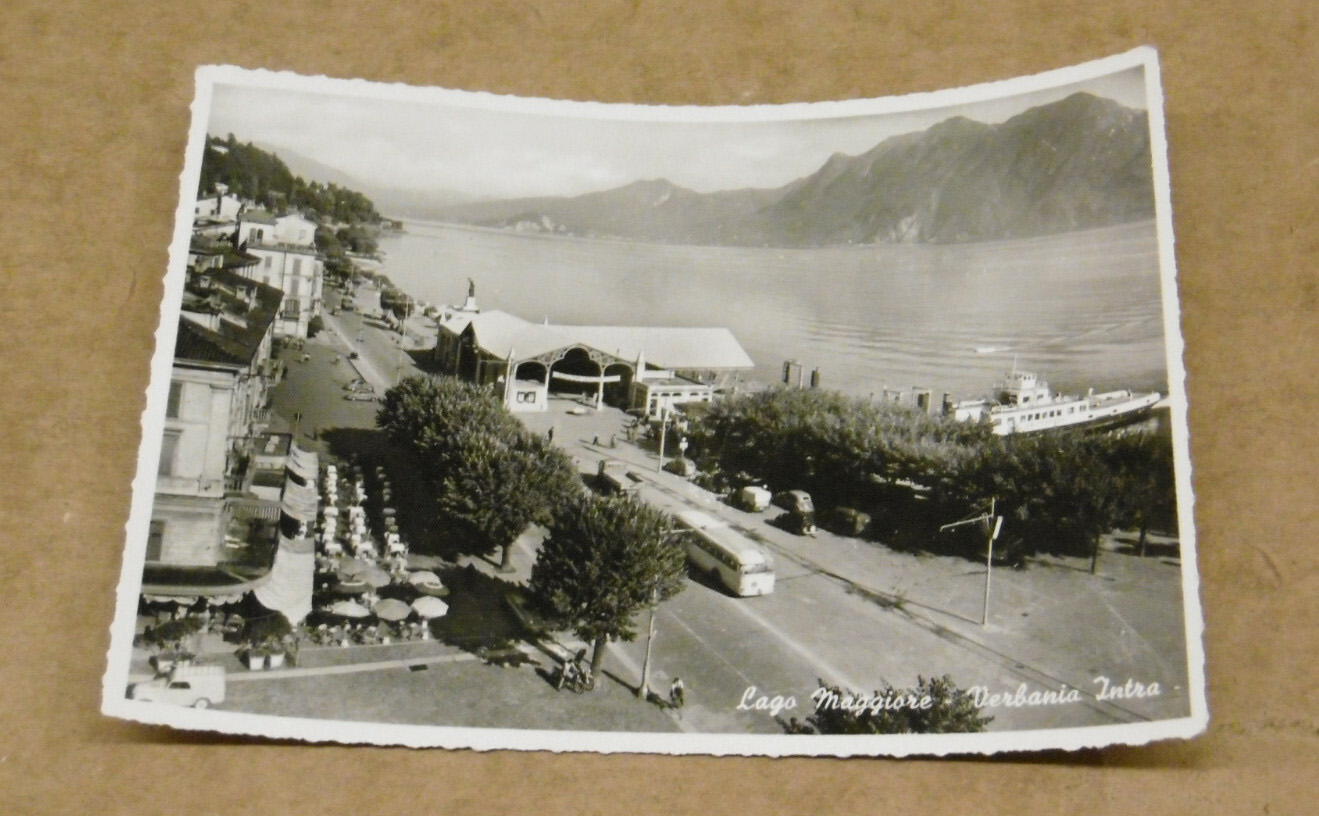
Postcard from Verbania
Filippo Ganna is the local and the finish almost goes past the house in Vignone where he grew up, passing through the next village over of Cambiasca on the descent to the finish in Verbania.
Verbania is on the shore of Lake Maggiore and you can see why the town emerged here as it’s on a promontory of gravel washed out from local rivers, one of the few pieces of flat land. See how Alpine hills plunge down into the lake in the image above. Indeed the only flats road around seems to be one busy, engineered route cut into the mountain along the shore or the alongside the river. You wonder how such a hilly place produced a rider so good on the flat?
Only geography does not determine physical ability. Plenty of Dutch riders have climbed to wins at Alpe d’Huez, Jonas Vingegaard comes from Denmark where the highest point is 170.86m above sea level, so meagre they use the decimal place.
Ganna’s predecessor Franceso Moser came from the Alps, likewise many Italian classics specialists. Matteo Trentin hails from Borgo Valsugana and has said that if he doesn’t want a massive climb then the only training ride is either up the valley and back down, or down the valley and back up.
Geography does play a role. To leave cycling, there was nobody on the Italian winter Olympics team from Pulgia, Campania or Basilicata, the three regions that make up the southern tip of the Italian peninsula, nor Sicily either too. These four regions account for over a fifth of the population. Meanwhile South Tyrol supplied 50 athletes, from 0.9% of the population. Proximity to snow, mountains and infrastructure from ski-lifts to clubs and social networks clearly makes a difference. Obvious.
This counts in cycling too though because while there are roads everywhere, the supply of clubs, races and structures able to accompany an amateur from beginner to elite are largely regionalised in Italy too, the sport is big in Lombardia, Veneto and Tuscany but much less so in, say Calabria or Sardinia.

So while Ganna may have started out on hilly roads where every training ride ended with a 3.5km at 7% climb just to ride home from Verbania – he also grew up in a region packed with clubs and teams (like his Pedale Ossolano, then Colpack), races and resources to help him on his way. Ganna since moved to Switzerland… but that’s a postcard for another day.
Source link
See more: https://theglobaltrack.com/
https://corinthiames.com.br/