




The Supreme Court is generally not a winning place for death row prisoners these days. So even though the justices didn’t write a full opinion siding with Alabama’s Joseph Smith on Thursday, it was striking that the state could not attract a majority on a court with six Republican appointees who are typically eager to help executions go forward.
Instead, the court split 5-4 in dismissing the case of Hamm v. Smith as “improvidently granted.” Such “DIGs,” as they are called, happen when the justices decide — after they have already granted review, read the briefs and heard oral argument — that they should not have gotten involved in the first place. It’s always a notable, though not unprecedented, occurrence.
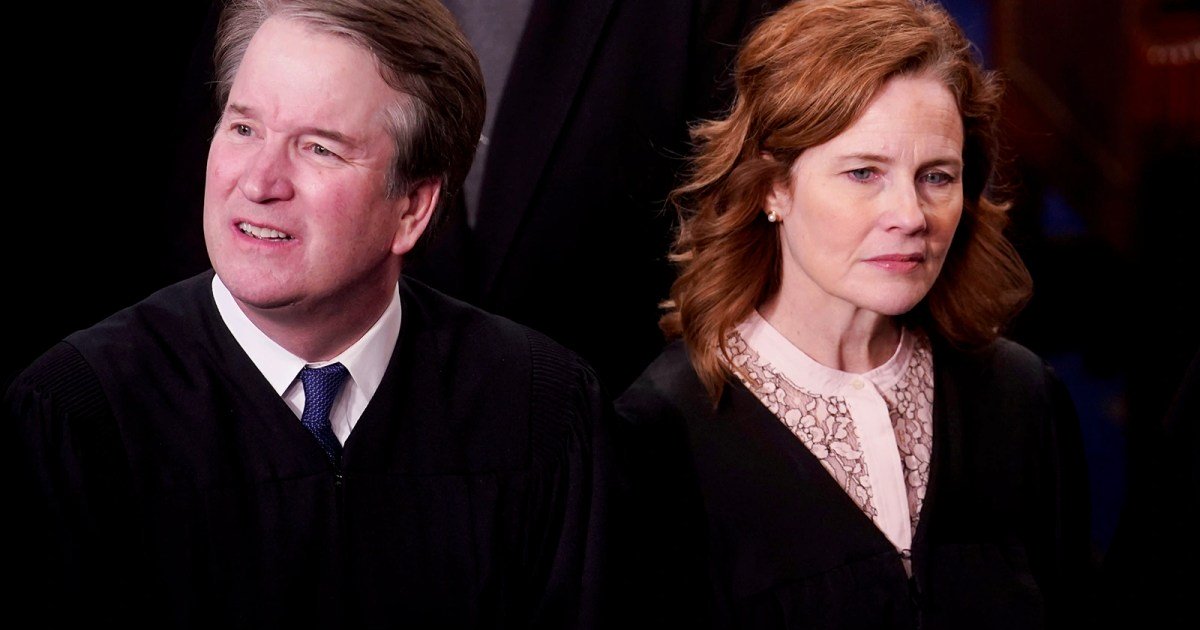
Yet Thursday’s DIG was even more remarkable than usual, both because of who benefited from it and how the court split in providing that benefit, with Justices Brett Kavanaugh and Amy Coney Barrett forming a bare majority with the court’s three Democratic appointees against Alabama.
The justices had agreed to review the state’s appeal as it sought to execute Smith for the 1997 murder of Durk Van Dam. Specifically, the justices agreed to decide whether, and how, courts may consider the cumulative effect of multiple IQ scores in a prisoner’s claim that they are too intellectually disabled to be executed under Supreme Court precedent.
The practical effect of Thursday’s dismissal is that the lower court ruling sparing Smith from execution stands. That alone is an exceptional occurrence at this court.
How the court reached that conclusion gets more interesting. There’s no explained opinion from the majority — only an unsigned line that says, “The writ of certiorari is dismissed as improvidently granted.” (“The writ of certiorari” means Alabama’s appeal.) That’s the norm when it comes to DIGs.
But some of the justices also wrote separate accompanying opinions, giving us a window, albeit an incomplete one, into the divide in this case and what it signals for the future of litigation on this issue.
Justice Sonia Sotomayor wrote a concurring opinion, meaning an opinion explaining why she agreed with the procedural dismissal. She was joined by Justice Ketanji Brown Jackson, who is the other justice most likely to side with death row prisoners. Justice Elena Kagan didn’t join them or write separately to explain her views, which isn’t too surprising either, because she only sometimes joins her fellow Democratic appointees in death penalty cases.
Sotomayor wrote that the majority correctly dismissed the case because the evidentiary record and lower court rulings were not sufficiently detailed for the justices to evaluate. Essentially, in her view, the court would have overstepped by weighing in at this point. But she also wrote to warn that she thought the dissenting justices’ view of the court’s precedents, and how courts should evaluate IQ scores, is “incomplete and potentially misleading.”
She wrote that the court “is not equipped in this case to provide any meaningful guidance on how courts should assess multiple IQ scores,” adding that all the parties in the case agreed “that the Eighth Amendment does not prescribe a single formula for weighing multiple IQ scores.” The Eighth Amendment bars cruel and unusual punishment.
The main dissent she responded to was authored by Justice Samuel Alito, who was joined in full by Justice Clarence Thomas (who also wrote his own solo dissent) and largely by Justice Neil Gorsuch and Chief Justice John Roberts. Alito wrote that the court missed a chance to provide guidance to lower courts on how to evaluate IQ scores.
Source link
See more: https://theglobaltrack.com/
https://corinthiames.com.br/