



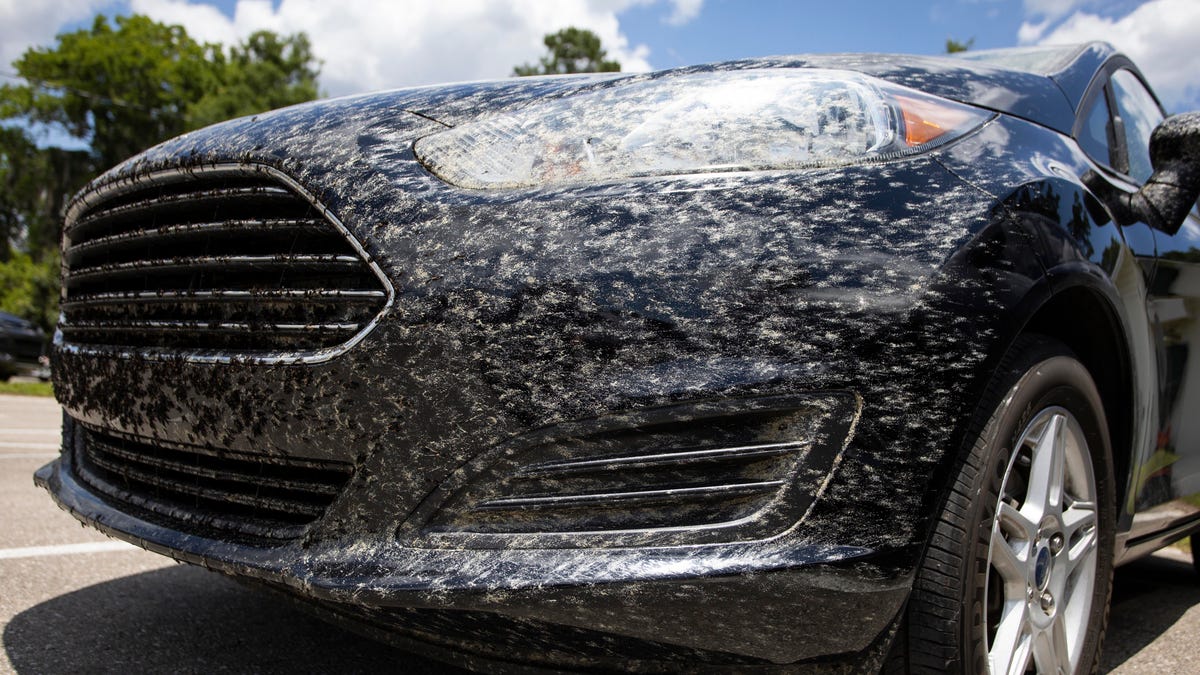
Getting a ton of pesky lovebugs on the grill of your car? Have no fear! Florida’s first lovebug season of 2026 is ending soon. But expect more lovebugs in the fall.
Lovebugs are always present in Florida, but females typically come out in swarms in April and May, and again in August and September for the mating season.
The amount of lovebugs littering car windshields and flying around the Sunshine State during lovebug season has diminished during the past few years. So far this lovebug season, Central and Southwest Florida have had more lovebugs than other parts of the state, where they are present but haven’t been swarming much this year.
Here’s what to know about lovebug season in Florida, when you can expect it to end and why some believe the myth that the University of Florida is to blame for the nuisance.
When does lovebug season end in Florida?
Lovebugs are always around, but females come out in swarms in April and May, and again in August and September for the lovebug mating season. The timing of when lovebugs start swarming is typically earlier in South Florida than in North Florida.
Adult lovebugs live for around three to four days, just long enough to mate and deposit a batch of eggs. Up to eight males compete for each female. When they mate, they stay connected and must stick to each other at all times, floating gently on the breeze, often smashing into windshields and grossing out bikers.
But Florida residents and scientists have noticed a decline in lovebug infestation. In recent years, lovebug sightings have dwindled to nearly nothing. It became rare to see even a few during the season.
The most common reasons for insect decline are habitat loss from human development, failure to adapt to rapid climate change, pollution and pesticide use, changes in spring runoff in aquatic systems, light pollution disrupting life cycles and more, a 2021 study from the Entomological Society of America on the importance of protecting biodiversity said.
A 2022 study from researchers at the UF/IFAS Extension suggests that predators may also have something to do with it. Since funding for studying bugs that are considered nuisances can be difficult to secure, we may never know the exact reasons behind the decline of lovebug populations.
So far in 2026, Central and Southwest Florida have seen the most lovebug swarms. This lovebug season should calm down in the next couple of weeks as May comes to a close and summer starts. But expect them to return in August!
Did UF create lovebugs?
No. Contrary to a years-old, very persistent urban myth, University of Florida researchers did not create lovebugs by manipulating DNA to control the mosquito population. Lovebugs are invasive to Florida, not native or created in a lab here.
University of Florida Professor Norman C. Leppla specializes in integrated pest management and biological control and has been studying the lovebug since 1972.
Lovebugs moved up the state in the 1960s, hitting North Florida in the 1970s, and there was an explosion in population growth then that may have been “accelerated by prevailing winds, vehicle traffic, sod transport, increased habitat along highways, and expansion of pastures,” Lappla said in his 2018 paper, “Living With Lovebugs.”
“Not by UF researchers,” he said.
What cleans lovebugs off a car?

How to clean love bugs off your car
Love bug season brings lots of love bugs — and potential love bug damage to your car. Here are tips to keep love bugs from destroying your vehicle.
Wochit, Wochit
The biggest complaint about lovebugs in the particularly bad lovebug seasons of the past has been that during the mating season, clouds of them have covered cars and windshields with smushed, dead bugs.
The most thorough way to clean them off is to go to a car wash and pay someone to do it. If there are enough lovebugs on your car, they can clog the radiator and cause the engine to overheat.
It’s important to wash them off quickly before the Florida sun bakes them on and not let them build up. It helps to keep your car clean and waxed, to make it tougher for the bugs to stick, and consider a hood air deflector or screen to make them easier to deal with.
Using dryer sheets is often recommended, along with a host of other remedies such as baby shampoo, hydrogen peroxide, soft drinks, furniture cleaner and more. Experiment with caution. But be aware that some solutions abrasive enough to scrape off lovebugs may also damage your vehicle’s finish.
Lianna Norman and C. A. Bridges are trending reporters for the USA TODAY NETWORK-Florida, covering Florida wildlife, breaking news and more. You can get all of Florida’s best content directly in your inbox each weekday by signing up for the free newsletter, Florida TODAY, at https://floridatoday.com/newsletters.
Source link
More: https://theglobaltrack.com/
https://corinthiames.com.br/