



Here are five questions that will need answers during the final countdown:
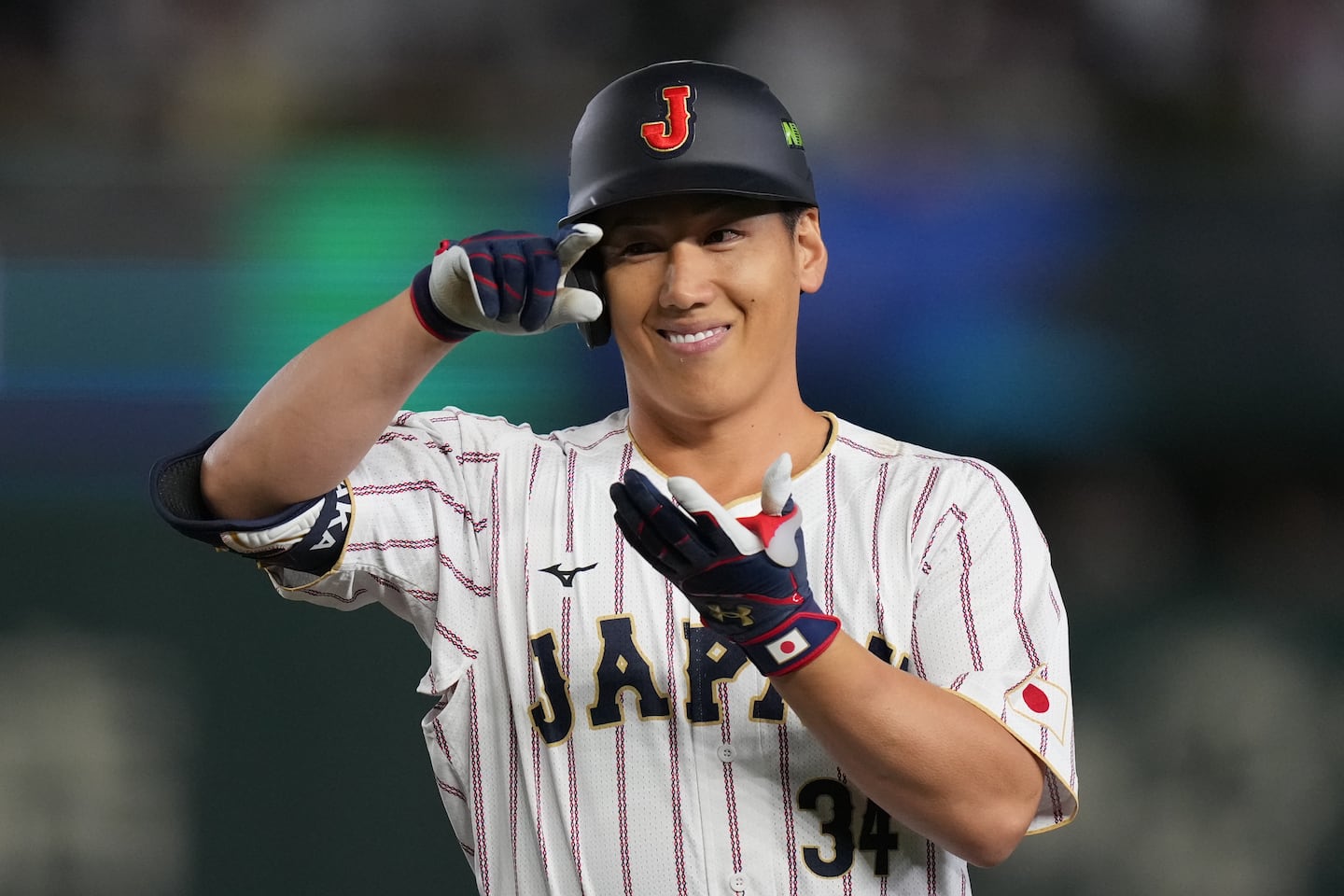
1. Can they find a taker for Masataka Yoshida?
Maybe Yoshida’s standout performance in the World Baseball Classic ups his trade value.
“I don’t know about trade value,” manager Alex Cora said. “He’s a good hitter, right?”
Cora has talked up Yoshida plenty, but the reality remains: Yoshida is an awkward-at-best fit for this roster, with no path to regular at-bats barring an injury or two (or a front office about-face leading to a trade of Jarren Duran).
There is a scenario in which Yoshida remains with the Red Sox and is useful as a pinch hitter/occasional DH. But if a club is willing to take on even, say, a third of his remaining $36 million over two years, it could work out for both parties. Yoshida would get more of an opportunity, and the Red Sox could free up that roster spot for, for example, the Team USA-torching Nate Eaton, a potential bench weapon.
The Braves, who lost Jurickson Profar for the year because of his second performance-enhancing drug suspension, come to mind as a team that needs a DH.
2. Who will be the backup catcher?
Entering spring training, the Red Sox had little roster-related intrigue. With most of camp complete, that remains the case.
A testament to that tranquility: Backup catcher might be the biggest chance for an upset.
Connor Wong is the incumbent No. 2, but he struggled significantly at the plate last year, and that has continued in Grapefruit League play. Matt Thaiss, meanwhile, has “been catching our eye,” Cora noted recently. Other Sox decision-makers have expressed similar.
If the Red Sox want to make that swap, they are free to. Wong can be optioned to the minors. Thaiss can be put on the major league roster (and has an upward-mobility clause that makes him available to other teams if the Red Sox don’t want to add him).
It would be a surefire way to bolster the organization’s catcher depth, since Wong would be ready and waiting when the Sox need to call up someone. In the meantime, he would work with the pitching prospects in Triple A, which is no small role.
3. Who will replace Romy Gonzalez?
Gonzalez’s left shoulder injury — and potential surgery that would sideline him for months — creates a noteworthy opening. The Red Sox should have a better idea this week how long he will be out.
Defensively skilled Andruw Monasterio found success against lefthanded pitchers while with the Brewers last year, and he has drawn consistent praise from Cora in recent weeks. Utilityman Nick Sogard is the other infield-centric option.
The other kind of, sort of roster questions pretty much have answers. Sox officials are jazzed up about Johan Oviedo, so consider him still the favorite to snag the open spot in the rotation. They haven’t officially declared that Caleb Durbin will play third base (as opposed to second), but Cora indicated this week that it is very likely. They haven’t guaranteed Marcelo Mayer a spot, but he is the obvious choice to play second.
4. How will the bullpen shake out?
Cora estimated that the Red Sox have “two spots, maybe three” up for grabs for relievers, the most volatile position group in the sport.
Working backward: Aroldis Chapman and Garrett Whitlock will handle the late innings, and Justin Slaten and Greg Weissert also return. That is four relievers out of eight total.
Pencil in Zack Kelly, five. Lefthander Jovani Morán, who probably but not definitely will stick around (and who cannot be optioned to the minors), makes six.
Cora presented a wide field for the last two slots.
The Sox will have to decide on Ryan Watson, a Rule 5 pick who will be in the majors or offered back to the Giants. Cora mentioned righthander Kyle Keller, who spent the past four seasons in Japan but is back stateside on a minor league deal; lefthander Tyler Samaniego, who hasn’t pitched above Double A; righthander Noah Song, the Navy reservist; righthander Tayron Guerrero, who at 35 has never found success in the majors but throws 100 miles per hour; and righthander Seth Martinez, who “understands the job,” Cora said, of inglorious multi-inning mopup man.
The wild card: other clubs’ fringe arms who become available near the end of spring training. The last opening or two may well go to someone(s) not currently in the organization.
It’s a motley crew — and a fascinating group in the context of the Red Sox not acquiring any established relievers over the offseason. Keep in mind that whatever it looks like on Day One, the bullpen crew will be subject to frequent change.
“We’ve just got to stay healthy, and other guys have to step up,” Cora said. “That’s the reality of it.”
5. Can the Red Sox stay this healthy?
(Please remember during this perhaps risky little acknowledgment that jinxes are not real.)
The Red Sox have remained remarkably healthy, a credit to the players as well as the medical/training staff, plus a bit of good fortune. Only one member of the original projected Opening Day roster is injured: Gonzalez, whose shoulder problem originated in September and is not something that popped up during camp.
Other than that, the Sox are basically batting 1.000. The outfield is still surplus-y. The rotation is full (and so is Worcester’s). The infield is whole and, it seems, defensively capable. None of the 13 members of the 40-man roster in the WBC have come up with any issues.
Ask any baseball person what he or she is looking for at this time of year, and inevitably at the top of the list is: Escape spring training healthy. So far, the Sox are having a banner season.
***
The Red Sox announced Wednesday that they agreed to one-year contracts with 20 players who have fewer than three years in the majors, a standard process that happens every year around this time. The group includes Wilyer Abreu, Durbin, Carlos Narváez, and Mayer. None had negotiating leverage and all will make the minimum salary ($780,000) or slightly more.
Boston Globe Sports Report: Episode 19
Tim Healey can be reached at timothy.healey@globe.com. Follow him @timbhealey.