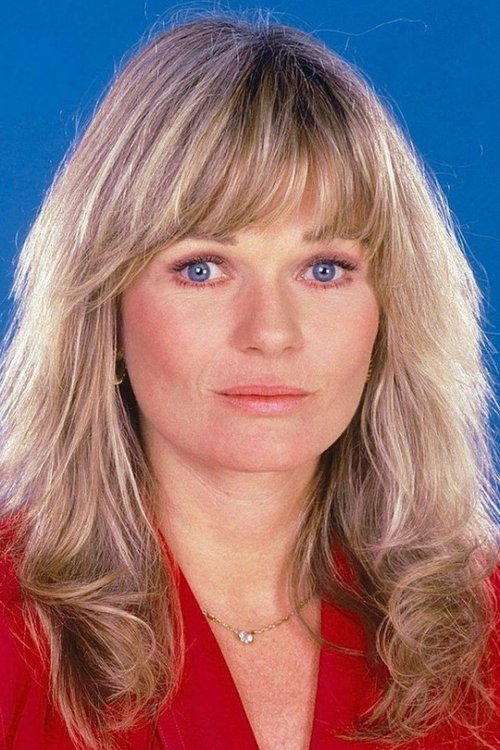




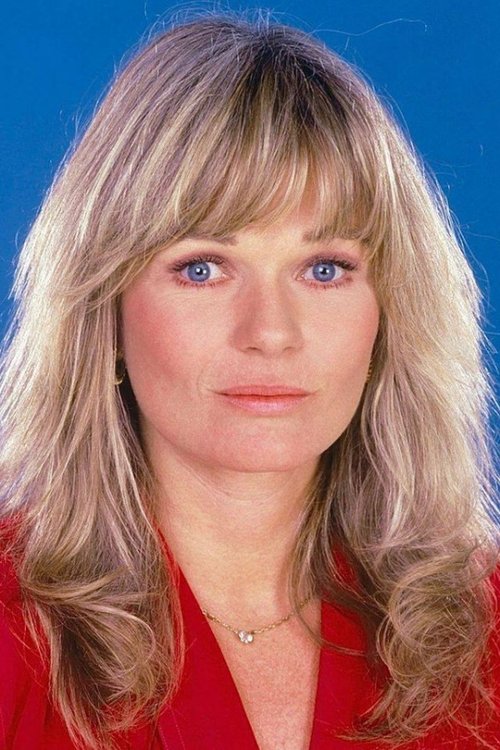
Let’s talk about Valerie Perrine for a minute. Because she deserves more than a footnote.
She died Monday at 82, after a long battle with Parkinson’s disease that had steadily taken her mobility, her ability to eat, her ability to speak. She was cared for in her final years by her friend and soulmate Stacey Souther, who by all accounts was nothing short of a saint. Perrine never married. She leaves behind her brother Kenneth, and a filmography that is genuinely, wonderfully strange.
Here’s the thing about Valerie Perrine: she never planned any of it.
She was a Las Vegas showgirl. A headliner at the Stardust, making $800 a week dancing in the Lido de Paris show, which by any measure is a pretty good life. Then her fiancé died in a freak gun accident. Then the man she started dating — Hollywood hairdresser Jay Sebring — was murdered by the Manson family at Sharon Tate’s house on a night Perrine had been invited but couldn’t attend because she had to work. The universe, apparently, had other plans for her.
A casting agent spotted her at a dinner party, eavesdropped on a phone call, liked what he heard, and asked if she’d ever acted. She said no. He asked if she could. She said yes. The only headshot she had was a topless showgirl photo from Vegas. She sent it anyway.
She got the part in Slaughterhouse-Five. Just like that.
From there, her career moved in directions nobody could have mapped. Bob Fosse cast her as Honey Bruce — Lenny Bruce’s drug-addicted stripper wife — in Lenny (1974), opposite Dustin Hoffman. She won Best Actress at Cannes. She got a BAFTA. She got an Oscar nomination. She lost to Ellen Burstyn, which is not a disgrace.
Her method, if you could call it that, was pure instinct. No acting classes. No technique. Just learn the lines, get on set, find a real memory that hurts, and let it happen. For that crying scene with Hoffman, she thought about an old boyfriend who had broken her heart. That’s it. That’s the whole system. And it worked.
Then came Eve Teschmacher in Superman (1978) — Lex Luthor’s secretary, soft-hearted enough to save the Man of Steel when it counted. She played her again in the sequel. And for the rest of her life, strangers would bellow “MISS TESCHMACHER!” at her in the street, Gene Hackman-style, and she apparently took it in stride.
Then came Can’t Stop the Music (1980), with the Village People and Caitlyn Jenner, which was so catastrophically bad it helped inspire the creation of the Razzie Awards. Perrine was mortified enough to move to Europe. “It ruined my career,” she said flatly. She was not wrong, exactly, but she kept working anyway — Jack Nicholson in The Border, Robert Redford in The Electric Horseman, Michael Caine in Water, whom she called the nicest human being she’d ever worked with.
She never became the mega-star the early 1970s suggested she might. But she was singular. Funny, uninhibited, completely herself, with a life story that reads like something a novelist would reject for being too on-the-nose. The accidental showgirl. The accidental actress. The woman who missed the Manson murders because she had to work a shift.
Cannes Best Actress. Oscar nominee. Eve Teschmacher. The whole improbable thing.
Rest easy, Valerie.