


Chemists have achieved what many once considered impossible by stabilizing an extremely reactive molecule in water, confirming a 67-year-old theory about vitamin B1. The breakthrough not only resolves a long-standing biochemical puzzle, but also points toward cleaner, more efficient methods for producing pharmaceuticals.
At the center of the discovery is a carbene, a form of carbon with just six valence electrons. Under normal conditions, carbon atoms are most stable with eight electrons. With only six, carbenes are highly unstable and react almost instantly with their surroundings. In water, they typically break down right away.
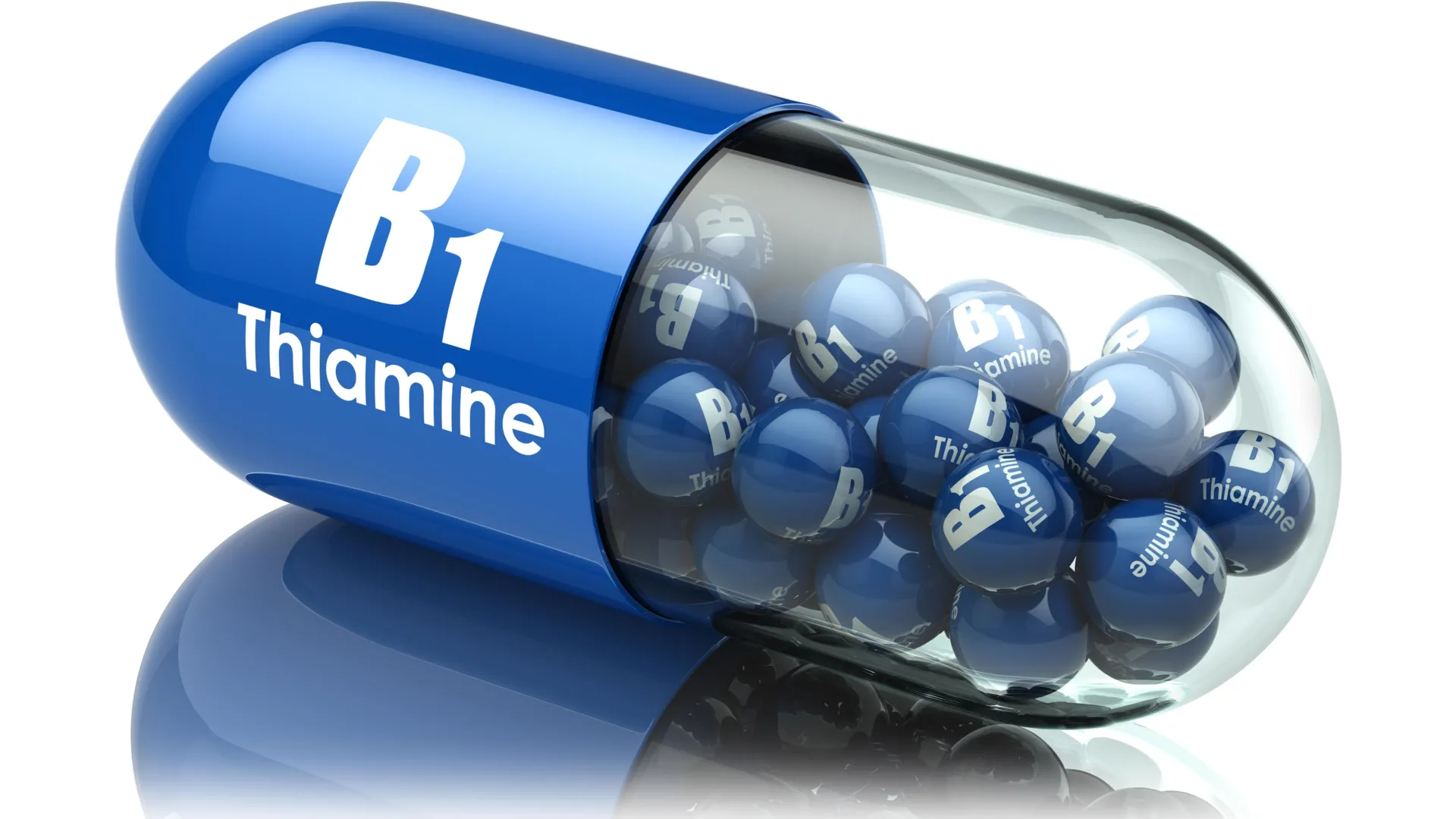
For decades, scientists believed that vitamin B1, also known as thiamine, might briefly form a carbene-like structure inside cells to help drive essential biochemical reactions. However, because of the molecule’s extreme instability, no one had been able to directly observe it in such conditions.
First Stable Carbene Observed in Water
Researchers have now succeeded in creating a carbene that remains stable in water. Not only did they generate it, they also isolated it, sealed it in a tube, and observed it staying intact for months. The findings are detailed in a study published in Science Advances.
“This is the first time anyone has been able to observe a stable carbene in water,” said Vincent Lavallo, a professor of chemistry at UC Riverside and corresponding author of the paper. “People thought this was a crazy idea. But it turns out, Breslow was right.”
A 1958 Hypothesis Finally Confirmed
Lavallo is referring to Ronald Breslow, a Columbia University chemist who proposed in 1958 that vitamin B1 could transform into a carbene to enable key biochemical reactions. While the idea was influential, it remained unproven because carbenes were known to be too unstable, especially in water, to capture or study.
To overcome this challenge, Lavallo’s team developed a protective molecular structure that surrounds the carbene. He describes it as “a suit of armor,” designed to shield the reactive center from water and other nearby molecules. With this protection, the carbene becomes stable enough for detailed analysis using nuclear magnetic resonance spectroscopy and x-ray crystallography, offering clear evidence that such molecules can exist in water.
“We were making these reactive molecules to explore their chemistry, not chasing a historical theory,” said first author Varun Raviprolu, who completed the research as a graduate student at UCR and is now a postdoctoral researcher at UCLA. “But it turns out our work ended up confirming exactly what Breslow proposed all those years ago.”
Toward Greener Chemistry and Drug Production
The implications go beyond solving a scientific mystery. Carbenes are widely used as “ligands,” or supporting components in metal-based catalysts that help drive chemical reactions. These catalysts play a major role in producing pharmaceuticals, fuels, and other materials. However, many of these processes depend on toxic organic solvents.
By stabilizing carbenes in water, the researchers may have opened the door to safer and more environmentally friendly chemical production.
“Water is the ideal solvent — it’s abundant, non-toxic, and environmentally friendly,” Raviprolu said. “If we can get these powerful catalysts to work in water, that’s a big step toward greener chemistry.”
Closer to Mimicking Chemistry in Living Cells
The ability to create and maintain reactive intermediate molecules in water also brings scientists closer to replicating the chemistry that naturally occurs inside living cells, which are mostly composed of water.
“There are other reactive intermediates we’ve never been able to isolate, just like this one,” Lavallo said. “Using protective strategies like ours, we may finally be able to see them, and learn from them.”
A Milestone Years in the Making
For Lavallo, who has spent two decades working with carbenes, the achievement carries both scientific and personal significance.
“Just 30 years ago, people thought these molecules couldn’t even be made,” he said. “Now we can bottle them in water. What Breslow said all those years ago — he was right.”
Raviprolu sees the breakthrough as a broader lesson about persistence in science.
“Something that seems impossible today might be possible tomorrow, if we continue to invest in science,” he said.