


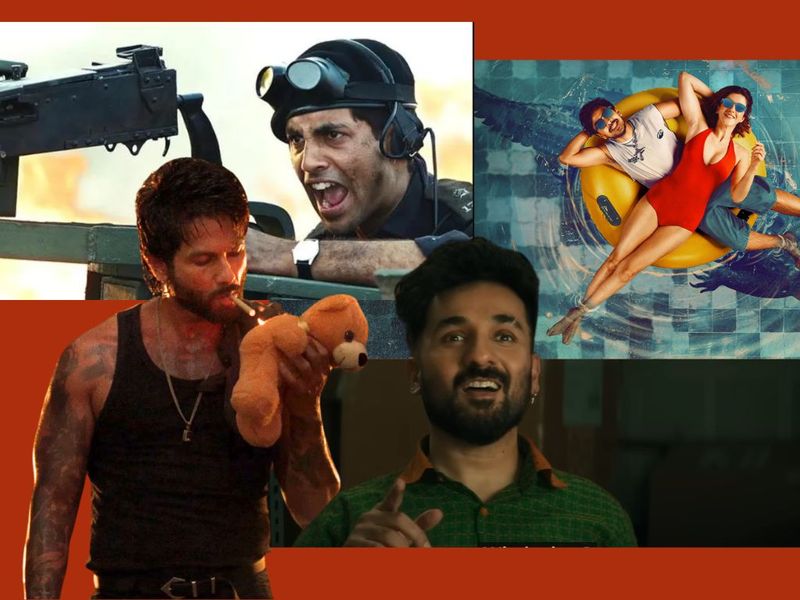
In a dystopian star-led Bollywood, the onus is on audiences to nurture creative ambition.
Few things infuriate me about Hindi film industry parlance more than a film being referred to as “high-concept”. It’s a patronising, pitiable way of calling something showing the slightest hints of ambition — and therefore, short-hand for ‘destined to fail’ or ‘too sophisticated’. And when this happens during a deluge of biopics, which play totally safe, or films with peak detailing committed to fawning over those in power, I get one step closer to channelling my inner-Howard Beale, where I’ll go near a window and scream, “I’m mad as hell and I’m not going to take this anymore!” The Bollywood films are without doubt dystopian at this point, where there is only a sliver of films that can be termed a sure thing. If it stars Shah Rukh Khan, a flagrant socio-political ideology, ultra violence, and references to our greatness as a nation (whether in the 17th century or after 2014).
As the Bollywood landscape imitates a nuclear wasteland in the aftermath of Dhurandhar: The Revenge, nearly all the discourse has concentrated itself around its record-breaking box office, the industry’s jealousy at large (something even pointed out by Zakir Khan at a recent awards show), and the many bad-faith players ‘independently’ opining how the film is not propaganda. So uncertain are things that hardly a couple of Hindi films are slated to release in all of April – especially for an industry infamous for producing at the rate of 3 films per day. The chatter seems fixated on a few names: Geethu Mohandas’s Toxic: A Fairytale for Grownups, starring Yash, on June 4; Nitesh Tiwari’s Ramayana, starring Ranbir Kapoor, Sai Pallavi, estimated to release on Nov 6; Siddharth Anand’s King, starring Shah Rukh Khan, supposed to release on December 24. Along with this, a couple of big-ticket Hollywood films like Dune: Part Three and Avengers: Doomsday, slated for release in December; one could be mistaken that Indian theatrical business is all about franchises, or superstar-led business proposals. However, in the first quarter alone, Bollywood has seen at least four “high-concept” films – daring to treat the audience as equals, but these have been quickly disregarded for not making a dent at the box office.
O’Romeo
In many ways, Vishal Bhardwaj’s latest directorial venture is as mainstream a release can get. Produced by Sajid Nadiadwala (the maker of franchises like Housefull and Baaghi) teaming up with Shahid Kapoor and Triptii Dimri, a 12-song jukebox by a single composer (Bhardwaj himself), and a story adapted on Mumbai’s underworld. Bhardwaj’s film is the most outlandish adaptation of a story by veteran crime reporter, Hussain Zaidi. Even as the overall film doesn’t work – I found myself holding on to bits like ‘Purtagal’ (the Hindi pronunciation of Portugal), which Farida Jalal’s character gets mocked for saying by her grandson, Ustaraa (played by Kapoor). It’s a typical Bhardwaj thing, to derive pleasure from language, pronunciation (like ‘chutzpah’ in Haider).
A still from O Romeo.
One thing about O’Romeo is that a long-time Bhardwaj fan will be able to tell the exact moments when the filmmaker bows to the pressures of commerce. The relish with which the blood spatters on screen, or a strangely contrived scene when Ustaraa overpowers Afshan (Dimri) inside her bedroom, seem to be the consequences of the success of Animal. A climax shoot-out tips its hats to Mr & Mrs Smith, scored with flamenco guitars in the background. However, despite trying his best to make a ‘hit’ film, there are times of quiet when Bhardwaj holds back. Like when Afshan is sitting by the shore, humming a melody that sounds incomplete, cutting Ustaraa to size. But the film successfully becomes a hybrid of Bhardwaj’s artistic integrity and the potboiler aesthetic he’s supposed to ape, during a sequence when Ustaraa rains hellfire on the villain’s den because he misses Afshan too much. The action choreography does a neat job of positioning Kapoor as a Southern superstar, as ‘Jalwa’—a qawwali with echoes of Chadhta Sooraj Dheere Dheere—plays in the background. If there was a sight to behold in Bhardwaj’s film, it’s this one.
Tu Yaa Main
Director Bejoy Nambiar’s career is of a cat with nine lives, whose formally stylish but forgettable films have made me question my life choices. However, when his creature-feature Tu Yaa Main was announced, I was cautiously optimistic. An influencer couple that has to survive in a drained swimming pool of a ghostly resort with a crocodile, Nambiar’s film is surprisingly lithe. Carried by the easy chemistry between Adarsh Gourav – a rapper from Nalasopara on the outskirts of Mumbai – and Shanaya Kapoor, a kind, traumatised girl from Bandra, Nambiar’s film serves up the thrills and the horrors. It’s a testament to Nambiar’s skill that a CGI crocodile feels like a mortal threat, and if you submit to the film, it does a splendid job of playing with audience expectations.

A still from Tu Yaa Main.
Nambiar’s technical competence has never been in question, but it’s in a deft genre film like this that we see him maximising his capabilities. One sequence after another is meticulously plotted, keeping the audience rivetted for 140 mins, not a mean task. Gourav is as dependable as ever, but I was surprised by Kapoor’s sweetness in the film. Sure, she’s playing a version of herself here, but nothing prepared me for her primal screams, and well-timed tears. The bar might be at the bottom of a drained pool for ‘nepo-babies’, but at least Kapoor gets the job done.
Happy Patel: Khatarnak Jasoos
Can something be the sum of a whole lot of nothing – appears to be the mission statement of Vir Das and Kavi Shastri’s Indianised version of Johnny English, which itself is a parody of the James Bond film. It’s fuelled by such a singular oddball sense of humour – you will either love it, or cringe at it during its runtime of two hours. Happy Patel commits so fiercely to its own silliness that the emotional stakes vanish. That’s one of the biggest challenges with spoofs: if nothing matters, then where is the emotional hook for the audience to invest in an outcome.
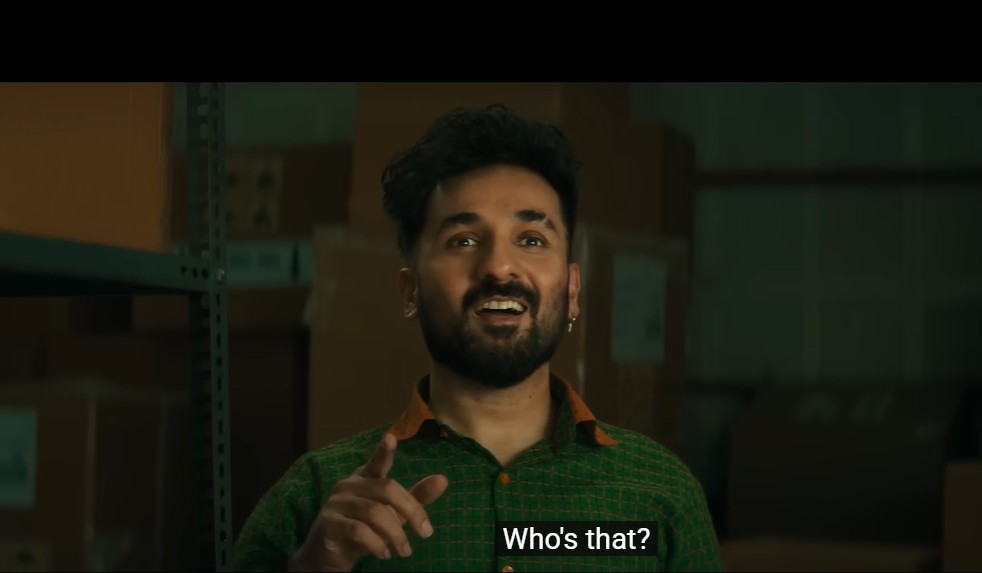
A still from ‘Happy Patel: Khatarnak Jasoos.’
Das and Shastri’s film is certainly no Popstar: Never Stop Never Stopping (2016), which riffs on music documentaries like Justin Bieber’s Never Say Never (2011) which spoofs the music industry. But despite all the in-jokes, commentary and cameos by real-life popstars, the Andy Samberg-starrer stands on its own feet. The problem with Happy Patel, is the plot never quite feels as well thought-out as some of the gags. Like when a shoot-out is paused at a crucial juncture because a domestic help needs to clean the house. Or when Das sings a song called Cous Cous. It’s the nonsensical brand of comedy that Hindi film has forgotten to do, and for that alone I consider Happy Patel a noble failure.
Ikkis
In a time when war is the flavour of a government, and films are feasting on Pakistan bashing, Sriram Raghavan pulled off a veritable heist by convincing a mainstream producer like Dinesh Vijan (of Maddock films) to invest in his tale of pacifism and tolerance. A passé sentiment if the online trolls of the film are to be believed, Raghavan’s film might be far from being the best, but it might be among the most significant films in his filmography. In a climate where tales of martyrdom are blatantly co-opted for a hundred-crore box office, the filmmaker chose to silence all the voices around him, and made something true to his sensibilities.
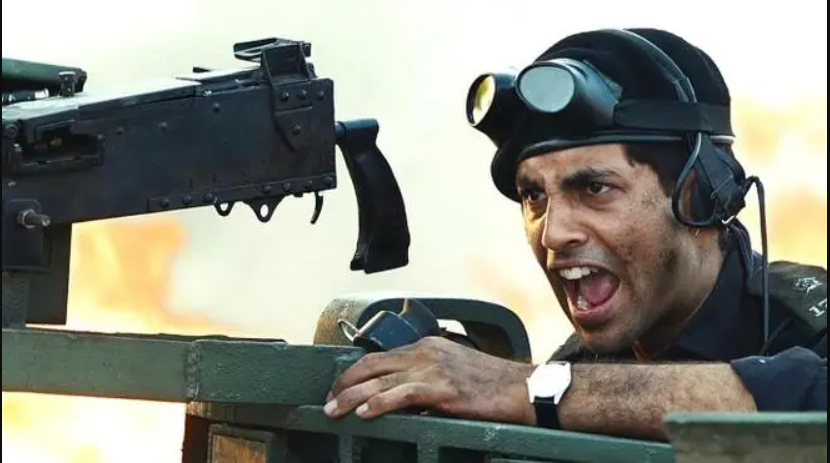
A film still from ‘Ikkis’.
In an era, when soldiers have become a punchline for sick political rhetoric, Raghavan delves into the idealism of the youngest Paramvir Chakra-awardee Arun Khetarpal’s numbered days during the 1971 war with Pakistan. But the more emotionally-rewarding part of the film unfolds in a parallel track in the film where Khetarpal’s father, played by a feeble Dharmendra (it would be his last performance), visits Pakistan, where he’s hosted by a Brigadier of the Pakistani army—played by an achingly sincere and direct Jaideep Ahlawat. How a person with power uses it, says a lot about them. To see Raghavan use his box-office clout (after the surprising run of Andhadhun) to make a film like Ikkis says everything about him. In the end, it was a genre director, whose films tend to shine a light on cynicism as a human condition, schooled his peers on what is to be a truly patriotic Indian.
§
Amidst fans giddy with delight at the box office records being broken, the online shouting matches about which male star is the best in the country, and the noise of a 24-hour PR machinery which quietly offloads the ‘failures’ from the public eye, it might be hard to remember that these films did come out in the last three months. There’s no other less-instructional way to say it, but as propaganda runs amok, and all stars chase the 600-crore box office, which will soon become 1000 crore and then later 2000 crore, the onus rests with audiences. If one wants creative ambition to thrive in an industry that values only engineered successes, they will have to show up for these films.
In a time when mainstream films are tasked with funnelling ideological poison, reckless gore, and warped gender theses (which were frowned upon as recently as in pre-pandemic times) — filmgoers need to incentivise storytellers who are straying off the beaten path. Whether in the form of a silly spy comedy, a war film with an anti-war message, a hybrid action-romance, or a nimbly acted and directed creature feature. Maybe it’s not a question about whether these films have a right to exist—because they already do. But the real question is whether we’re going to watch them before they disappear completely. “Remember when we used to make films…” – a tweet will read.
*O’Romeo and Ikkis are streaming on Amazon Prime Video | Tu Yaa Main and Happy Patel: Khatarnak Jasoos are streaming on Netflix
This article went live on April eleventh, two thousand twenty six, at twenty-six minutes past twelve at noon.
The Wire is now on WhatsApp. Follow our channel for sharp analysis and opinions on the latest developments.