



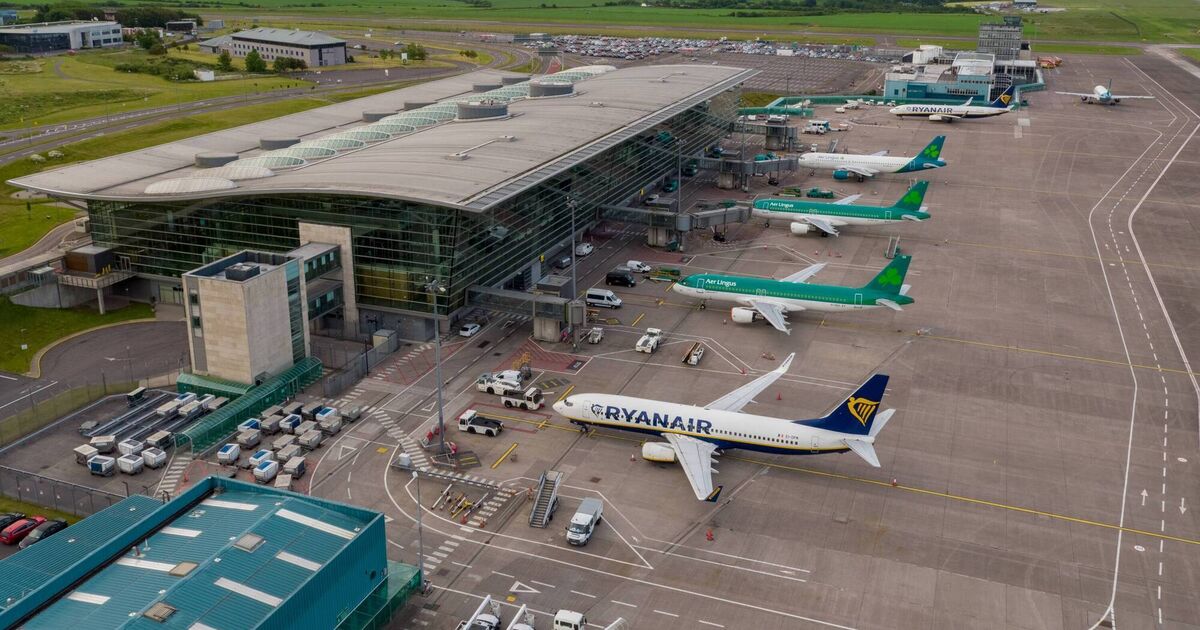
There are fears of potential travel chaos at Irish airports over the busy summer period if incidents like this week’s closure of Cork’s airspace for seven hours are repeated.
The northern runway in Dublin Airport has been closed by air traffic control staff shortages 11 times so far this year, while Shannon and Cork have each been closed once.
The closure of Cork’s airspace on Wednesday was the longest travel disruption so far.
A source told the that one air traffic controller (ATC) was unable to attend work on Wednesday morning in Cork and had given AirNav Ireland, the semi-State company responsible for air-traffic management, reasonable notice to arrange cover.
But tensions with AirNav Ireland over staffing levels and pension entitlements meant the position could not be filled, they said.
A meeting was to take place between AirNav Ireland and the ATC’s union Fórsa on Friday through the Internal Dispute Resolution Board (IDRB).
But one ATC source said they had limited hope for the talks, after previous recommendations made by the IDRB were “ignored” by the company.
They said that if a resolution is not found quickly “we’ll be into a real mess”.
AirNav Ireland told the this week that safety is the company’s number one priority.
It said it could not comment further as the company and Fórsa “are currently engaged in discussion” through their IDRB.
Tom Randles, managing director of Barter’s Travelnet in Cork, and president of the Irish Travel Agents Association (ITAA), said the ITAA is closely monitoring the situation.
“With industrial relations you can never tell how long things will go on for, or what potential impacts they’ll have,” Mr Randles said.
But he is hopeful that all sides will “come together and try to resolve it” quickly because “we need to keep our skies open”.
ATC staff shortages are a problem internationally with ATC strikes in France this week resulting in 180 flight cancellations and multiple delays.
French ATC unions are also threatening an Easter strike over staffing levels.
Lucrative contracts in the Middle East are increasingly drawing Irish ATC staff overseas — sometimes after they have worked for as little as three years in Ireland after graduation.