


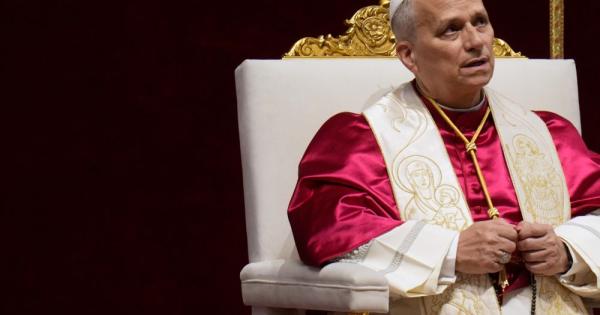
After a Holy Week in which he ramped up his previously restrained antiwar rhetoric, Pope Leo XIV is not taking his foot off the gas, issuing an emphatic appeal for world leaders to abandon the pursuit of power and work for peace.
“Enough of the idolatry of self and money! Enough of the display of power! Enough of war!” the pope said at a prayer vigil for peace in St. Peter’s Basilica April 11. “True strength is shown in serving life.”
Leo announced the uncommon and unprompted prayer vigil in his Easter Sunday address April 5, giving the pontiff another yet occasion to make the case for world peace following his Holy Week celebrations in which the theme of peace featured prominently.
In his speech, delivered after praying the rosary, Leo directly addressed world leaders on behalf of the “millions and billions of men and women, young and old, who today choose to believe in peace, caring for the wounds and repairing the damage left behind by the madness of war.”
“To them we cry out: Stop! It is time for peace! Sit at the table of dialogue and mediation, not at the table where rearmament is planned and deadly actions are decided!” he said.
Though not referencing any specific conflict by name, the pope invoked the legacy of St. John Paul II, recalling his predecessor’s efforts to avert the 2003 U.S.-led invasion of Iraq. Then, the Polish pope made numerous appeals to prevent the war’s outbreak and sent Cardinal Pio Laghi, former Vatican ambassador to the United States, to talk President George W. Bush out of the invasion and deliver the president a letter from the pope.
Laghi later described the Iraq war as “illegal and unjust.” Discussing the Iran war on April 7, Leo told reporters that many people have called the war in Iran “unjust,” a term rooted in Catholic just war teaching for conflicts that fail to meet moral criteria.
The pope’s speech at the prayer vigil also came after a January meeting was revealed to have taken place between Cardinal Christophe Pierre, the Vatican’s most recent ambassador to the United States, and Pentagon officials. The Free Press, which initially reported the meeting, described the meeting as an effort by Pentagon officials to insist that the United States can exert its military might however it sees fit and that the Catholic Church “had better take its side.”
The Department of Defense and U.S. Ambassador to the Holy See Brian Burch both disputed that characterization of the meeting, with Burch quoting Pierre to describe the reporting around the meeting as “fabrications.”
At the pope’s prayer service, attended by 36 cardinals and patriarchs and 50 bishops, the pope said that prayer is not “an anesthetic to numb the pain provoked by so much injustice,” but rather in prayer human thoughts, words and deeds “break the demonic cycle of evil and are placed at the service of the Kingdom of God.”
“A Kingdom in which there is no sword, no drone, no vengeance, no trivialization of evil, no unjust profit, but only dignity, understanding and forgiveness,” the pope said.
Prayer, he continued, is “a bulwark against that delusion of omnipotence that surrounds us and is becoming increasingly unpredictable and aggressive,” particularly at a time when “the balance within the human family has been severely destabilized.”
In his remarks Leo echoed his Palm Sunday homily in which he stated that Jesus “does not listen to the prayers of those who wage war,” presenting a striking contrast to the religious rhetoric of U.S. Secretary of Defense Pete Hegseth who has repeatedly invoked Jesus’ name in public prayers for the United States’ victory in the war in Iran.
“Even the holy name of God, the God of life, is being dragged into discourses of death,” Leo said at the vigil. “Those who pray are aware of their own limitations; they do not kill or threaten with death.”
“Instead, death enslaves those who have turned their backs on the living God, turning themselves and their own power into a mute, blind and deaf idol, to which they sacrifice every value, demanding that the whole world bend its knee,” he said.
Beyond the basilica, pilgrims also gathered outside in the breezy Roman afternoon to join in the vigil from St. Peter’s Square; Leo stopped in the square to greet them and thank them for their participation.
“We want to say to the whole world that it is possible to build peace, a new peace,” the pope told them before entering the basilica. “That it is possible to live together, all people, of all religions, of all races, that we want to be disciples of Jesus Christ united as brothers and sisters, all united in a world of peace.”