


CINCINNATI (WKRC) – A long-discussed plan to bring passenger rail service back to Ohio’s biggest cities is gaining momentum as supporters push for state funding and public buy-in.
The Ohio Rail Summit is happening in Columbus, with a major focus on the 3C&D project, a proposed passenger rail route connecting Cleveland, Columbus, Dayton, and Cincinnati. All Aboard Ohio, one of the project’s biggest advocates, says the effort is still years away but is reaching an important milestone.
A long-discussed plan to bring passenger rail service back to Ohio’s biggest cities is gaining momentum as supporters push for state funding and public buy-in. (WKRC, Provided)
The 3C&D project is wrapping up “Phase 2,” an early planning stage aimed at putting people back on trains connecting Ohio’s largest cities. Nathan Halm, All Aboard Ohio’s chapter engagement coordinator, said the goal is to restore rail as a modern connection across the state.
“The vision of this project would be to turn that back into a source of connection, not just for the history or for what we’ve had in the past but what can be here and now and well into the future,” said Halm.
The plan is part of a United States Department of Transportation program to identify and develop passenger railways. Some of the things Phase 2 examines are how many stations are in the state, how often trains would run through the cities, and how much rail would need to be upgraded and maintained for the routes.
Federal dollars funded 80% of Phase 2, while the state funded 20%. With Phase 2 nearing completion, attention is shifting to next year’s Ohio budget, since additional state funds are needed to move forward.
“It is our goal to show the benefits of rail and all transportation options, show why this would benefit so many Ohioans and so many folks who want to visit or travel through the state, and make the case to the state of Ohio that this is a project worthwhile and something we can’t afford to pass up on,” said Halm.
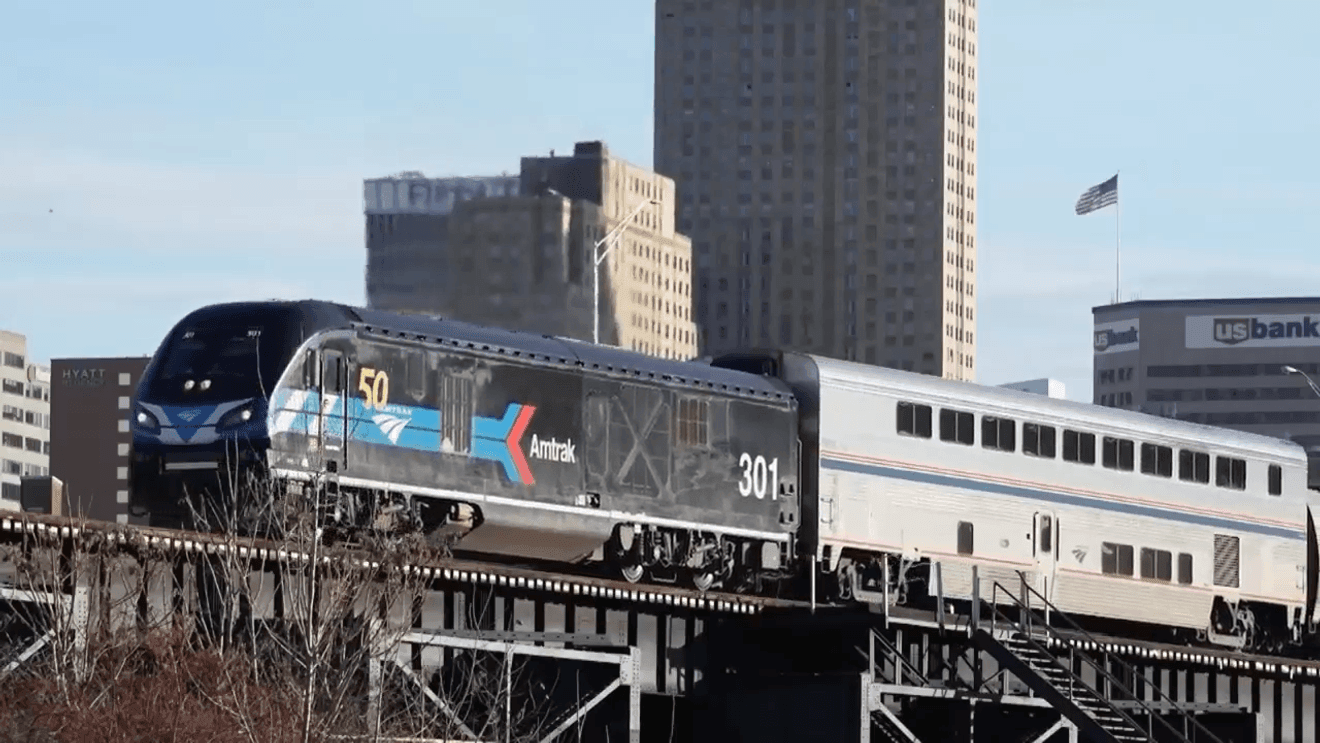
Supporters point to how dramatically passenger rail service has declined in some cities. Cincinnati once had more than 100 passenger trains coming through Union Terminal, but service is far more limited today. Amtrak spokesman Marc Magliari highlighted the contrast between the station’s prominence and how infrequently it is used now.
“There’s a glorious building in Cincinnati, and we only use it six times a week, and again, like Cleveland, you have to be sleepless to see our train, ‘The Cardinal,’ go through there,” said Magliari.
A long-discussed plan to bring passenger rail service back to Ohio’s biggest cities is gaining momentum as supporters push for state funding and public buy-in. (Provided)
Halm said the biggest concern is financial. The operating cost is expected to be about $13 million per year, though he noted that millions are spent on roadway projects. Advocates also argue rail offers practical advantages for travelers.
“There’s a better choice. There’s a productive choice. There’s a choice that lets you work or sleep or read or converse without worrying about some 18-wheeler on either side of you. Somebody behind you putting on makeup and shaving and all of them yacking on the phone,” said Magliari.
Halm said passenger rail can also expand access to jobs, education, and health care and that even people who don’t ride would benefit from less traffic and a better option for the environment.
A final decision about the project is expected to happen in 2029, with travel starting in the early 2030s.