



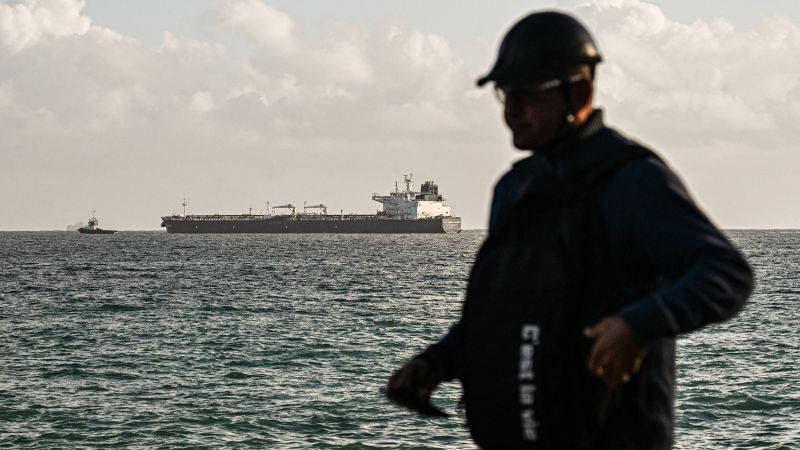
Ukraine attacked two Russian refineries and other key oil targets overnight into Saturday, officials said, just hours after the United States granted Moscow another waiver on the sale of its sanctioned oil.
Kyiv’s drone forces commander Robert “Madyar” Brovdi said on Telegram that Ukraine had struck the Novokuybyshevsk and Syzran oil refineries in Russia’s Samara region, the Tikhoretsk oil terminal in the Krasnodar region, and the Baltic Sea port of Vysotsk, as well as an oil depot in Sevastopol, in occupied Crimea.
The Russian Ministry of Defense did not acknowledge the strikes, announcing only that the country’s air defenses intercepted 258 Ukrainian drones overnight.
However, Russian regional authorities reported the attacks, or their consequences. Vyacheslav Fedorishchev, the governor of the Samara region, said “strikes have been recorded” against what he called “industrial facilities” and that emergency services were on the scene.
The Krasnodar region Emergency Response Headquarters said a fire had broken out at the oil depot in Tikhoretsk, and that “224 personnel and 56 pieces of equipment” were involved in trying to bring it under control.
Aleksandr Drozdenko, the governor of the Leningrad region where the Vysotsk port is located, said on Saturday morning that a drone attack had caused a fire at the port, which he said had since been extinguished.
Brovdi made no secret of the fact that the strikes were in response to the US renewed waiver, which allows the delivery and sale of sanctioned seaborne Russian crude through May 16, accusing the US of “cynicism” and warning the move comes with a price tag of “Ukrainian lives.”
The US Treasury issued the waiver on Friday, as the Trump administration desperately tries to ease the pressure on global oil prices caused by the US and Israel’s war on Iran.
“As negotiations accelerate, Treasury wants to ensure oil is available to those who need it,” a spokesperson for the US Treasury Department said.
The decision marked the second time the administration had taken the controversial step of allowing Russia to sell sanctioned crude and petroleum products stranded at sea. The previous waiver expired on April 11 and Treasury Secretary Scott Bessent told reporters as recently as Wednesday that the administration would not renew it. Yet on Friday, it did just that.
Western powers and other allies imposed sanctions on Russian energy exports because of the key role they play in financing Moscow’s war on Ukraine.
Russian President Vladimir Putin’s special envoy Kirill Dmitriev said on Saturday that the extension of the waiver would affect 100 million barrels of Russian oil, on top of the 100 million barrels that were covered by the previous license.
Higher oil prices and the waivers have already given a major boost to Russia’s struggling budget – the International Energy Agency said earlier this week that Russia’s energy revenues had nearly doubled in March, to $19 billion, from $9.75 billion in February.