


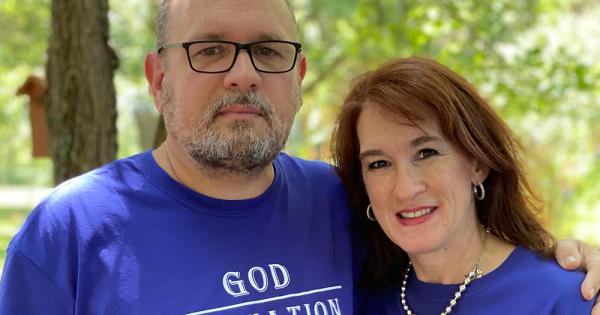
Scott Peyton has been waiting for a decision from the Vatican.
The Catholic deacon from Louisiana, who in May 2024 appealed his excommunication after leaving the church in the aftermath of his son’s abuse case, has spent about two years waiting for a ruling from Rome.
The appeal remains unresolved, leaving his canonical status uncertain and extending a case that has drawn attention to the intersection of church law, pastoral practice and the handling of abuse-related disputes.
According to The Guardian, in May 2024 Peyton appealed formally against his excommunication to the Vatican’s Dicastery for the Doctrine of the Faith.
The outcome could determine whether the excommunication was applied in accordance with canon law and how similar cases may be approached in the future.
Peyton, who was raised Methodist, entered the Catholic Church as an adult. His conversion, formalized in 2001, was followed by what he described as a deliberate effort by he and his wife Letitia to align their lives with Catholic faith and teaching. He and Letitia expanded their family to six children and became deeply embedded in Catholic parish life. As he stated in the personal narrative of his recourse to the Vatican, which was obtained by NCR with his permission, he even reversed his vasectomy operation to fully align with Catholic teaching on family life and sexuality.
Peyton wrote that in 2007, he discerned a vocation to the permanent diaconate. He was ordained in 2012 and assigned to St. Peter Catholic Church in Morrow, a small rural parish where the Peyton family had been parishioners since 2006. The community was tight-knit, and Peyton’s family became closely connected to its then-pastor, Fr. Michael Guidry. Peyton wrote that the diocese assigned him to St. Peter at his request and at the request of Guidry.
Guidry was a frequent presence in the family’s life, according to Peyton. Guidry invited the family to meals and praised their service. Peyton said his sons were very often at Guidry’s house to help him out with daily work, and when they were there he would let them drink alcohol, unbeknownst to their parents.
“Because we had great regard for the office of the priesthood and had great trust in Father Guidry personally, it never occurred to any of us that he might be grooming our family for the purpose of committing child molestation,” Peyton wrote in his recourse.
That trust was later broken. In May 2018, as later reported by OSV News, Peyton’s son Oliver disclosed that, three years earlier, Guidry had plied him with alcohol and molested him. The revelation marked the beginning of a sequence of events that would alter the Peyton family’s relationship with the church.
According to Peyton’s recourse to the Vatican, Peyton and Oliver reported the incident to the sheriff’s office May 21, the day after Oliver told his parents. Peyton wrote that the sheriff’s office interviewed Guidry four days later on May 25.
According to Peyton, Guidry initially admitted to inappropriate conduct but was not arrested. Peyton wrote that on May 29 he reported the allegation to diocesan authorities. In his outline of events in his recourse, Peyton said that “the Diocese of Lafayette’s officials initially appeared compassionate.”
That perception shifted quickly.
According to Peyton, Bishop J. Douglas Deshotel of Lafayette publicly announced the allegation during parish Masses on June 2, 2018, the day of the wedding of Peyton’s older son, providing details that made the family identifiable within their small community. Peyton wrote that the diocese also issued a statement announcing the allegation the same day. As OSV reported, Oliver Peyton’s name was disclosed in a 2018 lawsuit and appeared in media reports.
“I cannot emphasize strongly enough how distressing the diocese’s timing of the announcement, and the bishop’s breaching the victim’s anonymity, was for my family,” Peyton wrote in his appeal to the Vatican.
He added that the disclosure forced the family into public view before they had informed relatives and exposed them to speculation and judgment.
The bishop held a press conference about the case on June 4. “Bishop Deshotel said that if the accusation were found not credible, Father Guidry would be returned to ministry,” Peyton wrote.
Peyton’s canon lawyer provided NCR with a link to video posted by NewsTalk 96.5 KPEL, that contains audio from the June 4, 2018, press conference. During the press conference, Deshotel said, “First we let the civil authorities determine through their investigation exactly what happened, and if it was criminal or not. If it was not, then Father can be restored and his good name restored also.”
Peyton contended that this suggested uncertainty about the credibility of the allegation, despite Guidry’s admissions to police on May 25.
“By floating the possibility that the accusation might not be credible when he knew well that it was, the bishop gave Father Guidry an opening to claim to his supporters that the bishop knew that he was innocent,” Peyton wrote in his account of events contained in the Vatican recourse.
During the press conference, Deshotel, answering questions from reporters about who reported the abuse to the diocese and where the abuse took place, said that the victim’s parents were now attending church in Ville Platte, Louisiana. (In 2017 Peyton was transferred to another parish, Sacred Heart in Ville Platte.)
Deshotel also said during the press conference that the diocese provides crisis counseling for anyone suffering from abuse. Peyton wrote that shortly after the press conference, four members of the family began to receive counseling that was paid for by the diocese. He said the diocese later warned them that it would stop paying for counseling if they filed suit.
In his account, Peyton also said:
On June 13, 2018, Father Guidry was interviewed by police with his criminal attorney present. This time, he confessed to the molestation in a manner that was criminally actionable. The following day, June 14, he turned himself in to the police, was arrested and charged, and was released on bond.
Guidry was ultimately sentenced to prison. Yet Peyton said in his account that the parish response from St. Peter favored the priest.
He said in his recourse that parishioners assisted Guidry in moving from the rectory in July 2018, and held a luncheon for him after his admission. Others, he said, spread rumors challenging his son’s account. He felt his family’s standing in the community deteriorated and said he experienced isolation, strained relationships and a lack of support from clergy.
“Out of the more than one hundred deacons in the Diocese of Lafayette, only about six of them continued to offer me the hand of brotherhood,” he wrote.
Peyton’s Vatican recourse account aligns with his March 27 interview with the National Catholic Reporter, where he described the broader impact of what happened to his family’s faith.
Peyton continued to serve as a deacon for a time, but tensions with diocesan leadership intensified. According to his recourse, in August 2018, the family filed a civil lawsuit against Guidry and the Diocese of Lafayette. Peyton wrote that, immediately after filing, he was warned by clergy that he might be removed from the clerical state.
“At that rate, I would be removed from the clerical state before the priest who molested my son,” he wrote.
The Diocese of Lafayette did not respond to a request for comment from NCR, and has not confirmed whether Guidry has been laicized.
In 2021, the civil case was settled. The diocese announced it found the allegations credible and that Guidry had been permanently removed from ministry. The statement included a brief apology to Oliver and his family referring to the actions of Guidry but, according to Peyton, did not address other aspects of the family’s experience.
Following the settlement, Peyton wrote that the diocese immediately stopped providing counseling. Peyton and his family established a nonprofit organization to support abuse victims and advocate for reform. At the same time, their relationship with the church continued to deteriorate. In his interview with NCR, Peyton said attending Mass after the abuse became public as a painful experience.
“We were simply going to check the boxes. Everything in there reminded us of why we were in the situation,” he said.
Eventually, the family began attending an Anglican congregation, seeking distance from the environment associated with the trauma.
His departure from the Catholic Church was formalized in a December 2023 letter to Deshotel, resigning from active ministry. Peyton said that the tone of the bishop’s initial response was understanding, which was verified in the bishop’s email, included in the recourse.
Months later, in March 2024, however, Peyton received a decree of excommunication from his bishop.
“It was kind of one of these things that go like, ‘You can’t quit, we fire you,’ ” he said.
The canonical basis for the excommunication — which is considered one of the gravest canonic acts a Catholic bishop could impose — was contested. Dawn Eden Goldstein, the canon lawyer who represents Peyton pro bono, said to NCR that the bishop’s decision to impose a formal penalty was unwarranted and pastorally harmful.
“I was appalled by what I saw as a total pastoral failure on the part of the diocese,” she said.
Goldstein emphasized that Peyton had not publicly presented himself as continuing in Catholic ministry after his resignation and that his actions did not create the kind of scandal that would require an imposed excommunication.
“It was not at all clear to me that the bishop had tried in any way to seek other, more pastoral, remedies,” she said.
Her May 2024 appeal to the Vatican seeks to overturn the decree. The case has remained unresolved for nearly two years.
According to canon lawyer Nicholas Cafardi, former dean of the Thomas R. Kline School of Law of Duquesne University, the central issue in this case is not the bishop’s action but the canonical concept of schism. In his view, schism constitutes a rupture of communion with the Catholic Church, specifically a rejection of the authority of the pope. Under canon law, he said, such a rupture carries an automatic penalty.
“He excommunicated himself by going into schism,” Cafardi said, referring to the principle of latae sententiae, commonly known as immediate and automatic excommunication, which is incurred by the act in itself rather than imposed by a bishop. A schism usually occurs when an ordained church member officially separates himself from the church authority and hierarchy over doctrinal and organizational disagreements.
Cafardi emphasized that excommunication in this context is not intended as a punitive measure in a conventional sense, but as what canon law describes as a “medicinal” penalty. The effect of the penalty is that the individual may no longer exercise ecclesiastical ministry or function in a clerical role and is no longer considered to be in full communion with the church. At the same time, the purpose of the penalty is corrective, aimed at encouraging reconciliation.
In practical terms, Cafardi said, reconciliation would require the individual to renounce the schism and formally return to the church, typically through a profession of faith. Once that step is taken, the penalty can be lifted by ecclesiastical authority. Until then, he said, the situation reflects the consequences established by canon law for a break in communion.
Goldstein focused less on the act of departure and more on the circumstances that led to it. In a May 14 letter to Vatican authorities included in Peyton’s recourse, she said that canon law must take into account whether a person intended to break with the church or acted under pressure.
Drawing an analogy from church marriage law, she suggested that just as a spouse may be justified in leaving a harmful situation, Peyton’s departure should be evaluated in light of what she described as “the Diocese’s continued pastoral failures and outright antagonism” that “placed his children in grave danger of losing their Christian faith.”
Goldstein wrote that the excommunication against Peyton was not a “medicinal” penalty: “Rather, it has the appearance of a punishment for his successfully suing the Diocese of Lafayette, and it is causing grave harm to his family.”
In her interview with NCR, Goldstein also questioned the process that led to the excommunication, emphasizing what she described as a lack of pastoral engagement. “The bishop had a responsibility to speak and meet with him and dialogue with him,” she said, adding that she saw no indication that such outreach occurred after Peyton submitted his resignation.
While acknowledging that Peyton could have been aware of the possibility of automatic excommunication because of his theological education, she argued that his conduct did not rise to the level of public defiance or scandal that would justify a formal, imposed excommunication. From her perspective, the case raises broader questions about how canon law is applied when personal circumstances, including trauma and failures to provide community support and pastoral care, shape a cleric’s decision to leave.
“I believe that Pope Francis and Pope Leo now would agree that regardless of where the law is on this case, Deacon Peyton has a right to closure. He has a right to resolution,” she said. “And people everywhere who have stepped away from the Catholic Church out of the pain and anger caused by the abuse crisis have a right to know: Does the church consider them excommunicated because of their pain, their anger having led them to forego Catholic worship?”
Talking to NCR, Peyton described his brief attendance at an Anglican church as a response to what he and his family experienced in Catholic settings after the abuse became public. “We weren’t being strengthened by going to Mass,” he said. “So we tried to choose some place that would offer some help and feed us spiritually.”
He also rejected the suggestion that he intended to incur excommunication. “That was never the case,” Peyton said, pointing to his written resignation to the bishop, which he said was meant to clarify that he was stepping away without seeking to provoke a canonical penalty. He indeed noted that the bishop’s initial response was “pastoral” and did not warn of excommunication, which came only about three months later in March 2024. During that period, Peyton and his family had begun speaking publicly about abuse and advocating for legislative changes in Louisiana.
“When Guidry gets out of prison in a year or so, he can honestly say he is a Catholic priest, whereas my son can see that his father cannot say ‘I’m a Catholic deacon,’ or that I’m even welcome in the church, because we just cannot torture ourselves.”
“Two years of dragging this on, I want to know where Rome stands,” he said. “I want Rome to answer.”