




Candy for Valentine’s Day?
Maybe not.
The administration of Gov. Ron DeSantis announced Monday that it had tested 46 types of candy and that more than 60% of them (28) contained elevated arsenic levels that, consumed over time, could put children at an increased risk of cancer.
This is the second announcement this month the DeSantis administration has made about its testing efforts and the results being posted on the Healthy Florida First website. The governor and First Lady Casey DeSantis announced Florida had tested 24 infant formulas and found that 16 contained heavy metals or chemicals.
Those efforts followed Health and Human Services Secretary Robert F. Kennedy Jr.’s, directive to the federal Food and Drug Administration to look at ingredients used in infant formula. Before he joined the administration of President Donald Trump, Kennedy promised to look at whether there were toxic metals in infant formula.
Although the DeSantis administration purports that 28 candies showed high levels of arsenic, the first lady stressed that not all test results were bad. For instance, she said none of the candy the state tested showed elevated levels of lead, mercury, cadmium, or “other problematic carcinogens.”
Some of the candies with arsenic included: (The full list from the state listed at the bottom of this story)
- SweeTarts Original
- Trolli Sour Brite Crawlers
- Jolly Rancher Hard Candy Sour Apple and Strawberry
- Twizzlers
- Sour Patch Kids
- Tootsie Roll and Tootsie Fruit Chew
She also highlighted the candy that didn’t contain higher levels of arsenic, including Hershey Milk Chocolate Bar, Reese’s Peanut Butter Cups, Whoppers, M&M’s, Twix, and Milky Way.
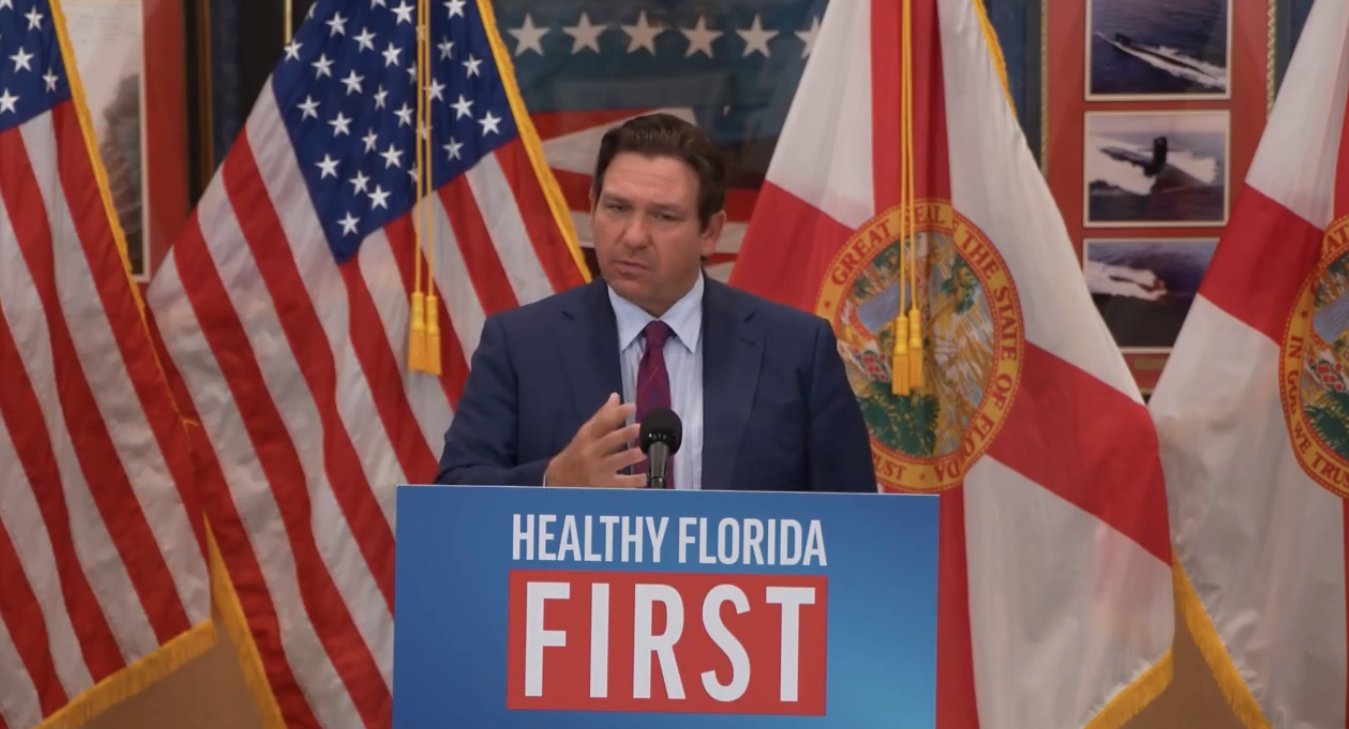
“Our goal really has been, as the governor has articulated, to support the federal [Make America Healthy Again] movement by working as force multipliers, to be able to drive accountability through testing,” she said Monday during a press conference at The Villages.
“The [Food and Drug Administration] primarily works as a reactionary force, stepping in after problems are identified, and while that role is very important, Florida is really working to change the system by supporting the FDA to not only continue to get in front of these problems by testing, but also by leading a coalition of states to trust but verify the integrity of our food supply.”
YOU MAKE OUR WORK POSSIBLE.
Florida tested candy from 10 different manufacturers. The Florida Phoenix reached out to six of the companies for comment. Candy company Ferrara manufactures eight candies that are purported to have elevated levels of arsenic. It referred comment to the National Confectioners Association, a trade group that promotes nectarous delights.
NCA Senior Vice President of Public Affairs and Communications Christopher Gindlesperger in a prepared statement blasted the Florida announcement calling it “misguided.”
“It will result in confusion among consumers, regulators, and lawmakers. Alternatively, the FDA’s Closer to Zero Initiative was created to reduce dietary exposure to naturally occurring elements (such as arsenic), and is currently working on arsenic action levels for foods consumed by children.
“Florida has chosen sound bites over science – ignoring this science-based program in favor of publishing unsourced materials that amount to little more than a scare tactic. Food safety and product quality remain our highest priorities, and we remain dedicated to being transparent and socially responsible – and we follow the science,” Gindlesperger said.
Florida tests 24 formulas; purport that 16 have at least one heavy metal
“Plenty of dirt”
Florida Surgeon General Joseph Ladapo joined the governor and first lady at the press conference and thanked the pair for providing him with the support to conduct the tests. He also thanked them for having the “vision” to know the testing should be conducted.
“There’s a lot more to go. There’s plenty of dirt, unfortunately, to uncover,” Ladapo said.
Arsenic is a naturally occurring element. It is a confirmed carcinogen and long-term exposure can increase the risk of skin, bladder, lung, and liver cancer. Kidney and prostate cancers may also be tied to high levels of arsenic.
Arsenic is “everywhere” and “in all foods,” Ladapo said, but added that it tends to be in low concentrations.
“I was really shocked by the levels of arsenic in common candies, the levels of arsenic in common candies are much higher, two, three, four times higher than even foods that we know have high levels of arsenic in general, like rice,” Ladapo said. “And compared to foods, just typical foods that people eat, the levels of arsenic were 20, 30, 40, times higher. It’s just unbelievable.”
While elevated arsenic levels in a single piece of candy may not be harmful, the first lady stressed that it becomes harmful when taken into context of how candy is marketed and consumed.
For example, she said, Nerds Grape and Nerds Strawberry candy both showed elevated arsenic levels. The DOH determined that a child could safely eat roughly 96 pieces of Nerds candy in a year with no worries.
“But 96 Nerds, as we well know, is not typically what comes in a box. When you think about it, a typical smaller box can contain about 2,000. If you get one of those big boxes that you get, like a movie theater, that’s about 8,000 Nerds,” she said. “Asking families to stop at 96 pieces over a year is not realistic when it’s viewed against how the product is packaged, marketed, and then consumed.”
The two-page report released by the state:
This story has been updated to include comment from the National Confectioners Association.
Independent Journalism for All
As a nonprofit newsroom, our articles are free for everyone to access. Readers like you make that possible. Can you help sustain our watchdog reporting today?