



WARNING: THE FOLLOWING CONTAINS SPOILERS FOR ROOSTER FIGHTER.
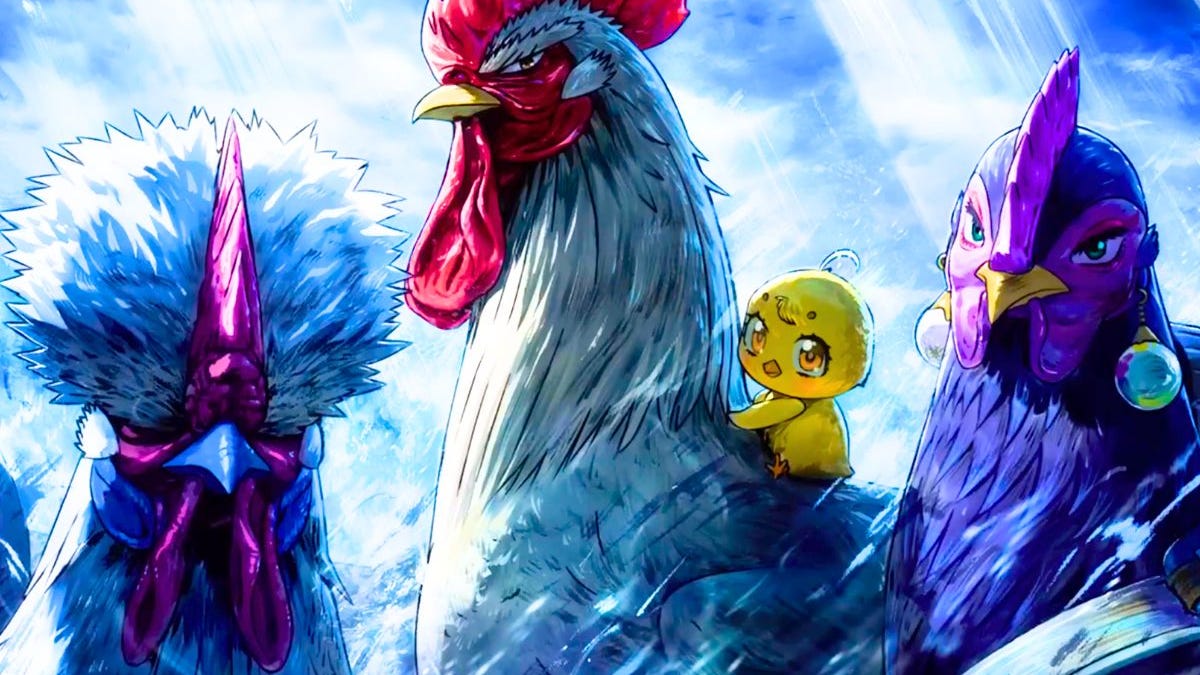
Rooster Fighter is the hit manga series from Shū Sakuratani that parodies shōnen manga and many of its associated tropes. Now that the anime adaptation has debuted on [Adult Swim] and is now streaming on Disney+ and Hulu, fans of the manga can now experience Sakuratani’s ideas in action and in all their parodical glory.
The Season 1 premiere does an excellent job at introducing Rooster Fighter’s core concepts in just the first few seconds of Episode 1, “A Rooster Among Cranes”. It opens with a kaiju-sized monster rampaging through a Japanese city, seemingly looking for her son. Just before she can consume a little boy she has captured, Keiji the rooster arrives at the scene to save the day, followed by its mission statement about a rooster’s quest to save humanity.
Much of the Season 1 premiere spends time acquainting audience members with its rooster protagonist and his day-to-day life. Keiji is clearly a rooster who enjoys mating with hens and likes to wander from place to place, rationalising that he’s a born wanderer. Rooster Fighter’s Season 1 premiere also showcases that although Keiji (understandably) despises kids and refers to them as “brats” or “gaki” (餓鬼) in Japanese, he also goes out of his way to protect them from harm and also pays his debts to humans who treat him kindly. He also sticks around to help clean up body parts from his fights against kaiju-sized monsters.
A big part of what helps sell Keiji’s character is his voice actors, Kenta Miyake and Patrick Seitz. As the original Japanese voice actor, Miyake presents Keiji with a deep, rough-sounding voice to convey that he is a rooster with a mission. He also conveys that Keiji likes to put up a tough front to distance himself from as many people (and birds) as possible, namely through his use of casual language.
Miyake’s vocal performance also conveys that Keiji is a rooster with a code of honour, and when something ruffles his feathers, he doesn’t just stand up and fight – he vocalises his dissent. Miyake also conveys this with his use of language, namely in Keiji’s tendency to refer to his enemies as “temee” (手前), which is a very derogatory way of saying “you” in Japan. In English, this would be the equivalent of saying “you cunt” or any expletive to accompany the otherwise neutral “you”.
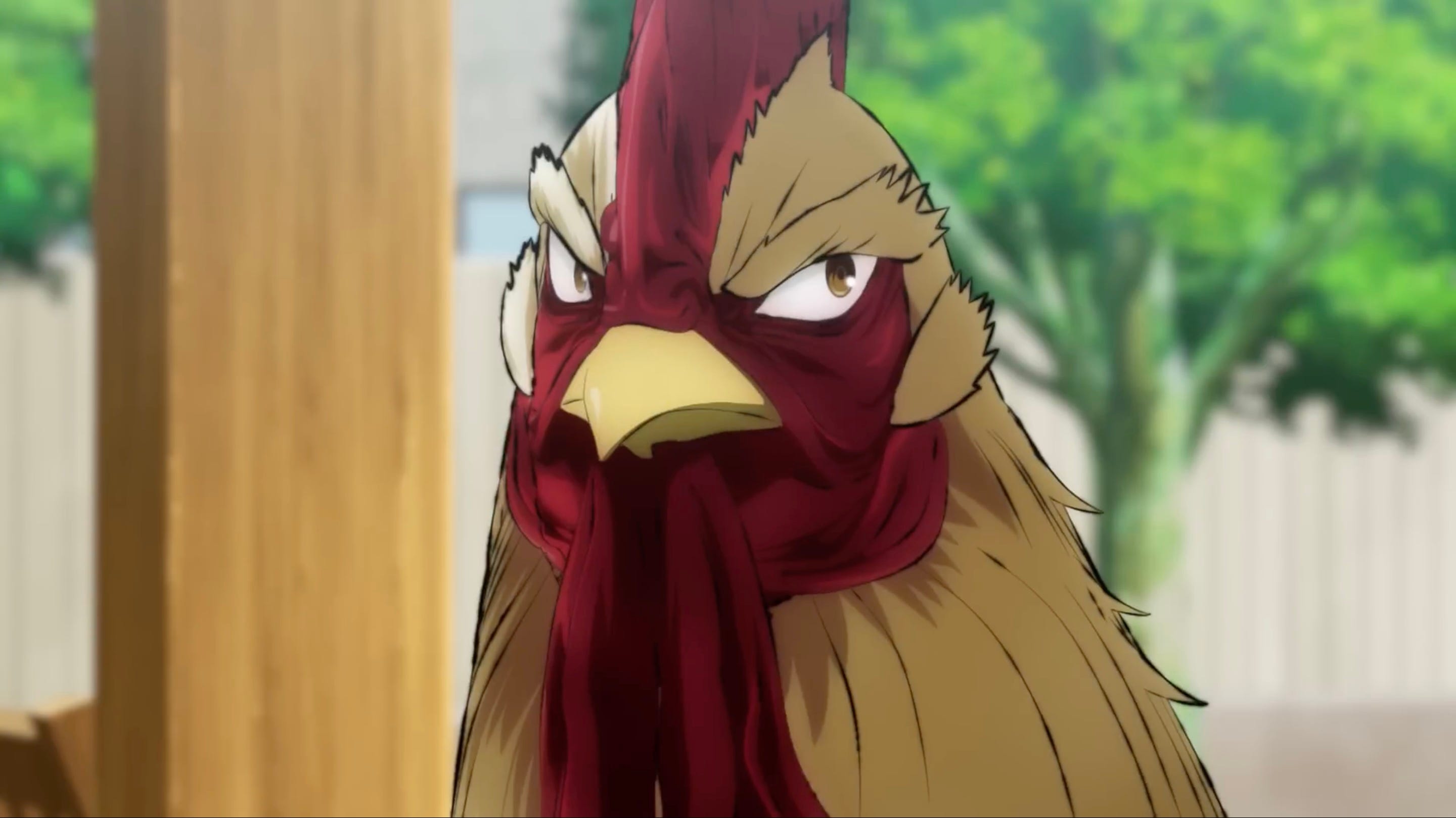
Miyake also succeeds in humorously screaming Keiji’s famous attack, “Kokkekoko”, which is simply the Japanese version of “cock-a-doodle-doo”. The animation even augments the innate humour of this attack by panning the camera around Keiji as he prepares the attack in a similar manner to Goku’s “kamehameha” attack in the Dragonball franchise.
In the English dub, Seitz is also perfectly cast as Keiji. Aside from sounding nearly identical to Miyake in his vocal performance, Seitz also brings something of his own to the role. Though Seitz’s version of Keiji isn’t nearly as rude in his use of language due to English lacking many of the nuances of the Japanese language, Seitz still succeeds at capturing the same core beats of his Japanese counterpart in his own way.
For instance, Seitz still captures Keiji’s sense of honour, his dislike of children, and his casual attitude as a wandering rooster. He also captures Keiji’s gratitude toward people who provide him with any kind of assistance. Though Seitz’s Keiji doesn’t use nearly as much colourful language as his Japanese counterpart, he still manages to capture his contempt for his opponents with English equivalents of what he actually says in Japanese. He also performs his lines with the same fervour as Miyake, including Keiji’s iconic “Kokkekoko” in Japanese.
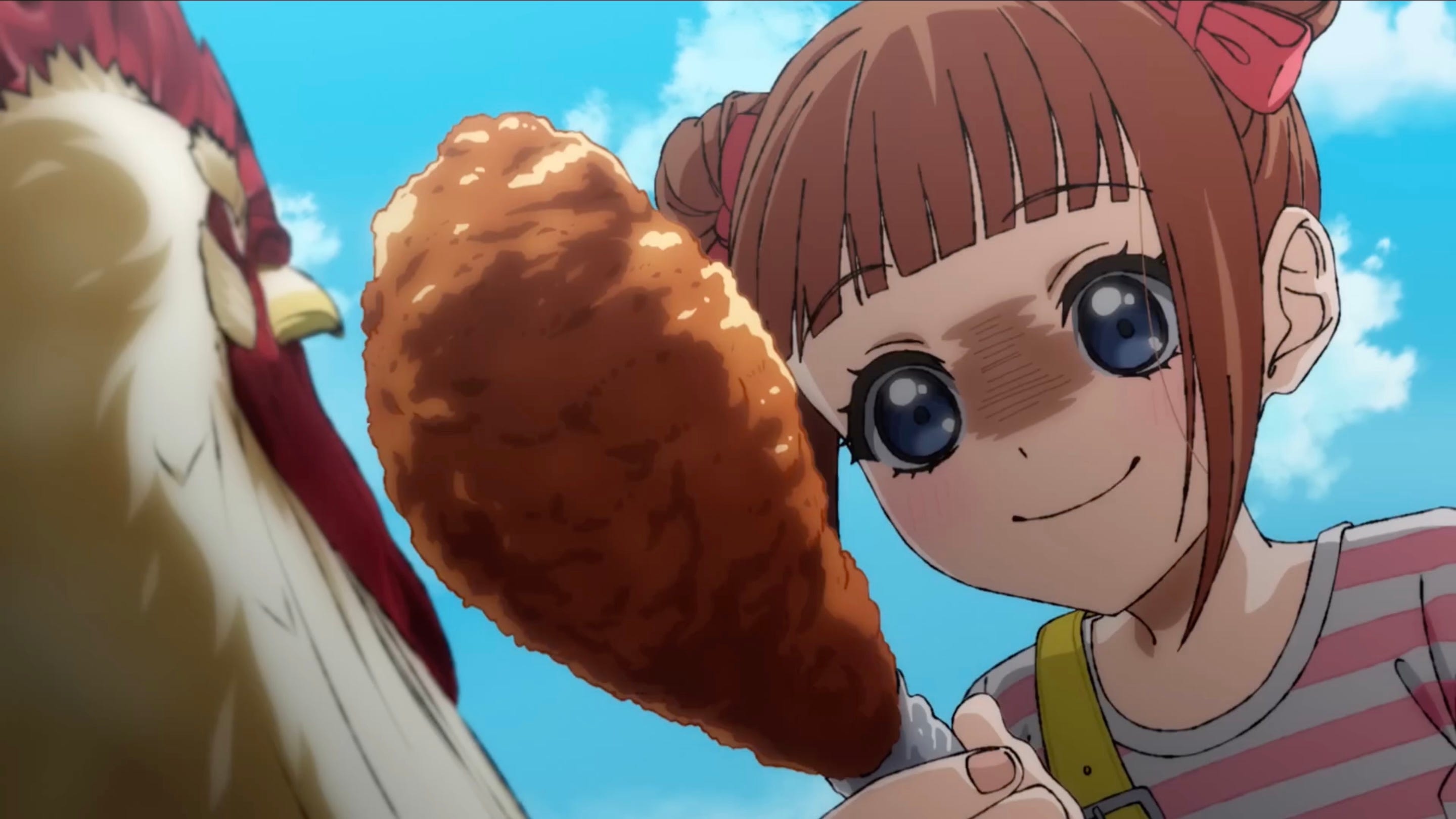
Animation-wise, Rooster Fighter employs a 3D style of animation but still captures the 2D aesthetics of traditional anime. It also employs a bright colour palette to capture the more mundane aspects of Keiji’s adventures and his more outlandish battles against kaiju-sized monsters. The battles are also accompanied by an Avengers-style music score for more dramatic effect, even for the flashback sequences.
The Rooster Fighter anime also closely follows Sakuratani’s manga, right down to perfectly capturing his art style, the story’s tone, and parodical elements. It also does a few things differently from the manga, like adding a few new scenes to fill the allotted time. It also depicts the origin of Keiji’s “Kokkekoko” attack as happening around the time his sister, Sara, was eaten alive by a monster. It also introduces Keiji’s former lover, Elizabeth, much earlier than she does in the manga, with hints of a future encounter with Keiji.
All in all, the Rooster Fighter anime does its source material justice. From successfully capturing the manga’s brand of humour, to casting excellent voice actors to bring Keiji to life, to making the manga’s iconic battle scenes much more vibrant, Rooster Fighter is an excellent TV adaptation for fans of the source material. Even for casual anime fans who haven’t read Sakuratani’s manga series (though they absolutely should), the Rooster Fighter anime is still a fantastic entry point into the world of warrior chickens, led by a rooster on a mission to save humanity.
Rating: ★★★★★
Rooster Fighter debuts new episodes on [Adult Swim] every Saturday at midnight and streams in Japanese and English on Hulu (US) and Disney+ (worldwide) the next day.
The Rooster Fighter manga can also be read in English on Viz Media’s website and in Japanese on Bookwalker.