



The Federal Reserve is widely expected to hold its benchmark interest rate steady on Wednesday afternoon amid uncertainty over when the conflict in the Middle East will be resolved.
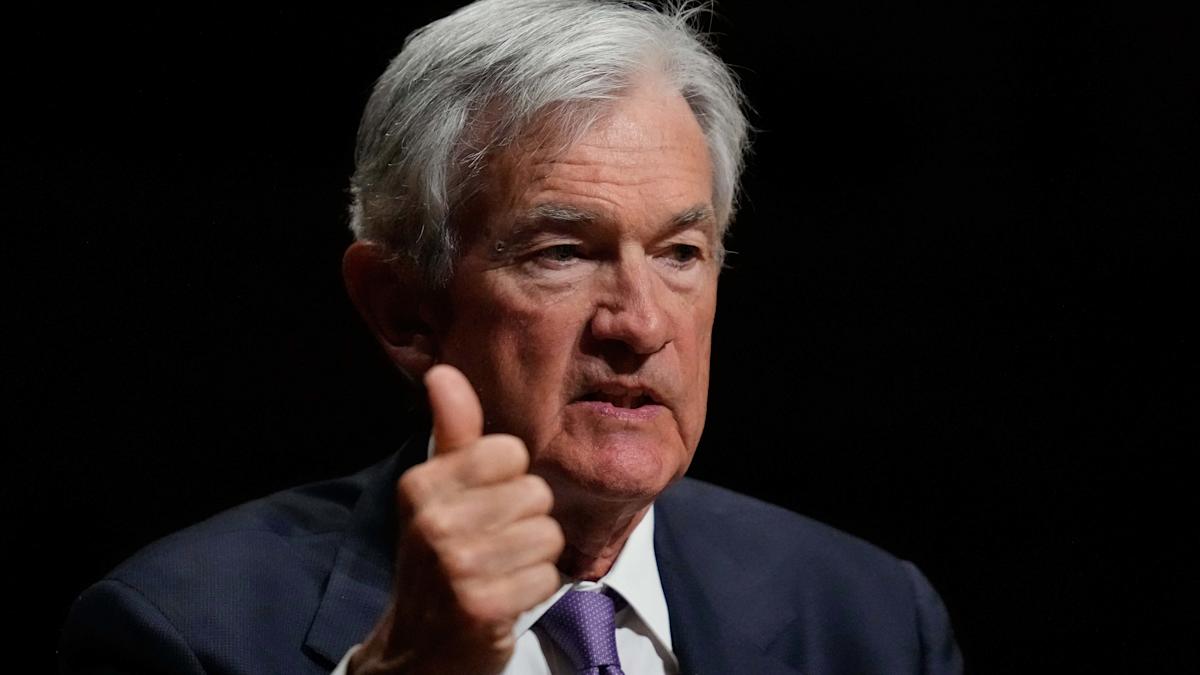
Fed Chair Jerome Powell will hold what is expected to be his last press conference, given that the Senate banking committee is scheduled to vote Wednesday morning to confirm Kevin Warsh as the next chair, likely putting him in place by May 15, when Powell’s leadership term expires.
Powell’s final policy meeting after eight years at the helm is expected to be somewhat unremarkable.
“With uncertainty still pervasive, we expect [Chair Powell] will emphasize that officials are unsure of the precise fallout from the war on the economy and monetary policy,” said Matt Luzzetti, chief US economist for Deutsche Bank. “However, Powell could highlight that persistent price pressures become more likely the longer oil prices remain elevated.”
Investors will be looking to see how Powell frames the impact of the conflict on inflation and growth, and whether he cautions that sustained high oil prices could hurt growth and employment as well as inflation.
Read more: How jobs, inflation, and the Fed are all related
“If inflation stays high, then people will back away and demand will fall,” former Kansas City Fed president Esther George said. “The problem I see with that argument right now is there are just a number of tailwinds for the consumer.”
For one, she said, higher-income consumers are more indifferent to inflation, capital investment is increasing, and government spending is increasing due to the war.
Also of interest is whether the Fed can continue to look through the oil price spike as a short-lived, one-time hit to inflation, given that it comes after tariffs and inflation remaining above the central bank’s 2% target for five years.
Fed governor Chris Waller has noted that policymakers may eventually have to acknowledge that a series of one-time shocks becomes persistent.
Read more: How oil price shocks ripple through your wallet, from gas to groceries
Even before the war broke out, former Cleveland Fed president Loretta Mester said inflation looked sticky. She noted that while goods prices have leveled off from the effect of tariffs, it’s unclear that services inflation (excluding housing) is on a downward path.
“The most recent readings, even before the war, were sticky, not moving down and perhaps even firming a bit,” Mester said. “So, I think they have to be very focused on inflation, and I think the risks are to the upside.”
Fed on indefinite hold?
The first major reading on inflation after the Iran war began showed that the jump in energy prices pulled up overall inflation but didn’t affect core inflation. The Consumer Price Index showed inflation jumped 3.3% in March, led by a 21% spike in gas prices. On a “core” basis, which excludes volatile energy and food prices and is the best long-run predictor of overall inflation, CPI inched up 2.6% in March, after rising 2.5% in February. The Fed’s preferred inflation gauge, the Personal Consumption Expenditures index, will be released on Thursday.