


For music lovers in Seattle, going to see their favorite band or artist (whenever they actually come through the city) has always been a joyous experience. That moment of seeing the lights go down, hearing them hit that first note from a song you’ve heard countless times, and then proceeding to perform live for an hour or two? Priceless.
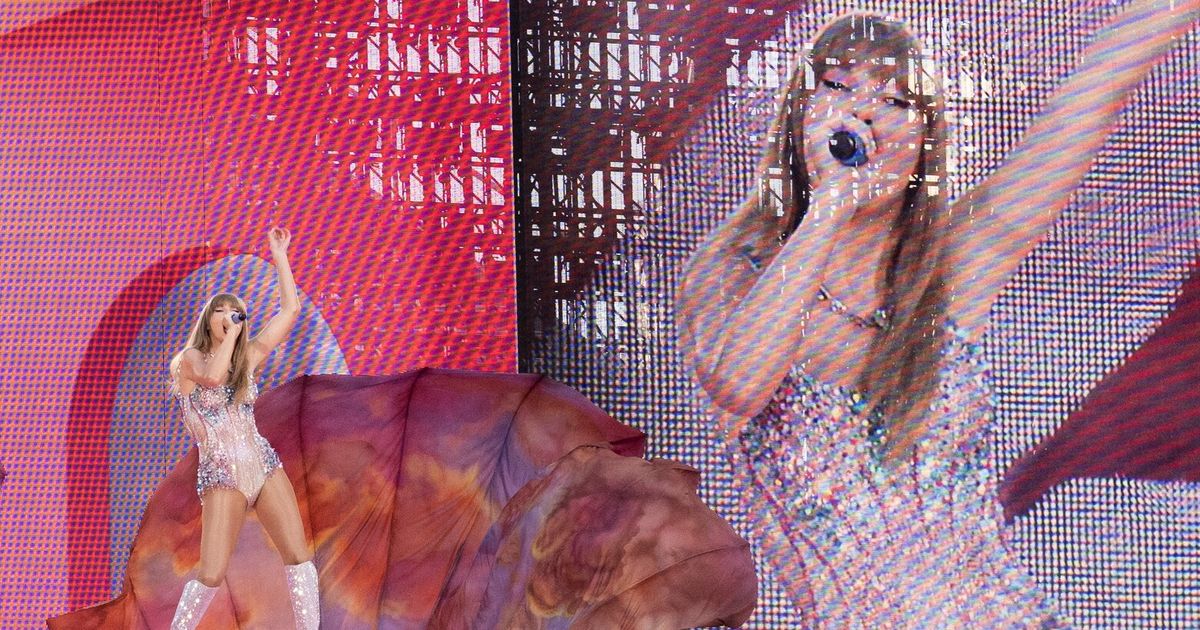
Less joyous? Paying high ticket prices for these shows. Even as the passion for concertgoing remains, the hassle of having limited options for buying tickets, paired with high prices, have left many music fans feeling they’re getting ripped off. In recent years, ticket prices have continued to rise in North America, with the average cost to see the highest-grossing artists on tour — from Taylor Swift to the Rolling Stones — increased by almost 44% between 2019 and 2024, from about $95 to roughly $136.5.
However, a landmark ruling earlier this month in an antitrust trial against Live Nation and its subsidiary, Ticketmaster, has now raised hopes that the ticketing companies — long the scourge of concertgoers across the country — could be reined in.
But the question remains: Does this mean ticket prices could go down for Washingtonians? Well, it’s complicated.
The ruling
The antitrust trial began last month in Manhattan federal court.
It stems from a 2024 lawsuit brought by the Department of Justice, 40 states (including Washington) and the District of Columbia.
The lawsuit alleges that Live Nation and Ticketmaster created an illegal monopoly. Shortly after the trial started, the DOJ and Live Nation reached a settlement, with the entertainment company agreeing to let competing companies like SeatGeek and Eventbrite list tickets on Ticketmaster’s platforms, capping service fees at Live Nation-owned amphitheaters and more. However, the settlement did not require Live Nation to sell off Ticketmaster. Some states (Washington included) and D.C. continued their fight against Live Nation despite the settlement, arguing that it “does not adequately remedy the harms to the marketplace for live music and to concertgoers caused by Live Nation.”
That battle culminated in a jury unanimously ruling on April 15 that Live Nation and Ticketmaster had become an illegal monopoly that was overcharging ticket buyers.
No concrete actions have been taken following the ruling. The verdict could set the stage for Live Nation and Ticketmaster being charged millions of dollars in monetary damages, as well as for the breakup of some of Live Nation’s venues or the two companies (something the states have strongly advocated). But could ticket prices actually go down as a result?
A ‘real possibility’
According to John B. Kirkwood, a law professor at Seattle University, while there is a long road ahead (that will likely include appeals from Live Nation), there is a “real possibility” that Live Nation could be forced to sell Ticketmaster. Other factors still impact the price of a concert — including, in this economy, rising food, travel and other costs for touring artists that may get passed to the consumer — but this verdict could lead to lower ticket prices.
“You could see a 10% drop in ticket prices,” Kirkwood said. “Antitrust enforcers typically argue that a merger is likely to raise prices 5% to 10%, so to have a reverse merger, a divestiture, I think it’s plausible to think in terms of 10% instead of 1% or 100%.”
Ultimately, with a potential Live Nation/Ticketmaster breakup, greater competition could put a dent in prices, as other ticket platforms could have a better chance of participating.
Douglas Ross, a law professor at the University of Washington and former antitrust attorney, said there is “market power that Live Nation has over ticketing and over venues,” but divestiture could “introduce more competition on either of those or both of those,” which “should have the prices of … selling a ticket come down somewhat.” (During his time as an attorney, Ross represented The Seattle Times in an antitrust case in the early 2000s. The case was ultimately dropped.)
Still, Kirkwood said divestiture is rare, pointing to the 1980s when AT&T was broken up.
“They are seldom achieved, but given this resounding jury verdict and all the complaints about Live Nation’s control of Ticketmaster, it is on the table,” Kirkwood said, while cautioning that it could be many months, if not years, before any measurable impact is felt by consumers. “In terms of looking for lower ticket prices, nothing would be imminent, but it is a real possibility this time.”
Ross echoed that now could be a time we see a historic mandated divestiture.
“If it’s ever going to happen, this is a case where it could,” Ross said, while acknowledging there would be challenges, as the initial 2010 merger between Live Nation and Ticketmaster was allowed.
“This is really difficult, and they didn’t find that the actual merger was unlawful,” Ross said of the antitrust ruling. “What they found is Live Nation as a complete company … operated unlawfully. So, without finding that the merger itself was unlawful, the states have an uphill battle to force the divestiture of Live Nation.”
Supply and demand
Another remaining question surrounds the role bands and artists, especially bigger ones, play in this. Taylor Swift and Bruce Springsteen, at the center of major Ticketmaster tour debacles in the early 2020s, entered into agreements with the company that allowed these ticket rollouts to happen, though the artists didn’t foresee the way things played out, Ross explained. Moving forward, even if what happens with Live Nation and Ticketmaster leads big artists to reevaluate their ticketing processes, their shows may always be pricey.
“If the artist is a Taylor Swift who is extraordinarily popular, I don’t think it’s going to be very much that the ticket prices come down,” Ross said. “Maybe for lesser artists, the overall price comes down some because the venue component and the ticketing component might be a bigger slice of the pie.” Ross said.
He also noted that an artist could just keep a ticket price high, despite potential cost reductions on Live Nation and Ticketmaster’s end.
“If a ticket costs $250 and $50 of that is going to Live Nation and Ticketmaster and $200 is going to the artist, if Live Nation and Ticketmaster are forced through competition to reduce their $50 down to $25, why wouldn’t a profit-maximizing artist simply say, ‘Ah ha! People bought the tickets at $250 … so I’m going to increase my take from $200 to $225 and keep the price at $250,’” Ross said. “Supply and demand has shown that [fans will] pay $250, or much, much more, so it could just be a rejiggering of who gets what.”
It’ll be some time before we see what comes of the Live Nation verdict and its potential impact on ticket prices. Still, it signals a shift that music lovers are hoping will make the concert-paying experience better and, more broadly, potentially restrict the impact that monopolization has on life in America.
“I hope we’re entering an era in which there is greater scrutiny of monopolies,” Kirkwood said.