
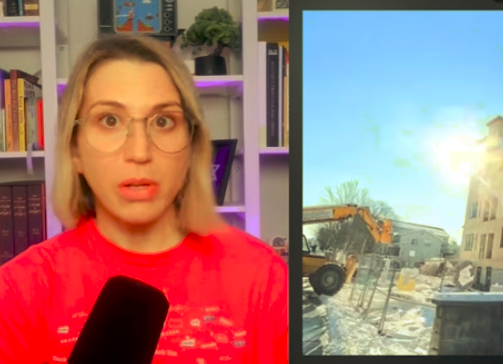
In this video, Frieda Vizel reacts to a YouTube video titled “Inside the New York Town Invaded by Welfare-Addicted Jews…” by Tyler Oliviera. As a native of Kiryas Joel, she offers a nuanced perspective on the community, aiming to counter the stereotypes and misrepresentations presented in Oliviera’s video.
“As someone who grew up in Kiryas Joel and left the fold, I have a lot to say on this Hasidic village. There’s good and bad. There are issues, and yes there are valid criticisms on its relationship to the welfare system, although this doesn’t take away from the facts: that this is a community where the vast majority of men are gainfully employed and work incredibly hard. The stereotypes of this community as “welfare queens” whose men study torah and don’t work is so damaging and not true.
Tyler Oliveira‘s recent video will so deeply reinforce these misconceptions. I’ve done a video where I went through the phone book and showed the extensive numbers of businesses Hasidim are into. It’s so sad that his platform will create so much misrepresentation. This is my first take reaction to his video. Please forgive my early morning rants and rambles. I am watching it raw with you. I find it quite upsetting and ignorant. I hope my deep feelings that this community is complicated, imperfect, should be criticized but is also often misrepresented comes through. This is long – well Tyler’s video is long.”
Vizel criticizes Oliviera’s journalistic approach, highlighting several issues:
- Outdated Information: Oliviera uses a 2014 report to describe a rapidly changing demographic, which Vizel deems irresponsible.
- Inflammatory Statements: She challenges his generalizations about Jewish communities and their legality compared to other groups, demanding precise comparisons.
- Disrespectful Inquiries: Vizel finds Oliviera’s questioning of community members about their work and prayer schedules to be incurious and accusatory.
- Misinterpretation of “Students”: She clarifies that many men who identify as “students” are actively working or transitioning into careers, not solely relying on welfare as implied by Oliviera. She explains that some men, especially in early marriage, study Torah full-time while their wives work, with men later entering various industries.
- Lack of Contextualization: Vizel emphasizes the importance of cultural translators to understand the nuances of the community’s work life and religious practices, which Oliviera fails to do.
Vizel also addresses the role of charity and community support in Kiryas Joel, noting that wealthier members often subsidize Torah scholars. She debunks the idea that men pray all day, clarifying that prayers occur three times a day, often before or after work. She expresses frustration at Oliviera’s “bulldozing” into private spaces to film and conduct interviews, noting that community members are hesitant to share information due to past negative media portrayals.
Ultimately, Vizel advocates for a more complex and humanizing portrayal of the Hasidic community, emphasizing that while issues exist, the narrative of “welfare-addicted Jews” is a damaging misrepresentation.