



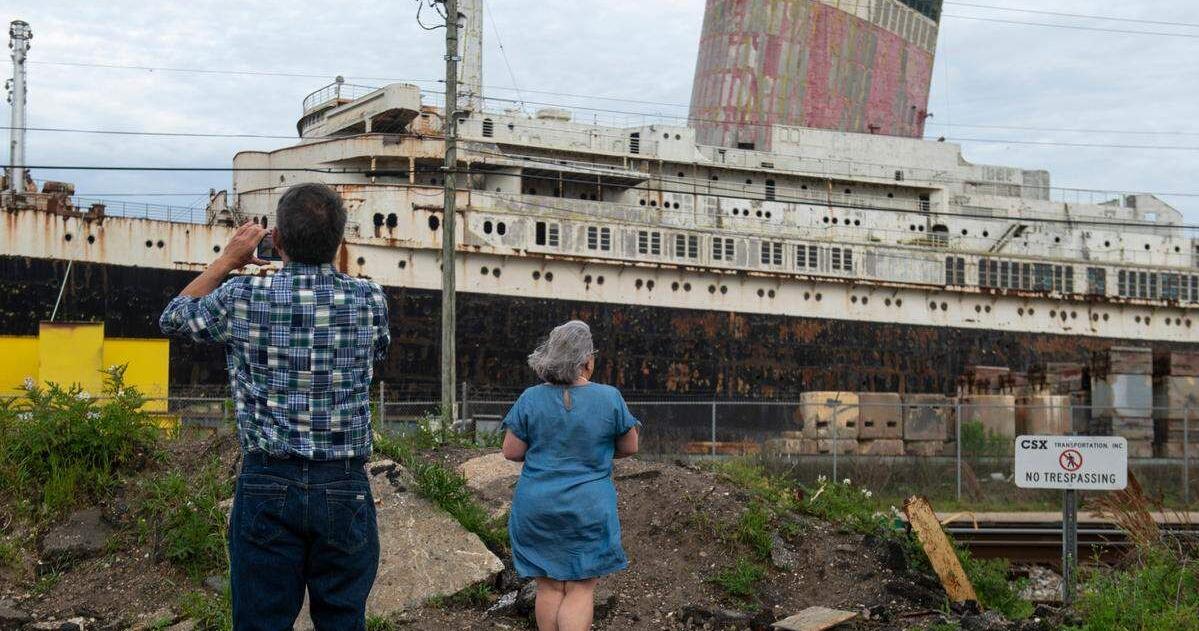
The only way Susan Gibbs believes she can save the SS United States is by sinking it to the bottom of the sea.
The massive ocean liner, which once ferried celebrities across the Atlantic Ocean, could soon be towed 20 miles off the coast of Destin, Florida, to meet its fate.
The controversial endeavor will transform the nearly 75-year-old vessel into an artificial reef that leaders say will lure thousands of divers and anglers each year. Gibbs, the granddaughter of the ship’s designer, figures it is better than selling the beloved ocean liner for scrap.
“It’s a poignant farewell,” said Gibbs, who leads the nonprofit SS United States Conservancy. “But it’s also an opportunity for us to ensure that her legacy lives on.”
The plan began two years ago as the conservancy raced to find a new home for the ship before its longtime lease at a dock in Philadelphia ended. The group searched around the country but found no other pier that could hold the vessel, which is larger than the Titanic and spans five city blocks.
Then leaders in Okaloosa County, Florida, made an offer. They had been working for decades to build an artificial reef program and transform the Gulf region into an international diving destination.
The county is now spending $13 million to build an SS United States museum on land and prepare the ship to be sunk as early as this summer. Leaders hope the attractions will draw more visitors from Louisiana and around the country to Destin and Fort Walton Beach.
Leaders in Okaloosa County, Florida, intend to sink the historic SS United States to create an artificial reef and diving attraction off the coast of Destin and Fort Walton Beach.
But their plan is facing outcry from some veterans and preservationists who are scrambling to stop the ship from vanishing beneath the waves. One prominent group called the SS United States Preservation Foundation is criticizing the plan’s timing just before the country’s 250th anniversary and has started an opposition campaign urging county leaders to “rethink the sink.”
“It’s not too late to keep a local decision from becoming a national disgrace,” one recent campaign video warned.
Debates about how to balance tourism with preservation are common across the fast-growing Gulf Coast. But the story of the ship, which has come to symbolize patriotic triumph, is also a sign of the country’s increasing divide over how to honor its past.
‘The extraordinary story’
If all goes to the county’s plan, the vessel will become the world’s largest artificial reef and bring millions of tourism dollars to the region each year. Scientists will study it, and dive shops and fishing charters will lead excursions there.
“Not a day goes by that we don’t get asked questions about the vessel and our visions for her as a reef,” said Jennifer Adams, the county’s tourism director. “We’re ready to deploy her as soon as we possibly can.”
The conservancy is gathering artifacts from the ship, including passengers’ letters and engineers’ logs, to display in the future museum on the shores of Destin and Fort Walton Beach. The group is also planning immersive displays that will simulate the experience of standing in the engine room as the ship blasts to sea, or watching legendary musician Duke Ellington play piano in the ballroom.

Passengers on The Perdido Queen take photos of the SS United States as it is docked in Mobile on Friday, March 28, 2025.
“The goal is certainly to tell the extraordinary story of this ship,” Gibbs said. “But it’s also a story about our country and our past and our future.”
The ship first embarked in 1952, moving so fast that pounding waves blasted paint from its hull. The vessel broke the trans-Atlantic speed record and still holds the title.
U.S. presidents Harry Truman, Dwight Eisenhower, John Kennedy and Bill Clinton all sailed aboard it. So did Marlon Brando, Walt Disney, Judy Garland and Marilyn Monroe. In 1963, the vessel even carried Leonardo Da Vinci’s “Mona Lisa.”
But after 17 years, the SS United States retired as trans-Atlantic flights grew popular. The ship bounced between buyers until the conservancy sold it to Okaloosa County, which argued the steep cost of docking the vessel meant sinking it was the only way to save it from a scrapyard.
“It certainly made more sense than having her turned into razor blades,” said Warren Jones, who serves on the conservancy’s board.
The county lugged the vessel to Mobile, Alabama, where it is temporarily docked.

On Friday, March 28, 2025, workers in Mobile, Alabama, prepare the SS United States to be sunk off the coast of Destin, Florida.
‘The people are watching’
Opponents say sinking the SS United States will erase history, and they also fear the ship could leach toxins into the ecosystem once it sits below the waves. They are asking for federal intervention to keep the ship above water and have suggested turning it into a mental health care and job training site for veterans.
“Sinking this vessel is crazy,” said Carlos Camacho Jr., co-founder of the nonprofit SS United States Preservation Foundation, who has written a letter voicing his opposition to President Donald Trump. “We have politicians saying, ‘it’s too expensive, it’s sink or scrap, there’s no other way.’ They’re wrong.”
The county insists it is cleaning the ship of all toxins and following rules set by the Environmental Protection Agency and U.S. Army Corps of Engineers, which are overseeing the project’s final approval. But the idea is still drawing attention from high-profile voices.
“The people are watching,” Erin Brockovich, the environmental activist whose battle over groundwater pollution became a Hollywood hit two decades ago, recently wrote in capital letters on social media. “Clean your ship up before you sink her.”
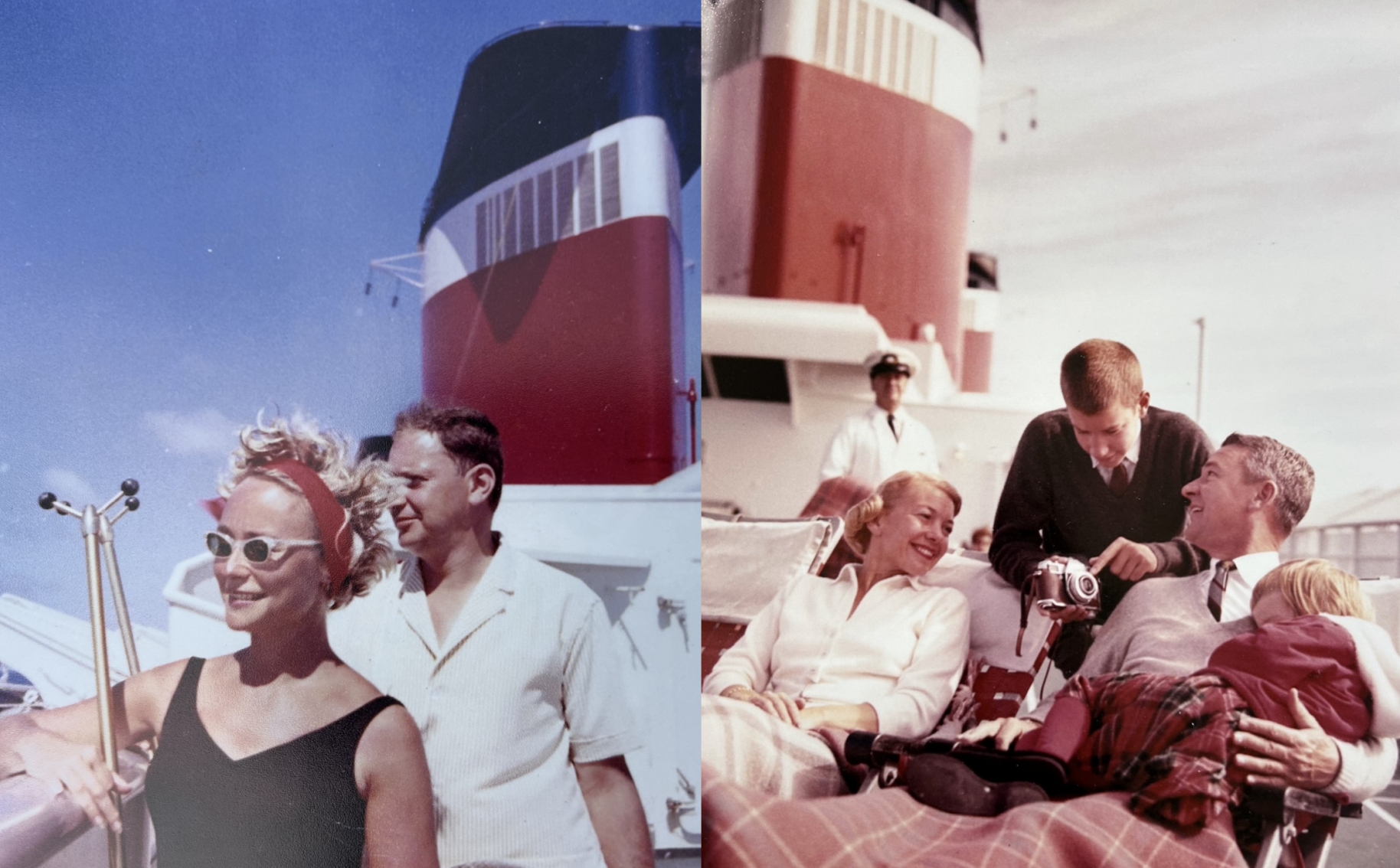
Passengers relax aboard the SS United States in undated photos from the ship’s era of trans-Atlantic voyages, between 1952 and 1969. Okaloosa County, Florida, bought the vessel in 2024 and plans to transform it into an artificial reef off the coast of Destin.
The sinking is personal to Jones, who rode the ship to Europe with his family in 1961. He was just a boy but remembers the journey well — the engines roaring to life in New York’s Hudson River, his hands gripping the deck railings in punishing winds, tossing and turning one night as the ship forged across the North Atlantic.
He later gave tours of the ship in Philadelphia, where one day, after the last crowd left, he wandered alone through the empty dining room and walked the ship’s long decks in silence.
Jones plans to be in Destin when the ship sinks, watching from a nearby boat.
“It’ll be emotional, there’s no question about it,” he said. “But I would not have wanted to see that ship just go to the scrapyard. To me, that would have been the ultimate disrespect.”