



The “fatal flaw” in the grandparents’ case, Gill said, came from their own evidence played at trial: A secret audio recording that a friend of theirs made of Naso two months after his wife died.
Two sisters who said they were family friends of Ghoreishi and Khorsand visited Naso and Laila in June 2024. One of them, Lili Bahrami, recorded their nearly three-hour visit on her iPhone. They told Naso they just wanted to know what happened to Sherry Naso, their childhood friend.
And Naso was “unvarnished,” the judge said.
Naso told the sisters that he believed his in-laws’ medical care cost Sherry Naso her life. He told them about his toxic relationship with his in-laws. He told them about masses of prescriptions that Ghoreishi wrote for Sherry Naso and Laila. He told them he believed that they’d misdiagnosed signs that Sherry Naso’s cancer had returned and discouraged her from getting care.
He said that he believed his in-laws controlled his wife and interfered with their marriage, and he didn’t believe it was in Laila’s best interests to be around them.
Naso said he feared that they wanted to make him appear to be an unfit parent and use their money to take away Laila. He said that he knew it sounded crazy, but Khorsand had “sent people to spy” on him.
Bahrami sent the secret recording to Ghoreishi and Khorsand, who submitted it as evidence while the trial was ongoing.
Naso had told the sisters that he had his guard up, because of the trouble between him and his in-laws, the judge said.
“And this piece of evidence corroborates that,” Gill said. “It reinforces the reasonableness of Scott’s apprehensions and his decision to restrict visitation.”
The judge called the recording “an invasion of privacy” and an “overstep” — and its existence guided his decision not to grant visits.
“We know at that time that he believed the grandparents were overbearing, that they’re interfering in his parental decision making, that [the] grandmother believes that she needs to protect Laila from him,” Gill said. “We know that he believes they’re spying on him. As he sits here today, he believes it to be true, because he was, in fact, recorded by somebody who then proceeded to hand the recording to [Ghoreishi and Khorsand]. He believes they’re moving against him for either custody or to show he’s unfit.”
By law, the court must defer to a fit parent’s decision not to allow visits, unless the grandparents can “clearly and convincingly establish” that the decision was unreasonable, Gill said.
The judge approved the motion filed by Naso’s lawyer to dismiss the trial, saying there was no way the trial could continue.
At the same time, the judge criticized Naso, accusing him of putting his own interests ahead of his daughter’s by cutting off visits. He said he didn’t find Naso’s testimony credible about Ghoreishi allegedly fabricating Laila’s medical records or that Laila’s visits with her grandparents were connected to her getting sick at daycare.
Gill said he saw no evidence that Laila’s dysregulation was caused by the court-ordered visits with the grandparents. He said the reason for her reluctance to see them “was the notion that her grandparents were bad people, and the danger was put in her head or allowed to be put in her head by her father.”
The judge said he didn’t find that the grandparents “were engaged in a cycle of chronic illness,” as Naso described. “I can find that the father was upset to learn about the amount of prescriptions that [the] grandfather prescribed Laila … and he believed this to be excessive,” Gill said.
Gill lamented that they hadn’t been able to forge a relationship after Sherry Naso’s death.
“This was a tragic case. Sherry Naso was by all accounts a loving, caring mother,” Gill said. “Rather than celebrating Sherry’s life, they spend time arguing, fighting in this court. Trials are not wars. Litigation is not a war. Trials are about a search for the truth. Efforts to try to aspire to ruin another party at any cost, is unnecessary and unjust.”
Gill found Naso in willful contempt of a visitation order set by then-Judge Debra DiSegna in the fall of 2024. He said Naso didn’t show that he was coerced into agreeing to the temporary visits, that he’d been represented by a lawyer, and that the two sides had made an agreement. Gill ordered Naso to pay $2,500 in attorney’s fees.

Ghoreishi and Khorsand, and their lawyers, Michael Ahn and Peter Sangiovanni, hurriedly left the courtroom without speaking to reporters. They have 30 days to decide whether to appeal Gill’s decision to the Rhode Island Supreme Court.
Naso was teary and hugged his lawyer, Veronica Assalone, and friends who’d come to support him.
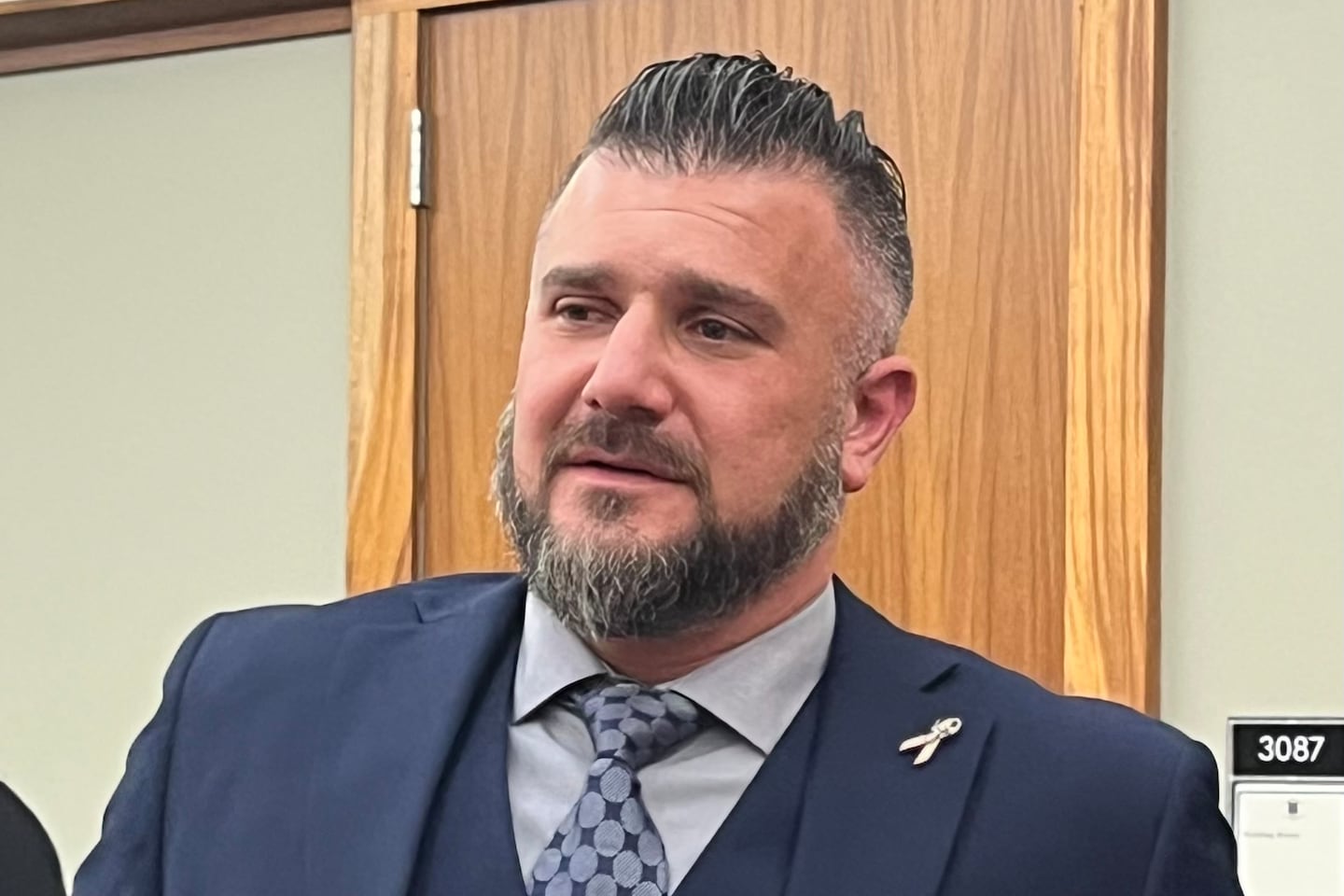
Gill “followed the law,” Naso said. “Ultimately, I am extremely grateful that he respected my fundamental parental rights and protecting my daughter.”
Naso said he didn’t agree with Gill’s assessment that visits would be in Laila’s best interest, or that he hadn’t put her best interests first.
“I put my daughter’s best interest before my own,” Naso said. “That’s why I’ve essentially bankrupted myself and ourselves to fight for her.”
On Friday, he said, he would take Laila to the park and spend the last day of April school vacation together.
But he would go alone to Sherry Naso’s grave. Friday is the second anniversary of her death. She would have been 39 years old.
Naso thought about what he’d say to her.
“Thank you for giving me the strength to get through these last two years. And I’m praying for the strength to continue on this fight,” Naso said. “I miss her and I love her so much, so much, but she’s giving me the strength. I know she was here with me today. She’s with me every day.”
Amanda Milkovits can be reached at amanda.milkovits@globe.com. Follow her @AmandaMilkovits.


