


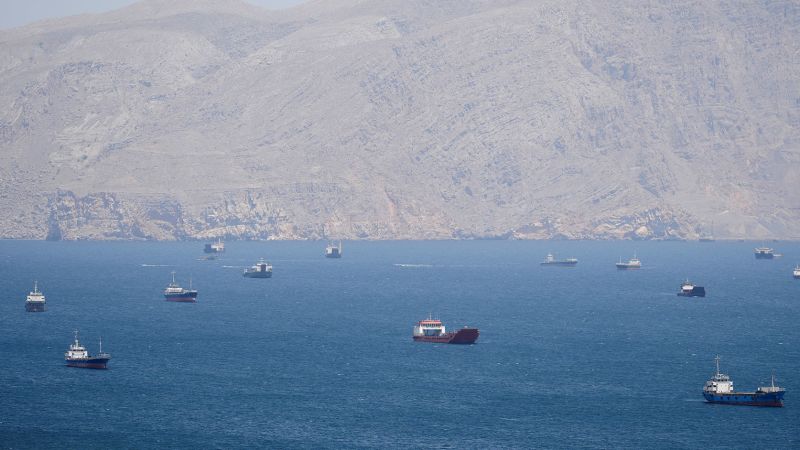
The United Arab Emirates will withdraw from Organization of the Petroleum Exporting Countries (OPEC) on May 1, the UAE’s state news agency WAM said.
“This decision aligns with the United Arab Emirates’ long-term strategic and economic vision and the development of its energy sector, including accelerating investment in domestic energy production,” the statement said.
OPEC is a cartel of major oil-producing nations that coordinates production policies to influence global oil supply and prices.
The UAE is also leaving OPEC+, which includes Russia, the statement said.
The move marks a major blow to OPEC and its leading member, Saudi Arabia. The cartel collectively accounts for 36% of the world’s oil production and together controls almost 80% of the world’s total proven reserves.
“The UAE’s decision to exit from OPEC reflects a policy-driven evolution aligned with long-term market fundamentals,” Suhail Al Mazrouie, the UAE’s energy minister, said in a statement on X. “We remain committed to energy security, providing reliable, responsible, and lower-carbon supply while supporting stable global markets.”
The UAE has long pushed for higher OPEC production quotas as it sought to expand capacity well beyond the levels assigned to it by the cartel.
OPEC was established in 1960 by Saudi Arabia, Iran, Iraq, Venezuela and Kuwait. The UAE joined seven years later.
The UAE is among the world’s ten largest oil producers, accounting for some 3% to 4% of the world’s oil.