

[ad_1]
“It’s funny, because when you asked, ‘Could it happen again?’ my thought was, Would I wish it on anybody?”
Photo: YouTube
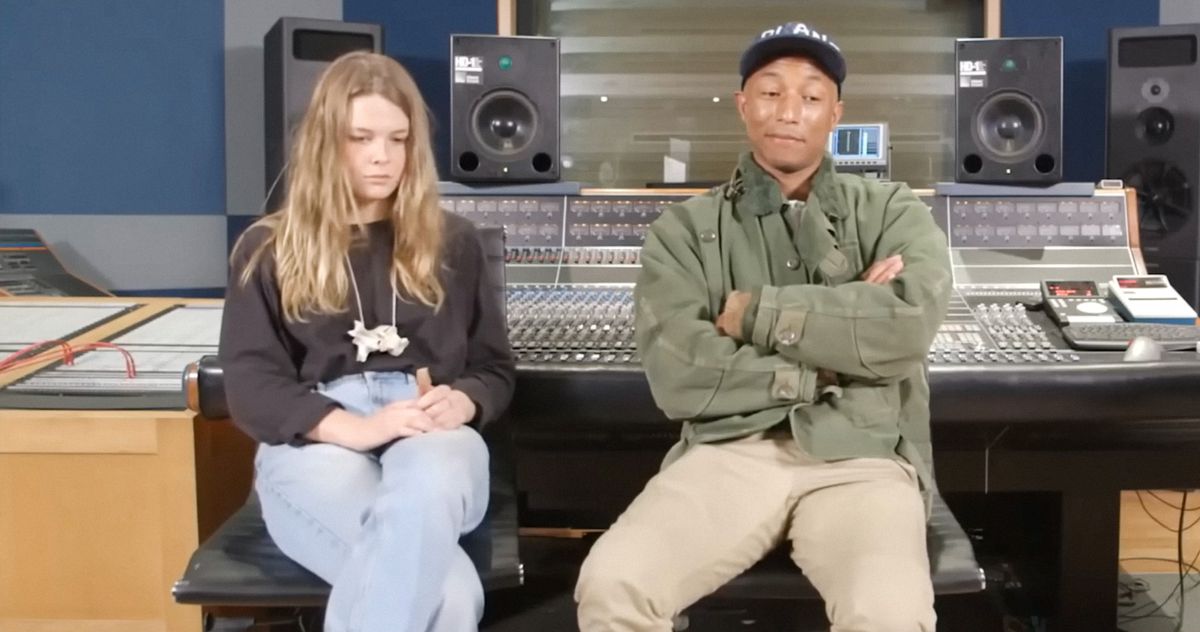
Ten years ago, Maggie Rogers was a senior at NYU, scrambling to finish a song for a music-production class she was close to failing. The guest critic that week happened to be Pharrell Williams. She played him “Alaska,” a track she’d written in about 15 minutes. It’s a bit of folk songwriting crossed with the electronic music she’d fallen for while studying abroad in Berlin. Pharrell told her he’d never heard anything like it. Someone was filming, the clip went viral, and it launched Maggie into pop stardom.
A decade later, she’s released three studio albums, earned a Grammy nomination for Best New Artist, and gone back to school to pick up a master’s degree from Harvard Divinity School, where she studied the spirituality of public gatherings. In the past few months, she’s been as visible offstage as on: She advocated for free speech in D.C., performed for 200,000 people at a protest in Minneapolis alongside Joan Baez, and delivered a haunting performance on The Late Show With Stephen Colbert ahead of the show’s farewell on CBS in May.
This month, I spoke with Maggie Rogers in front of a room of my current NYU music students. We looked back on the hit that launched her career.
I want to get a sense of what “Alaska” meant to you ten years ago and what it means to you today.
There’s a very long behind the scenes of what writing that song was. Basically, I was studying music production at Clive Davis, and I wasn’t really making any music. My entire junior year, I really started focusing on an English major. I had spent my first two years in bands, and then I kind of just needed some time — which now, so many years later, I’ve realized I kind of do this every five or six years; I need a beat.
I hadn’t made music in two years, and my professor Nick Sansano very gently brought me into his office and was like, “My guy, you are going to fail.” I was in an advanced music-production class and making music to fulfill assignments, but I wasn’t making things that were really my artistry, that they knew that I could make. They were sort of like, “You have to present in class next week. We really need you to show up.” We had two months left in school. So “Alaska” was the first song I’d written in two years, and it was three days old.
This is your senior year.
Yeah. I had shown it to my college roommate, Mary, who I’m still friends with and write songs with. I had told her, “I don’t know if I like this,” because it felt too poppy to me. It was outside my comfort zone. So what was interesting was that I got really famous for something that effectively was an experiment. It didn’t feel like the truest version of myself. At the time, it felt like something I was trying. I was playing around, I was excited about it, and that EP that I ended up finishing was my senior project.
But I think it was difficult at the time, too, because I cared so much about my classmates. These are really small programs, and I’d seen my classmates work really hard in those years, and they’d really seen me do other things and invest my time and energy elsewhere. So when that moment happened, it was also really complicated, because it was a little awkward. I had so much respect and love for my classmates who had really put in the work, and it was just a really strange thing, the way it all happened.
And so this is a song that quickly came to define your early career. You’ve probably performed it a thousand times.
Many.
Is there a lyrical or a musical moment that speaks to you in some sort of way now?
There’s two in the second verse. I say, “Learn to talk and say whatever I wanted to.” And whenever I say that, in the way that I’ve come to riff it in the live version, when I say “whatever I,” I go, “say whatever, whatever, whatever, whatever I wanted to.” There’s so much space to play with that.
Then, when we were doing an acoustic version on Colbert, there’s always a moment when I say, “I thought it was a dream,” where I get this really surreal special connection to being a student and being an artist, not knowing what I was doing. That still doesn’t feel that different than now, in many ways. But it all does feel like a dream. And that time really was dreamy.
2016 was a different time in media. TikTok hadn’t taken off yet. Going viral was a very different thing. Could this happen again today?
Always yes. Because otherwise it’s no. And why not yes?
I mean, that video went on the internet in March of 2016. It went viral in May, and I didn’t put “Alaska” out until like September. My first record came out January 2019. I went slow. I think that’s actually the thing; I wonder if that could happen now. I really took my time. I toured the world for a year and a half on five songs on an EP. And this was after I had grown up playing in bands. I really invested early on in a sustainable relationship with an audience over basically anything else. It’s funny, because when you asked “Could it happen again?” my thought was, Would I wish it on anybody?
Would you?
I don’t think so. No. I mean, I think that great art will always find its way to listeners, find its way to the top. I really, really believe that. But there’s something incredibly unnatural about the fast attention of the internet. There’s a reason it shares a word — viral — with something that we all suffered from. I feel so grateful to my friends and to my bandmates and to mental-health caretakers and managers and the people who really supported me through that time. But more than anything, I was really, really scared. I wouldn’t go back and change it, because that’s not really how it works anyway. I love who I’ve become and what my career has become, but part of why I feel that way now is honestly because of the pandemic. Because at the height of my career, I also got a second to stop.
“Alaska” was getting bigger than what I could handle. We killed the radio campaign on that song. It was going to go to pop radio, and I was like, “You cannot do this.” It was already going to alternative and independent radio, and it was already more than what I could handle. At that point, what it would take to support a pop-radio campaign, with me going in and politicking and shaking hands, that wasn’t why I wanted to become an artist. The whole thing was just so bizarre. I knew that I just didn’t want the song to get bigger than me.
When a student has this runaway success, what are the things that they should and should not do?
I have no idea — genuinely, because I don’t know what it’s like to try and come up now. I’m not really on TikTok. I bop in like four times a year and say what up. But I can’t imagine.
What about the inner world? It sounds like there was some sort of soul searching.
On the inner world: Keep making music. It’s funny, because the advice that everybody always gives you is like, “Don’t get too big for your britches,” or “Don’t let it change you.” But that is so ridiculous. Of course it’s gonna change you.
You just bought a new pair of britches.
Amen. Of course it’s going to change you, and it’s okay. That’s what I would tell someone going through that. And just hang out with your friends and don’t be afraid of people, because the idea of being perceived all the time is really scary.
You had taken a big break from making music. Then this thing happens. How did that change your relationship to writing music?
The day the Pharrell video happened, I walked out of class and didn’t really know what to do. I turned my phone off, and I walked to Chinatown to my friend’s apartment, and we made a song called “Better” that ended up on the EP. I remember showing up and I said to him, “This thing just happened. Pharrell really liked my song.” His response was so weird — like, “That’s awesome. What should we make now?” That’s kind of always been my reaction: Just keep making things that you love.
When we last spoke, it was 2022 and you put out the album Surrender. At the time you said, “I don’t know if I’ll make another album.” You later went on to put out Don’t Forget Me in 2024. But it sort of ties back to the beginning of our conversation. When “Alaska” happened, you had taken a break. You needed a break again.
I take breaks.
What do breaks do for you?
They help me renew my artistic vows. I think what it means for me to be an artist is always changing, because what it means to be a human at whatever stage of my life is changing. What I’m willing to share, what I’m willing to negotiate, what I’m willing to compromise on, where I want to explore, what goals are for myself and my exploration are always changing. I think why I fell in love with the music industry in the first place is because it’s always changing. I love that. I find that it’s really innovative, and it means that a girl in her bedroom in Ohio in high school can change the way that everyone does everything forever.
But yeah, I also just naturally go through periods of internal winter for quiet. I find that if I let myself have that time, the writing of the record will actually be very quick. With “Alaska,” I’m like, “I made it in ten minutes three days before the thing,” but it really took two years to make. The last time I took a year off, I went to grad school, and then I made Don’t Forget Me in five days in track-list order, two songs a day. So measuring productivity in time, to me, doesn’t really work for creativity, because it’s not linear.
Do you release all the music that you make? How do you feel about the editorial process that has happened?
In the past, they’ve kind of needed ten songs when I’ve made 11. I’ve really just made what I needed to, and there hasn’t been a ton of extra. For Surrender, I wrote like a hundred songs, but it’s because it was the pandemic, so I was kind of just making stuff. When I actually entered the mouth of the record and was in the belly of it, I made what I needed to. The more that I make records, listen to records, and love records, I value curation a lot more. I would rather somebody give me a perfect eight or ten songs than give me 20. I just don’t want it, and I think it’s kind of lazy. Right now, I’m doing a lot of curating. It also makes me really sad that there might be songs where … do they just stay in a Dropbox somewhere?
I went through a breakup a couple years ago, and I had this song that I know is good. It’s devastating, but I just do not want to sing this song. Every time I listen to it, I’m like, Here we go, and the idea of playing it in front of an audience every night sounds like causing myself pain on purpose. I don’t even feel the emotions in the song anymore. So that one’s supposed to stay in my Dropbox for a little while. There might be a record in four years where I’m like, Oh shit. That song! And it’s going to be the perfect puzzle piece, and I’m going to be able to sing it with the same amount of urgency and maybe a little bit more love for myself going through something. Great songs stick around.
It’s kind of what I said at the beginning: Great music always makes its way. I really am focused on making a concise statement more than anything right now. But to me, it’s the first time I’m writing a ton and am completely getting over the fact that, once again, right now I have a Dropbox of 95 songs for this one record I’m working on.
Which means you’ve been productive, because you wrote a newsletter not long ago that said you had 80 songs.
Yeah, I wrote more songs. But it’s fun. It’s the best. When it’s not fun, it’s the fucking worst.
[ad_2]
Source link