

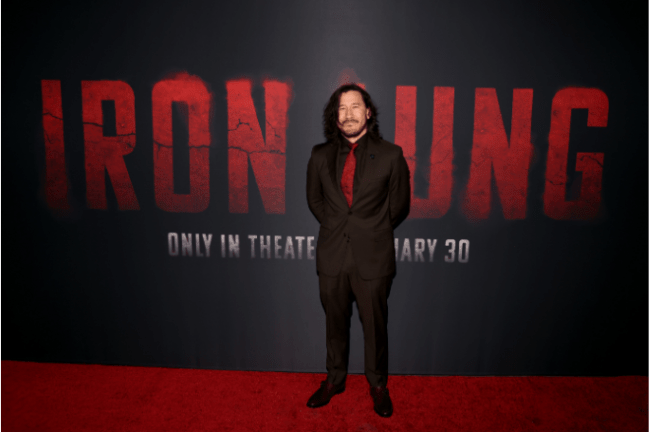
Film distribution was invented when there was one type of filmmaker: Someone who needed the system, moved through its channels, and arrived at the audience only after passing through its gatekeepers. It never considered someone who already had the audience, because how impossible.
So when Markiplier financed, produced, directed, and distributed “Iron Lung,” which grossed over $50 million in theaters, he tried to bring its digital release back to YouTube, the platform where his audience was born and raised.
Makes sense, right? Only it did not.
As Markiplier said on a recent livestream, “You can’t just take a video and put it up on YouTube and sell it as a movie. You’d think it would work that way… I thought it worked that way because I’m a YouTuber.”

The reason it doesn’t: YouTube is the world’s largest distribution platform, but it is not a distributor. For the films and TV shows that viewers purchase or rent, it makes deals with aggregators — companies that package, standardize, and deliver content at scale, handling the rights clearances, metadata, and formatting. All the stuff that no platform would want to handle across thousands of filmmakers.
The Invisible Layer
The system works. It just wasn’t designed for someone who reaches distribution with audience, capital, and independence intact.
Since the release of “Iron Lung” three months ago, Markiplier’s met with every studio. (“All of them have a very similar question,” he said. “‘How’d you do it? Where did you — where the hell did you come from? How did you get in my house?’”) He could have signed with any number of aggregators, but that would mean ceding certain rights, which is precisely what someone who just ran a $50 million self-distributed theatrical release wouldn’t want to do.
So he negotiated around it. After what he called an “arduous legal process” that required going directly to YouTube CEO Neal Mohan, YouTube agreed to serve as the exclusive digital home for “Iron Lung.”
An Exception Isn’t a System
That’s an exception for one film from an outlier creator. What makes this worth examining is what he’s pushing for next. Markiplier wants to become an aggregator himself, and beyond that, to advocate for a system where any filmmaker could access YouTube distribution without the intermediary.
“I would love to fight to build the system where anybody could do it right,” he said. “There should be a system where people are able to just do it almost as easily as making YouTube videos. Everyone stays on the platform.”
There’s commercial logic: A trailer lives on YouTube with a purchase link beneath it. Viewers convert without leaving the platform. If other creators review the film and link back, they earn a revenue share. Discovery, marketing, and transaction become one layer.
He said he told YouTube execs: “This makes sense for you. It gets more people involved in this. Some people may not even know you can buy movies on YouTube.” But what’s striking is how little appetite YouTube has shown for exactly this kind of expansion.
When I spoke with Mohan last fall, I asked about making YouTube a destination where films are discovered and watched in full. “The truest thing we can do is to continue to invest in discovery,” he said. “Most of our investment really goes to that.”
Discovery is where YouTube excels. What comes after — rights, pricing, access, transaction — YouTube has largely left to others. Markiplier keeps running into that gap.
Hacking the Gap
For theatrical, he hired bookers who put the film on screens worldwide. For digital, he’s negotiating his way into the aggregator role. He even bought a 100-disc DVD printer (!) rather than absorb the cost and timelines of third-party manufacturing. Each workaround interrogates what sits between a finished film and its audience, and whether those filters are needed.
Some are; aggregators handle real complexity in rights clearances, technical standards, and platform relationships. But while Markiplier is an edge case, he won’t be the last. As to whether that’s a problem or an opportunity, it depends on where you sit.
The system may adapt. Aggregators serve a real need, but creators with enough leverage are already pushing for new terms and new access points. Most independent filmmakers don’t have that leverage yet, but a deal that holds becomes precedent. That’s what the next filmmaker needs.
The Kevin Smith Problem
Three decades ago, Kevin Smith became a Hollywood cult hero with “Clerks.” Some people took the wrong lesson from Smith’s success, believing it meant they could skip film school and make a movie for $25,000 that would be acquired by a major distributor. Markiplier is the cult hero for 2026 and Hollywood keeps asking how he did it. The more useful question is the same as Smith’s: what his success means, and who’s right behind him.
Markiplier can’t personally build the system for everybody, and his specific success can’t be duplicated. But he’s in a position to demonstrate, with real numbers and a real negotiation, that YouTube can be something it has so far declined to be: a place where a filmmaker controls the full arc — audience, distribution, ownership, lifecycle. Not easy, and not right for everyone, but accessible in a way it hasn’t been before.
Precedents are how platform behavior changes. This one is worth watching.
Weekly Recommendations curated by IndieWire Managing Editor Christian Zilko
5. 5 Things Film School Doesn’t Teach You About Producing by Donny Broussard
Learning how to make films is the ultimate mix of theory and repetition. While studying film history and the art of storytelling is important, there’s no substitute for the practical lessons that you learn on set. That’s particularly true of producing, which is all about solving the kinds of problems that you could never fully reproduce in a classroom. But if you’re looking to learn and don’t have a chance to get on set just yet, this article might be the second best thing.
Another interesting case study about how one independent film handled its distribution without relying on traditional gate keepers. While the specifics of the “Life After” success story won’t be applicable to every film, the story is a helpful way to get yourself in the self-distribution mindset. And its key lesson — that indie films need to identify their specific audience in advance and then cultivate that audience before coming to the big screen — is the closest thing you’ll find to one-size-fits-all advice these days.
3. You Can’t Measure Everything (and That’s Okay) by Kyle Steinike
A great read for anyone’s career mindset, no matter what corner of the entertainment industry you’re pursuing. While we all love to track our own progress in measurable fields, it’s just as important to remind yourself that some equally important growth happens in ways that are not easily quantifiable.
The old value proposition of the festival circuit might be gone, but that doesn’t mean that film festivals have outlived their usefulness. They can still be a great way to launch a film and build an audience, but the lack of traditional sales now means that filmmakers have to proactively figure out what they want to get out of festivals. This is a great primer on what realistic festival goals for an indie film in 2026 might look like.
One key difference between great artists and the people that the industry eventually filters out is whether they pursue improvement or validation. Stahl explains that those who humbly look for opportunities to hone their craft go much farther than the people who always look for opportunities to hear somebody else say how great they are. He likens it to the difference between consistently working out and donning a muscle suit for fun.