



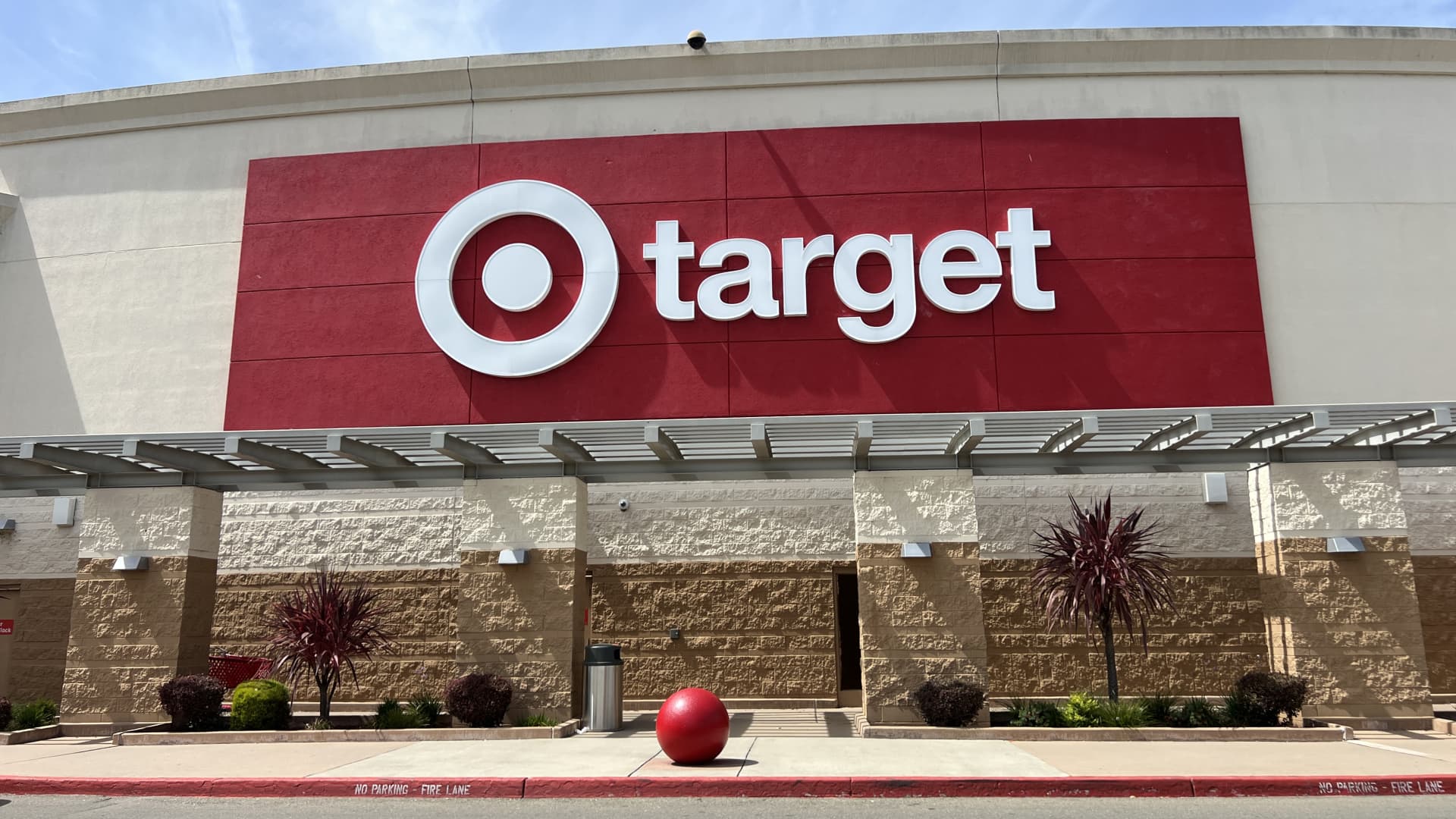
Target on Wednesday posted earnings and revenue that beat Wall Street expectations, and reported that net sales grew more than 6% year over year as the retailer tries to win back customers amid slumping sales.
Target’s same-store sales jumped 5.6%, its first positive same-store sales number in five quarters.
The retailer said it saw broad-based strength across its categories, with traffic across stores and digital platforms growing 4.4% compared with the first fiscal quarter last year. Digital comparable sales increased 8.9%, growth the company attributed to same-day delivery through its membership, Target Circle 360.
“Even with this early progress, we know our work is just beginning, and we have confidence we’re on the right path because guests are responding in areas where we are leaning in and driving change,” CEO Michael Fiddelke said on a call with reporters. “These are areas where we bring style, design, and value to not only the products we sell, but how we sell them, creating a distinctly Target experience.”
Notably, non-merchandise sales spiked nearly 25%, including from what the company identified as strong growth in its membership revenue and the Target+ marketplace. Target, like Walmart and Amazon, has tried to grow those business units both to offer more convenience to customers and boost its profits.
The company said it saw sales increase across all six of its core merchandising categories, with particularly strong responses from consumers in its health and wellness, toys and baby segments. It opened seven new stores in the first fiscal quarter, with more than 100 remodel projects in progress.
Here’s what the retailer reported for its fiscal first quarter compared to what Wall Street expected, based on a survey of analysts by LSEG:
- Earnings per share: $1.71 vs. $1.46 expected
- Revenue: $25.44 billion vs. $24.64 billion expected
As it reported the first-quarter beats, Target also hiked its full-year revenue outlook. The retailer said it expects net sales growth of 4% compared to 2025, an increase of 2 percentage points from its prior outlook. It also expects its earnings per share to come in near the high end of its previously provided guidance range of $7.50 to $8.50. Analysts were expecting earnings of $8.14 per share.
“Despite our updated guidance, we’re maintaining a cautious outlook given the work we know we have in front of us and ongoing uncertainty in the macroeconomic environment,” Fiddelke told reporters.
Shares of the company rose slightly in premarket trading.
For the three-month period that ended May 2, Target reported net income of $781 million, or $1.71 per share, down from $1.04 billion, or $2.27 per share, in the year-ago period. Adjusted earnings per share were $1.30 in the year-ago period.
It reported merchandise revenue of $24.89 billion, beating estimates of $24.18 billion. Target’s revenue beat reported Wednesday was the largest since November 2021.
Some of Target’s strongest strength this quarter was in its baby and kids category, Fiddelke told reporters, with a more than 5 percentage point acceleration in the second half of the quarter, in addition to product additions in the health and wellness category that drove double-digit sales growth in that segment.
Target’s gross margin came in at 29% for the first quarter, compared to Wall Street estimates of 28.7%.
The company has been struggling as it works to prove to investors that it can end its sales slump and win back brand loyalty from consumers. Wednesday’s earnings come as Wall Street keeps a keen eye on a more selective consumer, hit by soaring gas prices and macroeconomic uncertainty.
Despite high gas prices and an overall pullback in discretionary spending, executives said the consumer continues to show interest in new items that Target is bringing into its assortment.
“We see a consumer that continues to be resilient, even though they faced a mix of headwinds and tailwinds in the first quarter,” Fiddelke said.
Target said it’s focused on improving its merchandising, guest experience and technology as it hopes to return to sustainable growth.
CFO Jim Lee said in March that Target would increase its spending this year to accelerate its turnaround, with capital expenditures totaling about $5 billion for the year, a more than $1 billion increase from last fiscal year. Those investments will go toward its supply chain and investment in its stores, among other areas.
For the current second fiscal quarter, Target said its key priorities include what it called its “largest food and beverage transition” in more than a decade, in addition to launching the Target Beauty Studio across more than 600 stores and overhauling nearly 75% of decorative accessories.
“We will not confuse this progress with potential,” Fiddelke said. “Our focus is on delivering consistent growth, not just in 2026 but for decades to come.”
Lee told reporters the company is “working through the process” of applying for tariff refunds and acknowledged that the tariff environment remains dynamic. He said it’s early to determine how policy changes are affecting margins.