




New research suggests that sustained exercise may quietly reshape the biology of stress.
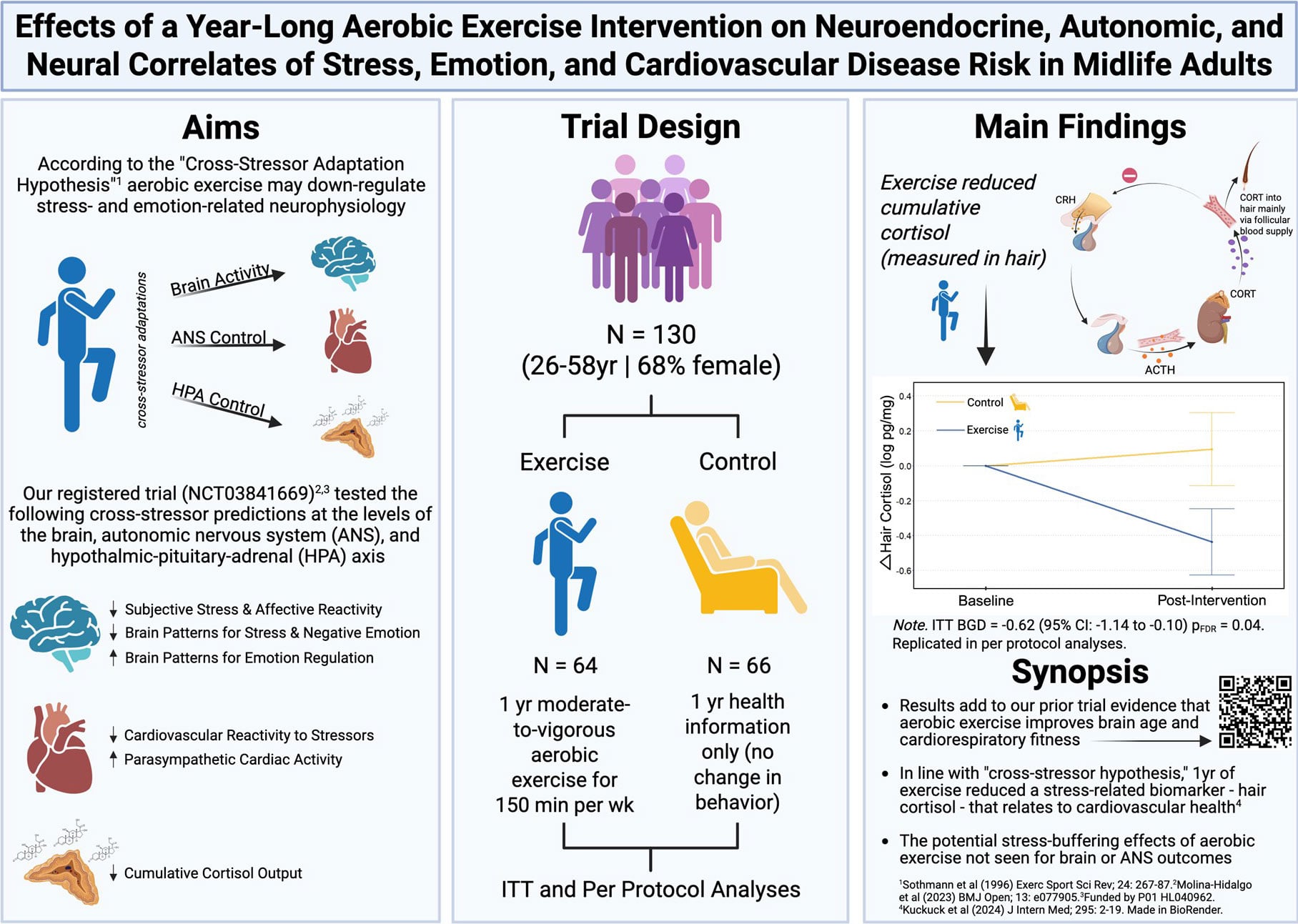
In a first-of-its-kind clinical trial published in the Journal of Sport and Health Science, researchers explored how a year of aerobic exercise affects the biology of stress and emotion. The randomized study focused on long-term physiological changes linked to regular physical activity.
The research was led by Dr. Peter J. Gianaros, Director of the Center for Mind-Body Science and Health at the University of Pittsburgh, USA, and Dr. Kirk I. Erickson, Director of Translational Neuroscience and the Mardian J. Blair Endowed Chair of Neuroscience at the AdventHealth Research Institute, USA. Their team investigated how meeting American Heart Association exercise guidelines influences biological markers of stress and emotional regulation, with a particular emphasis on cortisol, the body’s primary stress hormone.
A total of 130 adults between the ages of 26 and 58 took part in the study. Participants were randomly assigned to one of two groups. One group completed 150 minutes of moderate to vigorous aerobic exercise each week for one year, while the other group received general health education and maintained their usual activity levels. Throughout the study, researchers tracked changes in cardiorespiratory fitness, cortisol levels, and other indicators of stress and emotion using brain imaging and advanced measurement techniques.
Key Findings on Cortisol Reduction
Participants in the exercise group showed a clear reduction in long-term cortisol levels. Cortisol plays a central role in regulating metabolism, immune function, sleep, memory, and mood. Elevated levels over time have been associated with cardiovascular disease, metabolic disorders, and mental health conditions.
As Dr. Gianaros explained, “The effect of exercise on long-term cortisol levels could be one of the mechanisms or benefits of exercise that protect against several diseases and some mental health conditions, but more research is needed to fully explore this possibility.”
Implications for Health and Causality
These findings are important because much of the existing research on exercise and stress is based on correlations rather than direct evidence of cause and effect. This study stands out for its randomized design and its year-long duration, which allowed researchers to observe sustained biological changes.
The results suggest that following recommended physical activity guidelines may offer a practical way to reduce the biological impact of stress and support overall well-being. Regular exercise could serve as an accessible strategy to improve quality of life.
Earlier findings from this same trial also point to additional benefits. Using advanced brain imaging, researchers reported that aerobic exercise may help slow the rate of brain aging.
Dr. Gianaros and Dr. Erickson hope these results will increase awareness of how meeting the recommended target of 150 minutes of weekly physical activity can support mental resilience and long-term health.
Reference: “Effects of a year-long aerobic exercise intervention on neuroendocrine, autonomic, and neural correlates of stress, emotion, and cardiovascular disease risk in midlife adults” by Peter J. Gianaros, Lu Wan, Mia K. DeCataldo, Cristina Molina Hidalgo, Mark R. Scudder, George Grove, Abigail Shell, Chae Ryon Kang, E. Lydia Wu-Chung, Anna L. Marsland, Thomas W. Kamarck, Javier Rasero and Kirk I. Erickson, 17 March 2026, Journal of Sport and Health Science.
DOI: 10.1016/j.jshs.2026.101135
This study was funded by the National Institutes of Health and the National Heart, Lung, and Blood Institute (grant number: P01 HL040962) awarded to the University of Pittsburgh.
Never miss a breakthrough: Join the SciTechDaily newsletter.
Follow us on Google and Google News.