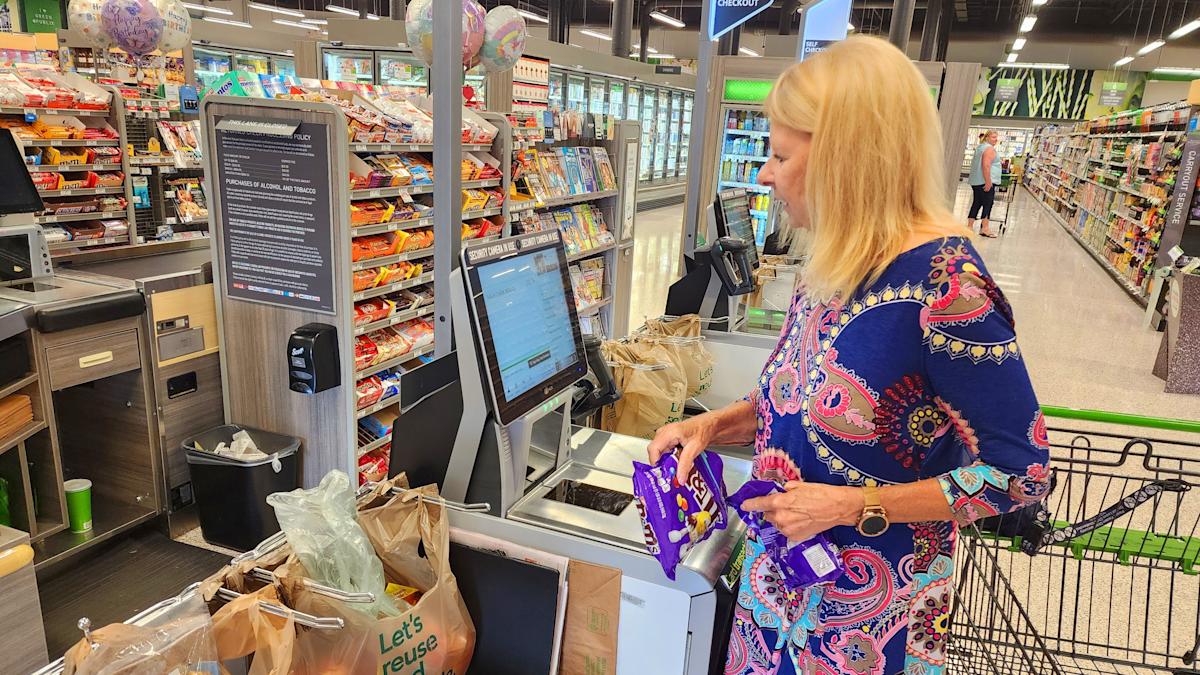
Whether it’s a digital price tag on a store shelf that can be altered at the press of a button (1) or an online price point that fluctuates based on an algorithmic analysis of a consumer’s digital footprint, the strategy of amending product costs in real-time is on the rise (2).
Retailers are taking advantage of AI and their access to consumer data to customize prices based not just on supply and demand (which is considered “dynamic pricing” (3)), but also on a shopper’s location, search history, personal details, past buying habits and more (the more nefarious “surveillance pricing” or “price discrimination” (4), which is itself is a type of dynamic pricing).
In response to these trends, Maryland is about to become the first state to ban the practice in the grocery sector.
The Protection From Predatory Pricing Act (5), which passed in the state legislature earlier in April, takes aim at companies that Governor Wes Moore says (6) are using “new technologies to drive up the bill for working families.” It’s a practice his leadership — and authorities like the Federal Trade Commission — believe to be invasive, exploitative and anti-competitive (7).
“The cost of basic household goods could surge based on the time of day, the weather, or granular consumer data, allowing stores to calibrate price increases to extract maximum profits on the backs of consumers,” explained a release announcing the legislation back in January (6). It denounced “using shoppers’ personal data to charge different prices to individuals for the same bag of groceries.”
Under the Act, supermarkets would be prohibited from engaging in what could be considered dynamic pricing, including using consumer surveillance data (shopping habits, etc.) and/or protected class data (ethnicity, religion, geolocation, etc.) to either set a price for goods or services, or to shape special offers or advertisements under certain circumstances.
The bill expands on the state’s existing Online Data Privacy Act (8) established in 2024 and would charge violators with unfair or deceptive trade practices under the Maryland Consumer Protection Act, resulting in civil fines starting at $10,000.
Read More: This $1B private real estate fund is now accessible to non-millionaires. Start investing with just $10
Since large corporations like Whole Foods, Kroger (9) and Target started adopting electronic shelf labels en masse, The Federal Trade Commission (FTC) has been raising alarm bells about the tech. It launched an investigation into surveillance pricing in particular in summer 2024 (10) — the same year Walmart revealed (11) it would be installing digital price displays across 2,300 of its stores by 2026. This past March, that plan was expanded to a full nationwide rollout (12) across all 4,611 US locations (13) by year’s end.
The industry titan promoted the move as a customer experience win, as it saves employees from having to spend the time manually updating price tags. The mini digital screens also include other features, such as a light to alert staff when stock needs replenishing.
An episode of NPR’s Planet Money (14), released during the early days of dynamic pricing, suggested that the advancement could help cut down on food waste and inefficiencies, along with actually promoting competition rather than being anti-competitive.
In addition, show guest Robert Evan Sanders, a professor of Marketing and Analytics at UC San Diego, argued that bargaining has been intrinsic to buyer-seller relations since commerce began. He noted that customers who had time to haggle would historically end up getting a different price for the exact same item than those who didn’t and that, even in the present day, some customers are simply more “sensitive to prices” than others.
But, one may rightfully question whether grocers should be allowed to capitalize (15) on that, given the essential nature of their offerings. And in the case of surveillance pricing, the use of individual data against users to — without their knowledge — offer them a higher price than someone else based on their demographic characteristics stands out as a key ethical issue.
The fact that traits as private and specific as dietary needs, income, how often buyers hover over particular items, or even how far they live from competitor stores could be in the realm of use for such purposes, as indicated by Consumer Reports (16), is also concerning.
In the absence of regulations like those championed by the FTC, Consumer Reports and the State of Maryland, the public has to remain vigilant — especially when making purchases online.
Be aware of what information various retailers could garner about you — especially via dedicated apps, loyalty programs and prompts to register or log in — as these can all be used to create pricing that isn’t in your interest. Taking the time to carefully price-check products across sellers — both in-person and online — and even on different devices can also be useful.
Experts recommend (17) clearing your cache and browser cookies often when shopping on the web and to use a virtual private network (VPN) when possible to obscure your location and search history. A browser’s incognito or private mode can likewise hide some of your details.
Join 250,000+ readers and get Moneywise’s best stories and exclusive interviews first — clear insights curated and delivered weekly. Subscribe now.
We rely only on vetted sources and credible third-party reporting. For details, see our ethics and guidelines.
MSN (1); LinkedIn (2); Salesforce (3); Wiser (4); Maryland General Assembly (5),(8); Maryland Governor’s Office (6); Federal Trade Commission (7),(10); Supermarket News (9); Walmart (11),(13); Inc. (12); NPR (14); Forbes (15); Consumer Reports (16); Investopedia (17)
This article originally appeared on Moneywise.com under the title: Maryland is moving to ban companies like Walmart and Kroger from ‘surveillance pricing’ — what it is and how to avoid it
This article provides information only and should not be construed as advice. It is provided without warranty of any kind.