



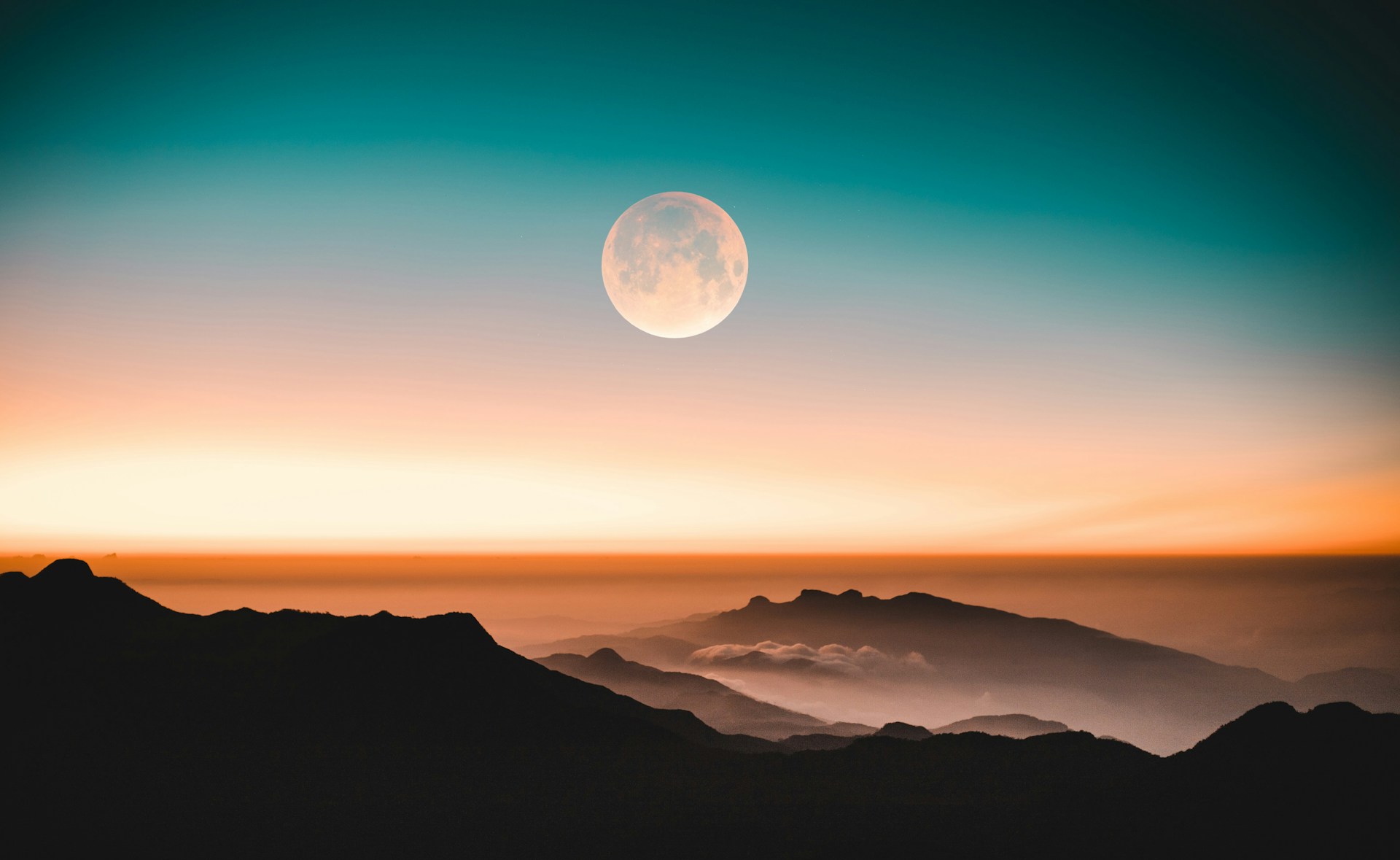
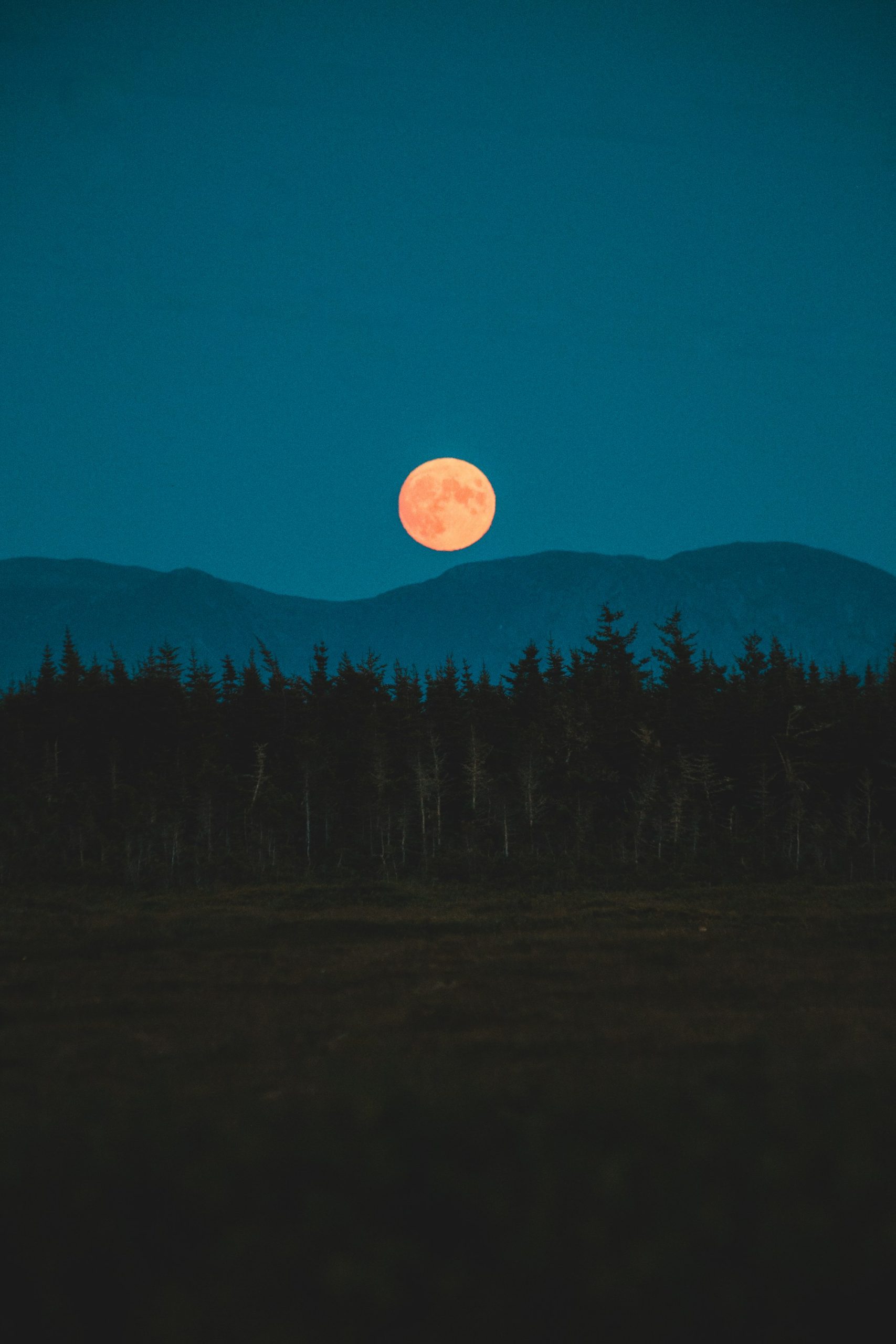
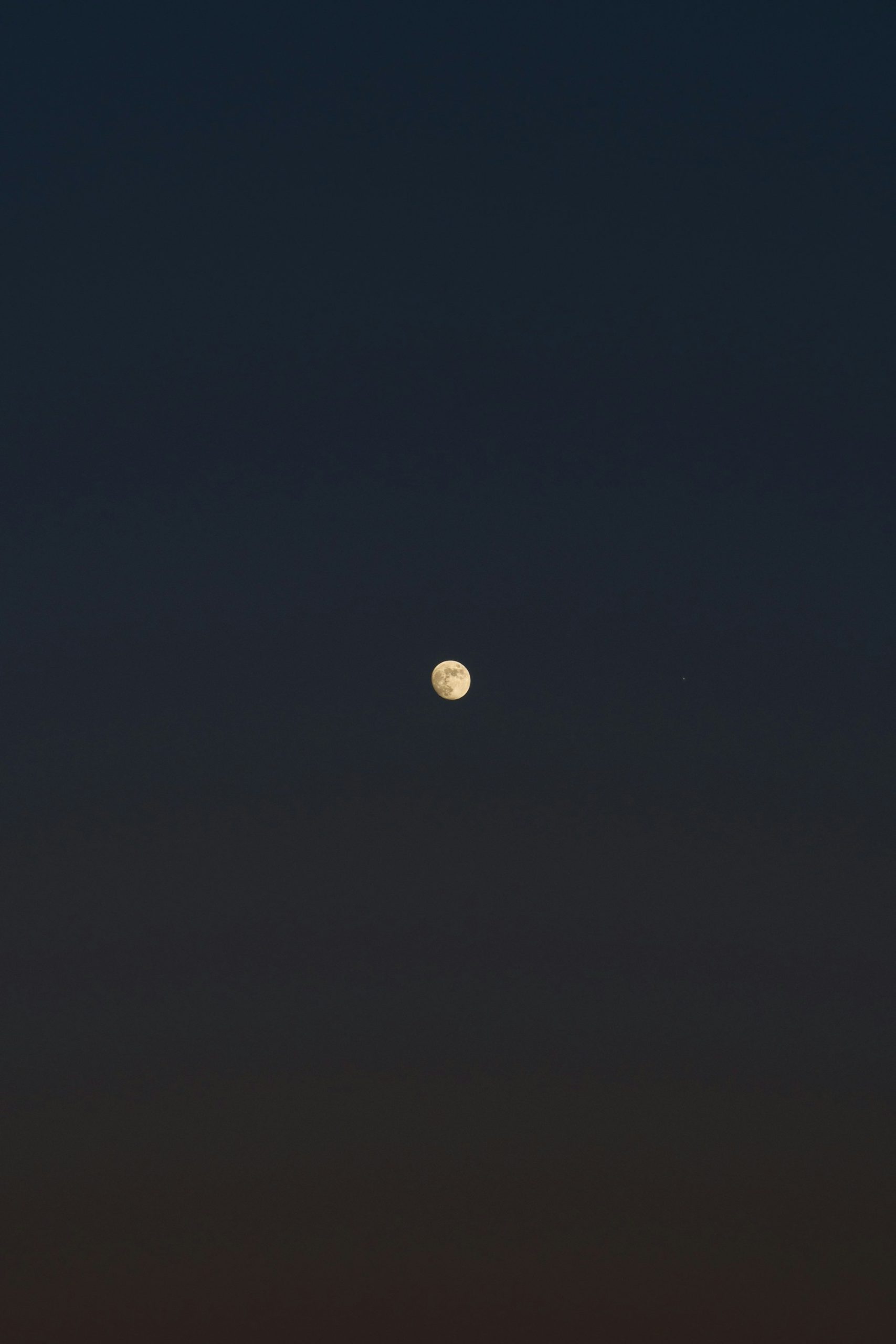
Have you ever observed the enormous moon rising majestically above the horizon? At times like these, it seems like a true giant compared to the small, bright disk we see high in the night sky. This phenomenon is known as the “lunar illusion.” It has baffled the most eminent thinkers from antiquity to the Scientific Revolution and, oddly enough, remains one of the most intriguing unsolved mysteries of our perception to this day.
As early as the 4th century B.C., Aristotle attempted to find a rational explanation for this phenomenon. He suggested that Earth’s atmosphere acts like a giant lens: when the moon is low on the horizon, its light travels through a thicker layer of air, which supposedly creates an optical magnification effect.
For that time, it was a perfectly logical hypothesis. However, today we know for certain that physics has nothing to do with it. The secret lies not in atmospheric optics or orbital mechanics, but in the intricacies of our visual system. It’s very easy to prove this: simply take photos of the Moon near the horizon and at its zenith using the same camera. If you take a standard ruler and measure the photos, you’ll see that the angular size of the Moon’s disk remains exactly the same.
Mind Games
Most modern neuroscientists agree that the moon illusion is a kind of glitch in our brain’s ability to accurately judge the size and distance of unfamiliar or distant objects.
There are several popular theories that explain this optical illusion:
- The influence of the surroundings. When we look at the horizon, trees, buildings, and hills come into view. The brain uses them as a scale, and against their backdrop, the Moon appears closer and gigantic. When it rises into the high sky without any visual landmarks, we perceive it as a more distant and smaller object.
- The Ponzo illusion. This is a classic optical effect in which two identical lines appear different when placed against a background of lines that converge in the distance. Our brain automatically tries to “correct” the perspective, making one object appear larger. Perhaps a similar mechanism is at work with the night sky.
Why hasn’t the final decision been made yet?
It would seem that everything makes sense and the mystery has been solved. However, NASA experts point out that these hypotheses have serious flaws. The main argument against them is the astronauts’ experience. While in orbit, they also fall victim to the lunar illusion, even though there are no trees or mountains in the foreground in space to distort the sense of scale.

Since science has not yet identified the exact neurobiological mechanism behind how our brains trick us, NASA takes a philosophically calm approach to this dilemma.
“Even without a complete explanation of why we see it this way, we can still agree that—whether real or illusory—the giant moon is a beautiful sight,” the agency notes.
So while scientists continue to search for answers in the labyrinths of the human mind, we are left with the most enjoyable part—simply enjoying this majestic, atmospheric, and always captivating cosmic spectacle.
We previously explained that 68% of the universe does not actually exist.
According to iflscience.com