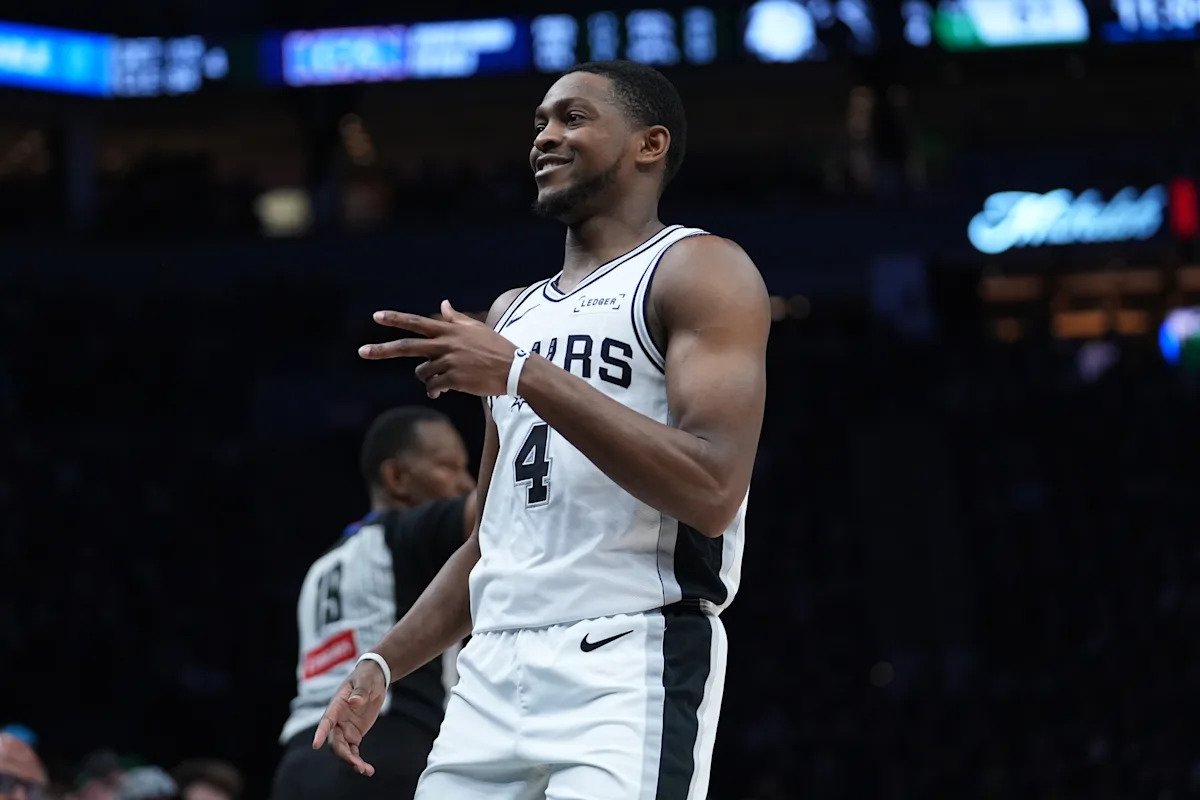




There will be no relitigating the NBA MVP award.
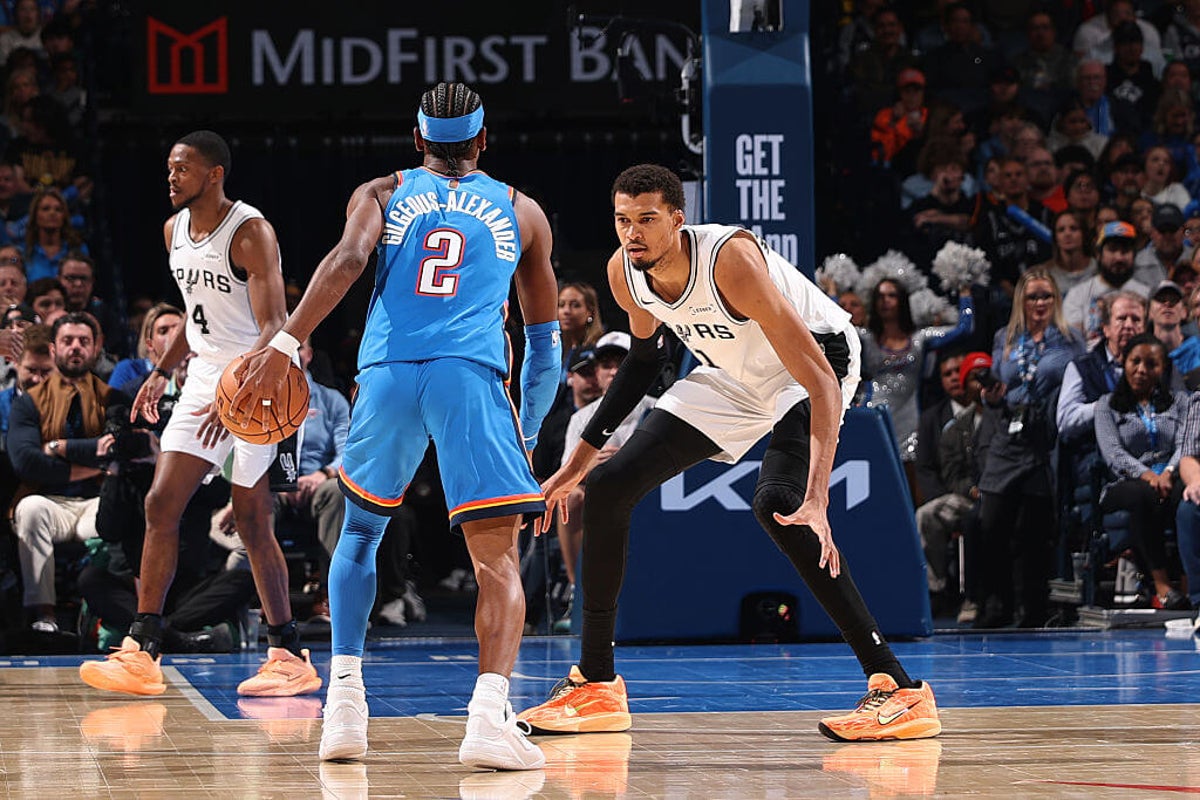
Shai Gilgeous-Alexander won his second straight trophy on Sunday, deservedly, with Nikola Jokić and Victor Wembanyama finishing as runners-up. Regardless of what happens in the Western Conference finals between Gilgeous-Alexander’s Oklahoma City Thunder and Wembanyama’s San Antonio Spurs, that was the correct result.
Here’s the thing, though: At age 27, Gilgeous-Alexander is in the prime of his career. With the league’s best record, a championship ring in 2025 and another MVP trophy, you’d think it was indisputable that he’s far and away the NBA’s best player.
And yet … will his next series mark a changing of the guard?
Gilgeous-Alexander was the league’s best player over the course of the 82-game regular season, but is he the best player right now? That part seems in serious question after Wembanyama came on like gangbusters in the second part of the campaign and has thus far dominated the playoffs.
I’m not sure this aspect of the storyline has received quite the attention it deserves: Wembanyama was a really good player for the first three months … and then completely went nuclear during the stretch run.
From Feb. 1 to the end of the season, the Spurs went 28-2 when Wembanyama played and posted a plus-23.4 net rating, the best mark in the league by a wide margin (the next three players on the list all played for the Thunder, including Gilgeous-Alexander). In that same stretch, the Spurs were just plus-0.7 with Wemby off the court, a 22.7-points-per-100-possessions difference that would make even longtime Denver Nuggets fans raise a surprised eyebrow.
That’s carried over into the playoffs, as the Spurs are 7-1 when Wembanyama plays at least 15 minutes and 1-2 when he doesn’t; San Antonio has a plus-21.9 net rating in his minutes but just plus-7.1 when he sits.
Individually in that post-February stretch, Wembanyama raised his rates of points, rebounds, assists and true shooting sharply from the first half of the year, despite a slump from the 3-point line that prevented his numbers from really going ballistic. Of his 13 games with a game score above 30, 10 came after Feb. 1, including the top four. Wembanyama’s back-to-back 41-point masterpieces on March 30 and April 1 were his two highest-rated, despite only playing 29 and 30 minutes in the two games.
I’ll note that this wasn’t just a hot shooting stretch; those numbers came with a big jump in his already fearsome block rate and were emphatically backed up by the eye test.
The league’s scariest talent is still getting better. Rapidly.
To make sure I wasn’t alone in this assessment, one of my missions at the NBA Draft Combine was to ask execs from the other 29 teams if they thought Wemby had supplanted Gilgeous-Alexander and Jokić as the league’s best player. Mostly, I was met with chortles and nods.
“I don’t know what the hell you do with him,” said one personnel expert. “Offense. Defense. Any of it.”
So … is Wemby the best player in the league?
“No,” another veteran exec said. “He’s the best player I’ve ever seen.”
During Game 6 of the Spurs’ series against Minnesota, Prime Video analyst and longtime NBA head coach Stan Van Gundy mentioned to a national audience that, “Victor Wembanyama is the most impactful defensive player I have ever seen in this league.” After the game, Minnesota’s Jaden McDaniels, no defensive slouch himself, echoed Van Gundy.
“Wemby is probably the greatest defender I ever played against,” McDaniels said. “Him being so tall and so long, it was hard to get to the rim. … I was able to get to my spots, but playing Wemby, he’s huge. He’s so tall. He’s the greatest defender I ever played against.”
That’s to say nothing of the offensive highlights he almost nonchalantly generates between his endless length, his guard-like skill level and his advancing feel for the game.
The latter skill, in particular, is gaining by leaps and bounds, a scary sight for the rest of the league. For instance, this play from the first quarter of Game 6 in Minnesota resulted in miss, but the insta-read by Wembanyama nearly brought me out of my chair, taking a pass against a paint mismatch and instantly, blindly, whirling into a Frisbee pass at the opposite 3-point line that gave Devin Vassell a fungo.
One profound example of Wembanyama’s impact came before Game 6. In talking to Minnesota players about the traps the Spurs had unleashed on Anthony Edwards. Wolves guard Mike Conley pointed out that generating a two-on-one in the paint against Wembanyama was essentially worthless.
“Ant’s done a really good job of getting off [the ball] and finding us,” Conley said. “Wemby, obviously, with him being in the paint, you can’t just drive it and go dunk on somebody or go finish or draw two in. They don’t have to help from any other side because they just funnel everything down to Wemby.”
This is totally, utterly unprecedented. The entire point of virtually all NBA actions is to create a two-on-one situation somewhere on the court and then exploit it. And yet, Minnesota breaking a trap to have one player charging downhill from the free-throw line and another in the dunker spot was essentially reduced to a non-event by Wembanyama’s presence; the Wolves not only needed to create advantages but needed to play five out and create the advantages far enough from his sprawling tentacles to generate some decent likelihood of eventually scoring a basket.
We’ll see if the Thunder face a similar quandary if the Spurs throw similar traps at Gilgeous-Alexander, but that might not be their only comparison to the Wolves’ predicament. The other low-key sentiment from the Minnesota side was of timing running out on the rest of the league: You better beat Wembanyama this year, because the next decade or so afterward is a wrap. The Thunder have a loaded roster featuring an MVP in his prime, and it might not matter.
Following Game 6, I asked Wolves center Rudy Gobert, a fellow Frenchman who has known Wembanyama for years, about whether the rapidity of Wemby’s ascent surprised him:
“I wouldn’t say surprised,” Gobert said. “Watching him being able to do what he’s doing in these moments and overcome adversity like he did this series, it’s a credit to his work and all the sacrifices that he made and all the time that he puts to his body, on his mind, his dedication. … As a competitor, I always try to build him up, and I thought we had a way to beat them, but he led his team, and now, it’s going to be interesting to see how he’s ready to face that next challenge, see if he takes his team to the promised land this year.”
I’m getting slightly ahead of myself, of course. The Thunder are defending champions, have been in this situation before and had the best record in the league. They have more depth than the Spurs and more offensive dynamism as long as Jalen Williams is healthy, and defending the slithery Gilgeous-Alexander is like trying to eat milk with a fork. (Also, while we’re here: The New York Knicks don’t exactly seem like they’d be pushovers in a potential NBA Finals matchup.)
History can laugh cruelly at our predictions; 14 years ago, we thought LeBron James had better take care of the Thunder in the NBA Finals because it might be his last chance. James went on to play in seven of the next eight finals, while the Thunder didn’t get back until last June.
I should also point out that, so far in the postseason, Gilgeous-Alexander has held his own: His team hasn’t lost, and he and Wembanyama are two of the top three players in PER and near the top in BPM. (First in both categories entering Sunday: Karl-Anthony Towns!)
Finally, Wembanyama hasn’t faced a defense in the playoffs like the Thunder’s, a swarming mass of arms and hands that seems to have seven players. Perhaps it’s not quite his time … yet.
On the other hand, we may be about to witness the dawning of a new era — because if not even the mighty Thunder can stop Wembanyama, the rest of the league has no hope.