


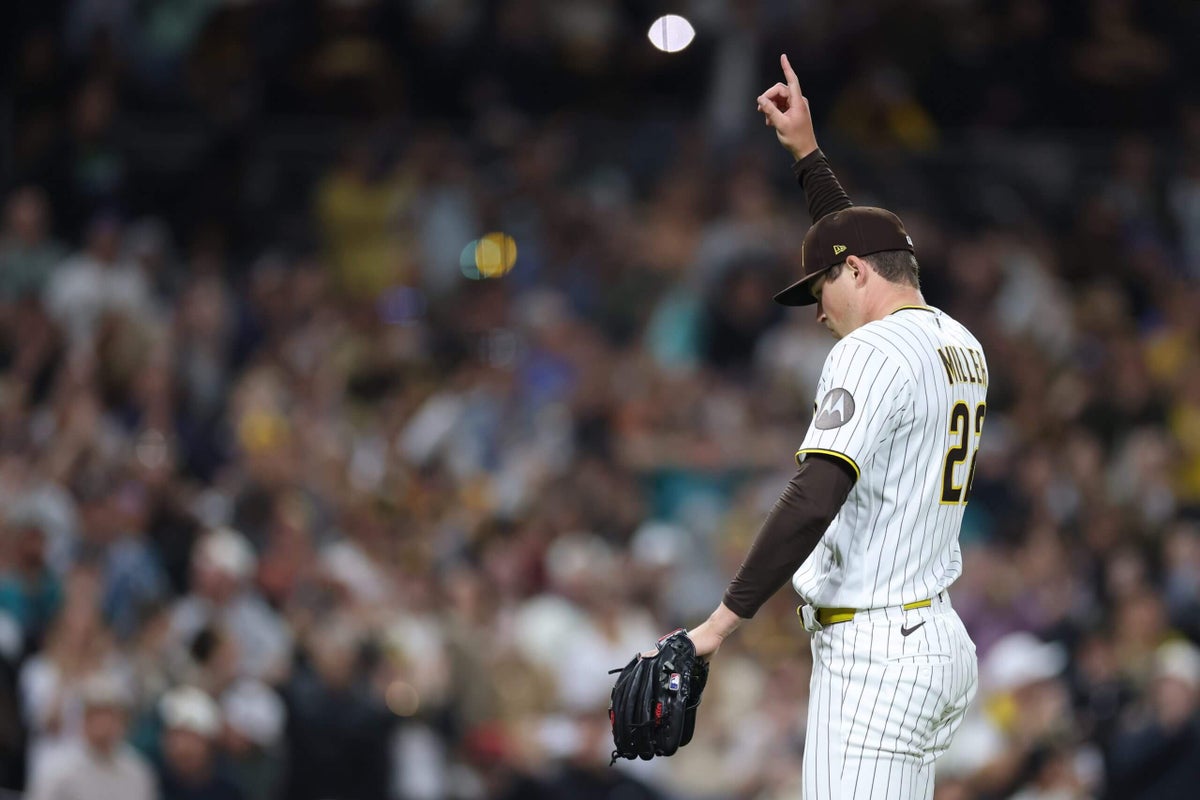
As news spread Friday morning that the San Diego Padres were closing in on a sale to a group led by Chelsea Football co-owner José E. Feliciano and his wife Kwanza Jones for $3.9 billion, the record-setting sum — should the sale be finalized and at that price — elicited a variety of reactions throughout Major League Baseball.
“Absolutely shocked,” said one team executive of the price. “Now what does this mean for the (upcoming) CBA?”
That question was perhaps the most pressing, as baseball’s owners are expected in upcoming labor negotiations to push for a salary cap in part to increase franchise valuations that have often lagged behind other major professional sports leagues. MLB’s current Collective Bargaining Agreement expires later this year.
The Padres’ price tag seemingly goes against the notion that MLB values are lagging. Forbes gave the Padres a $3.1 billion valuation entering the 2026 season — a 59 percent jump from the previous year. A $3.9 billion sale price would smash the previous record for an MLB team, set by the New York Mets, who were bought by Steve Cohen for $2.42 billion in 2020. Going into the sale process, there was a reasonable expectation that the Padres would sell for north of $3 billion, perhaps even $3.5 billion. But the reported deal with Feliciano and Jones blows those expectations out of the water.
Is San Diego an outlier? It depends on who you ask.
In one view, every franchise is unique. The Padres are San Diego’s only team in the four major U.S. sports leagues. They benefit from excellent attendance, weather and a stadium that hosts other events to generate additional revenue. They’re in California, which is home to a lot of billionaires, and the more parties interested, the greater the bidding war. Sources told The Athletic that all four groups vying for the team made a final bid, and at least one other group’s final offer was in the $3.5 billion range.
“The smaller markets are selling for twice what the large markets are,” said agent Scott Boras. “An outlier? I would say the truth is (the Padres valuation) outs the lies that baseball isn’t at the most prosperous point of its existence.”
Added another agent: “These guys opened the books, saw everything and bought this for $3.9 billion as we go to a (potential) work stoppage? These are smart, savvy business owners. They are in the process of buying undervalued assets.”
The Padres are in a position to benefit massively from the new CBA, should the league meet its goal for a national media rights deal that could pay each club hundreds of millions annually starting in 2029. The Padres rank among the smallest in the league in local media revenue.
“I hope they aren’t an (outlier),” said another industry executive. “I hope it’s an example of what small-market teams can do with the right ownership. For years, there’s been people saying, ‘How can they keep spending?’ or ‘It’s going to massively crash on them,’ but kudos to them. They invested in the product and have been rewarded.”
The Atlanta Braves, the only publicly traded MLB team, saw their stock price rise 4 percent following the news of the potential Padres’ sale. Shares of the Braves are trading at an all-time high. The Tampa Bay Rays, the last MLB team to be sold, went for $1.7 billion in September 2025. The price was also more than many people projected, though it was less than the NHL’s Tampa Bay Lightning were bought for in October 2024 ($1.8 billion).
Not every team looking to sell has outperformed projected valuations. Last August, the Pohlad family explored a sale of the Minnesota Twins but reversed course after they couldn’t get the price they wanted. They were believed to be seeking about $1.7 billion but also carried roughly $500 million in debt, which was an issue for potential buyers at the time, as it was one of the highest debt-to-revenue ratios in the sport. (The Twins have since added new minority partnerships to erase that debt.)
In 2024, the Lerner family, owners of the Washington Nationals, also took the team off the market after they couldn’t find a buyer at their asking price of approximately $2 billion.
When those teams were pulled off the market, there was little talk that the failure to sell was an indictment of the health of the league. So, some wondered, should the Padres really be a shining example?
San Diego had $300 million in debt, a manageable number that did little to deter interested parties. Teams in destination cities like Miami, Los Angeles or San Diego are always going to fetch more interest. Billionaires want to own teams in desirable areas, and there’s no telling when another Southern California team will be up for sale. Some in the sport wonder when, if ever, Los Angeles Angels owner Arte Moreno will entertain selling the team again. (Moreno explored selling the Angels in late 2022 but then took the team off the market in 2024; it’s unclear if his decision was because of low bids or that he changed his mind.)
Regardless, the Padres’ sale will be used by the players’ union to illustrate that franchise valuations are rising even without a salary cap. Agents and players will, of course, fully embrace the notion — fair or not — that the league is doing well financially.
“These franchises are so undervalued it’s insane,” Boras said. “There is no outlier in private equity. They care about valuation. Would you rather own the Phoenix Suns or San Diego Padres when you have double the content in baseball? Can you imagine what this does to other valuations? The fallacy of a salary cap helping. Does private equity care about salary caps? No, they care about 162 games and content and about selling stadium rights for $100-plus million.
“Baseball’s prosperity turkey is done. The barometer says it’s ready to eat.”