


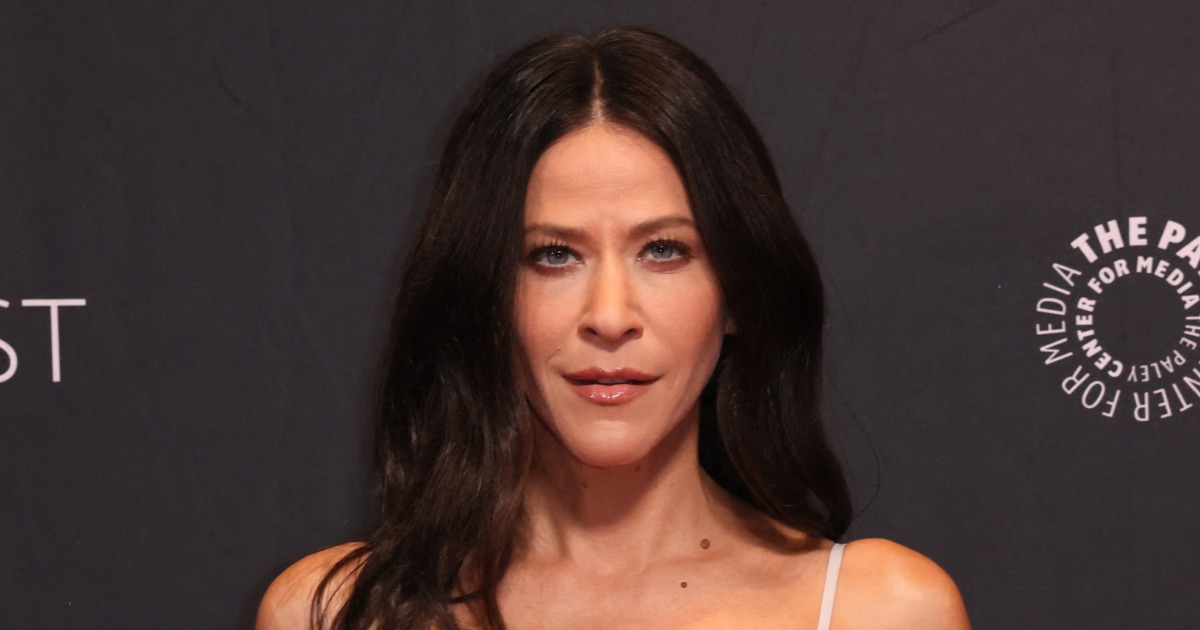
For Jackie Tohn, the last few years have been a rollercoaster. The “Nobody Wants This” star has been on a career high. But she’s also been going through a challenging personal health journey behind the scenes.
After her father developed metastatic tumors last year, she learned that she carries a high genetic risk for breast cancer. And Tohn decided to undergo a preventive double mastectomy this past December, she revealed exclusively on the TODAY show on May 15.
It’s something she’s been able to compartmentalize most of the time. “I don’t remember thinking about it. I’m such a weird machine,” she said on TODAY with Jenna & Sheinelle. But there were also some “crazy experiences,” she added, like learning about her inconclusive breast MRI results on the way to present at the Creative Arts Emmys.
Now, she’s sharing her story publicly in the hopes that others learn about their own genetic risk factors for breast cancer.
A Surprise Diagnosis Led to Genetic Testing
“In January of 2025, my dad found lumps under his arm, and went to the doctor and they turned out to be metastatic carcinomas,” Tohn said.
A carcinoma is a type of cancer that affects the epithelial tissue that lines many of the body’s organs, Cleveland Clinic explains. And the fact that it was metastatic indicated that it could have spread from somewhere else in his body.
“They couldn’t find where the primary cancer in his body was, so they gave him a panel of hereditary genetic testing to try and figure it out,” Tohn said. “It turned out that he was BRCA1 positive.” Her dad was diagnosed with male breast cancer, she said.
Shortly after her father was tested, Tohn also got genetic testing and learned that she also carries a BRCA1 mutation. Tohn is a paid partner for Myriad, a company that makes genetic tests.
Normally, genes BRCA1 and BRCA2 help suppress cancerous tumors, TODAY.com explained previously. But certain mutations affect the way those genes work, and a few specific mutations are known to significantly increase the risks for breast, prostate and ovarian cancer.
After testing, Tohn met with a genetic counselor and learned that, due to her BRCA1 mutation, “it turned out that I had an 85% chance of getting breast cancer,” she said.
It’s estimated that people with a BRCA mutation can have anywhere from a 45-85% chance of developing breast cancer over the course of their life, according to Johns Hopkins Medicine.
Deciding on a Double Mastectomy
When she first learned of her BRCA1 mutation, Tohn wasn’t sure what her options were. “It’s like someone giving you a single nail and being like, build the house, there’s a field,” she recalled.
Initially, she thought advanced surveillance might be an option, which could include an annual breast MRI in addition to a mammogram, the American Cancer Society says.
But that 85% number weighed on her. “That was when I said, OK, put on my big girl pants, and I’m just doing this,” Tohn explained. She found a medical team and, on Dec. 1, 2025, underwent a double mastectomy and breast reconstruction.
An analysis of the breast tissue she had removed showed that Tohn had “multiple pre-cancerous, concerning cells in both breasts,” she said. “When the doctor called me, in a wonderful way, she was almost shrieking with joy.”
Know Your Risk Factors
Tohn is sharing her story now to encourage others to understand their cancer risk and whether genetic testing might be an option for them.
“The three things you should look out for (in your family) are rare, young and multiple cancers,” Tohn explained.
That means if anyone in your family has a rare cancer (like her father’s male breast cancer) or had a cancer diagnosis at a young age, you may have an elevated risk for cancer that’s worth discussing with your doctor. That’s also true for cases in which multiple people in your family had cancer, she said.
Experts previously told TODAY.com that, at age 25, you should take a breast cancer risk assessment to understand whether you have an elevated risk. In addition to family history, these tools can take into account other risk factors, like the age at which you had your first period and when you had your first child.
However, the vast majority of breast cancer patients don’t have a family history. And only about 5-10% are related to a known genetic risk factor, the Breast Cancer Research Foundation says, and up to 25% for women diagnosed under age 30.
That’s why you’re not necessarily in the clear if you don’t have a genetic mutation linked to breast cancer, and that’s also why regular screening is still an important tool.