


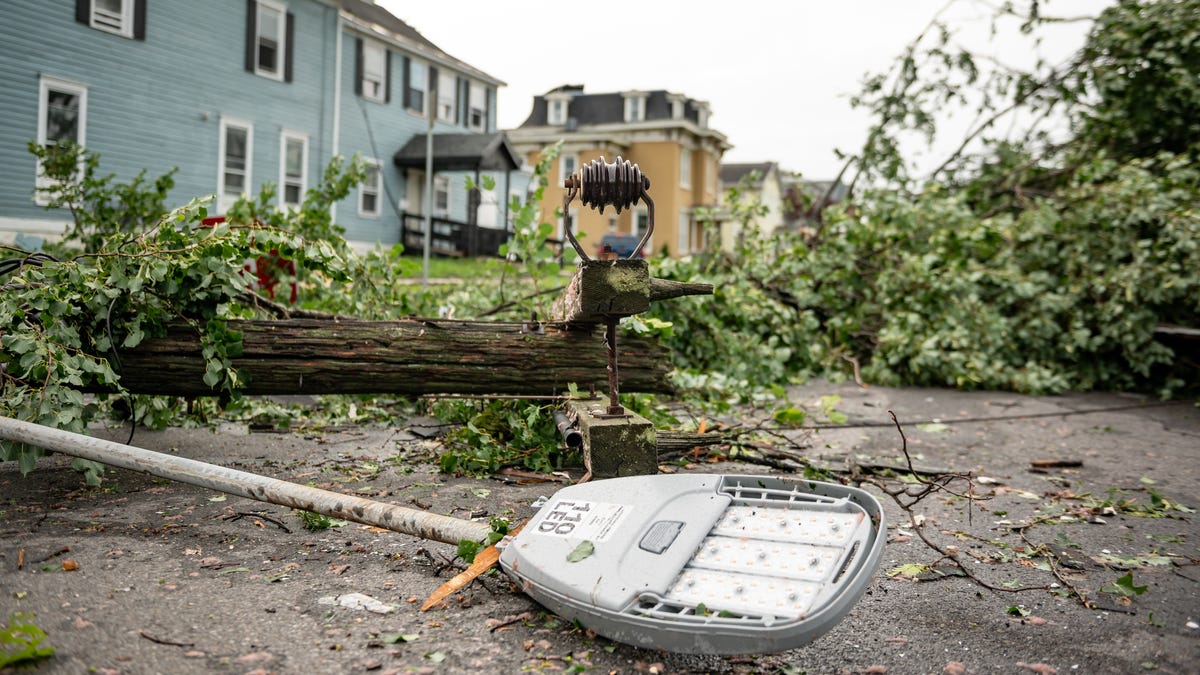

Watch: Severe storms caused widespread damages in upstate New York.
Severe weather has caused widespread damage in central and western New York.
Peak tornado season is underway is some parts of the country.
Severe storms have ripped through the region and some twisters have touched down in the Empire state – including an EF-1 that ripped through Cattaraugus County in western New York in March.
In New York, the summer months mark peak tornado season, though tornadoes can happen any time of the year, according to the National Weather Service.
Around 1,200 tornadoes hit the U.S. annually, including an average of 10 per year in New York, according to the National Oceanic and Atmospheric Administration. A record-breaking 33 tornadoes touched down in New York in 2024, including two stronger than an EF-2. Seven tornadoes occurred in New York last year.
While storms can form quickly and change direction with little warning, knowing what to do before, during and after a tornado warning can make a critical difference in staying safe. Here’s more:
How do you stay safe during a tornado?
The National Weather Service recommends getting to the lowest level possible, ideally a basement or interior room on the lowest floor. Put as many walls as you can between you and the outside, and steer clear of windows. Elevation and nearby water do not provide protection — tornadoes can cross hills and water easily, so always seek shelter if one is nearby.
What to do when driving during a tornado warning
Do not try to outrun a tornado — a twister is known to move fast and can change direction quickly. Pull off the road and enter a sturdy building if possible.
Do not shelter under a highway overpass. (Yes, this option is often shown in disaster movies. It’s a poor choice.) Overpasses can intensify wind speeds and increase debris exposure, putting you at much greater risk of injury or death, according to the Weather Service.
If no building is available, either get down in your car and cover your head, or abandon your car and lie flat in a low-lying ditch or depression and cover your head with your arms.
Tornadoes in New York: A history of twisters
Since 1950, New York has experienced over 500 tornadoes, with the majority being relatively weak EF0 and EF1 twisters. However, the state has also seen a few significant tornado events, including the devastating tornado outbreak of May 31, 1985, which produced several powerful tornadoes, including an EF4 in Chenango County. While tornadoes are less common in New York compared to regions like the Midwest, they remain a notable and occasionally destructive aspect of the state’s weather history.
A record-breaking 33 tornadoes touched down in New York in 2024, including two stronger than an EF-2. Two other high tornado years in New York were 1992 and 1998, when 25 and 23 tornadoes were recorded, respectively. Seven tornadoes occurred in New York last year.
When is peak tornado season in New York?
While peak tornado season starts as early as March in some southern states, New York’s peak tornado season runs from June through August, according to the Weather Service. That said, tornados can and do occur outside peak season when the conditions are just right.
Tornado season elsewhere in the nation peaks from May to June in the Plains states and in June or July in the upper Midwest,
NY tornado database: See the state’s worst twisters
The National Oceanic and Atmospheric Administration has tracked tornadoes in New York since 1950, providing data on their paths and impact. This interactive map, featuring tornado data from January 1950, offers detailed information including damage estimates and any injuries or fatalities caused by recent tornadoes. Check out the tornado database.
How to prepare for a tornado before it hits
Tornadoes can develop quickly and change direction with little warning, but having a basic plan in place can make a critical difference in how safely you respond. A plan and a few essentials can help you respond fast when seconds matter.
Keep a kit ready in your home safe space or shelter area.
- Water (at least 1 gallon per person per day for 2–3 days)
- Nonperishable food and a manual can opener
- Flashlight and extra batteries
- Battery-powered or hand-crank weather radio
- First aid kit (bandages, antiseptic, pain relievers)
- Prescription medications (at least a few days’ supply)
- Sturdy shoes for everyone in the household
- Work gloves (helpful after damage for debris)
Protect important documents when storms are near
Keep copies in a waterproof container or a grab-and-go folder.
- IDs and passports
- Insurance cards and policies
- Medical information and prescriptions
- Emergency contacts
- Proof of residence (helpful for recovery claims)
Tornado watch children and family safety steps
Preparation can save time in chaos.
- Write a parent or guardian phone number on a child’s arm or clothing with a permanent marker or wristband
- Teach kids where to go in the home in the case of a warning
- Practice getting to the safe room/space quickly
- Keep helmets or pillows in the safe room for head protection
- Store shoes and flashlight in the safe room
- Make sure children know how to call 911 if needed
Tornado watches and pet
- Have a leash, carrier or crate ready to go
- Prepare food and water for 2–3 days
- Have vaccination records if possible
- Ensure ID tags and microchip info are up to date
Includes reporting by the USA Today network