In the final hours before the U.S. operation to capture Venezuelan dictator Nicolas Maduro, President Trump was surrounded by a cadre of trusted advisers — with one noteworthy absence.
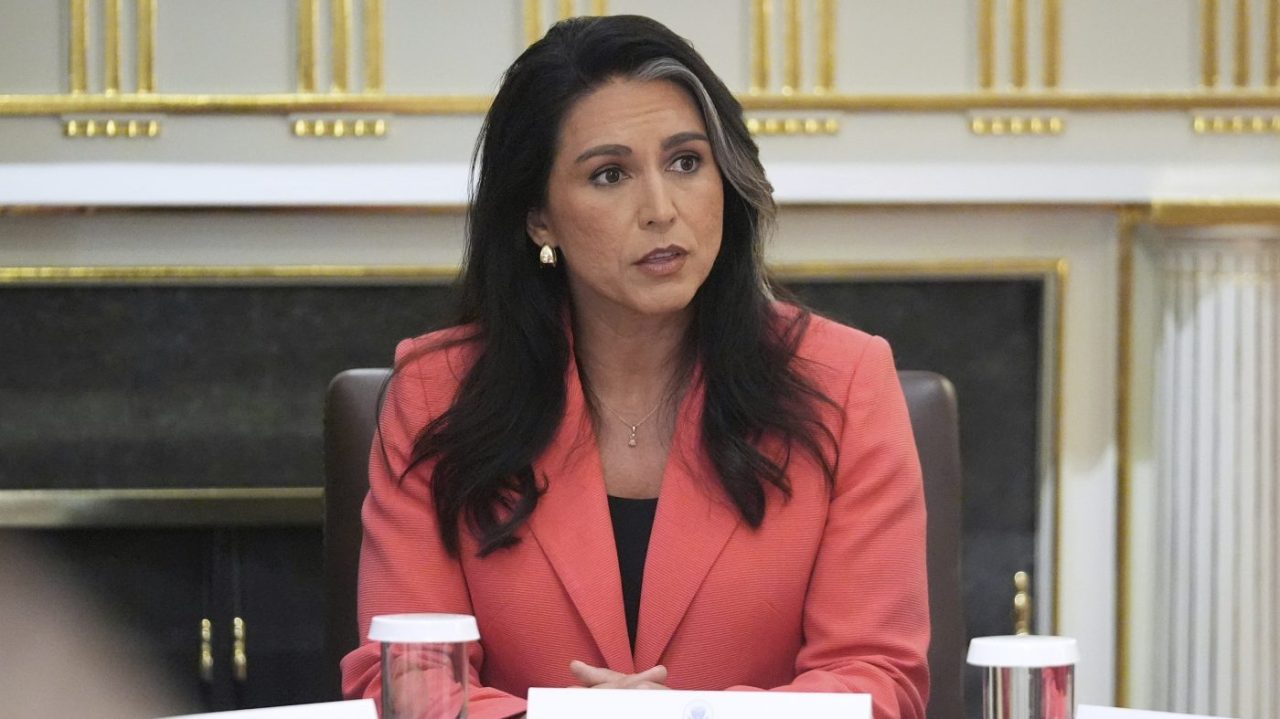
Tulsi Gabbard, the Director of National Intelligence, was doing sun salutations on a beach in Hawaii. She had been routinely excluded from Venezuela operational planning for so long, in fact, that White House aides reportedly joked that “DNI” really stands for “Do Not Invite.”
Gabbard’s exclusion may stem from her extensive history of opposing a hardline policy against the Maduro dictatorship, once writing that intervention would “wreak death and destruction on the Venezuelan people.” While the final death toll of the operation is still uncertain, assessments have found that fewer than 100 people died, of which a plurality were Cuban security personnel.
This raises a fundamental question: If the Trump administration does not trust its own Director of National Intelligence with a highly sensitive and crucial operation, how can the American people — or, for that matter, America’s intelligence-sharing partners?
Although administration officials, including Vice President JD Vance, have formally denied Gabbard’s absence, it was far from inconspicuous. Dramatic photos from the Situation Room published by the White House prominently feature Secretary of State Marco Rubio, Homeland Security Adviser Stephen Miller and CIA Director John Ratcliffe flanking the president. Gabbard broke her silence on the operation over 48 hours later, praising the operation while noticeably omitting the words “Maduro” or “Venezuela.”
Although a State Department spokesman has denied that it was Rubio who was responsible for sidelining Gabbard, the two have a history of sparring on foreign policy during their time in Congress. In a pointed X post from 2015, for example, Gabbard criticized Rubio and the late Sen. John McCain (R-Ariz.) for opposing Russian strikes in Syria, an operation that quickly devolved into a years-long campaign of Russian planes bombing Syrian hospitals in partnership with the now-deposed Assad regime.
Gabbard’s isolation came to a head after a messy confirmation process, which included a statement where Gabbard felt it necessary to refute that she was a “puppet” of America’s adversaries, like Assad or Vladimir Putin. The fact that she failed to earn the faith on that account of the very administration that nominated her is a stunning indictment of her capability as Director of National Intelligence.
Instead of transparent denials, the American people deserve to know exactly why the person charged with overseeing 18 intelligence agencies was not included in one of the most consequential operations conducted by the Trump administration so far. At a time when America’s relationships with its allies are already tenuous, most recently due to abrasive comments on NATO and Greenland, Gabbard’s questionable status will certainly compound already-existing concerns from intelligence-sharing partners, including the crucial Five Eyes alliance.
During Gabbard’s confirmation process, British security officials voiced concerns about further intelligence-sharing with the U.S. due to Gabbard’s years of apologetics for Putin. Mere months later, Gabbard issued a directive to U.S. intelligence agencies to bar Five Eyes Partners — including the United Kingdom — from accessing information on Russia-Ukraine negotiations.
The U.S. faces a litany of short-and long-term challenges that require a competent leader guiding the intelligence community.
On Iran, Gabbard was similarly sidelined during discussions about potential military action in June, due to a bizarre video she unilaterally released on social media warning of impending nuclear war, as well as dovish comments made while Gabbard was a Democratic congresswoman.
On Russia, Gabbard has a sordid history of apologetics, including once authoring a memo to her congressional staffers that decried America’s “hostility toward Putin.”
On China, Gabbard has repeatedly boosted talking points originating from Beijing to attack Japan, a key American ally. This has included bemoaning efforts in Tokyo to boost Japan’s defense capabilities — efforts the Trump administration itself has repeatedly encouraged.
One year into the job, Gabbard has proven time and time again that she is out of lockstep with the Trump administration, America’s partners and the American people. Her exclusion from the Venezuela operation was not the first time she has been sidelined — and it certainly will not be the last.
Kareem Rifai is a graduate student at the Georgetown Security Studies program.
Copyright 2026 Nexstar Media Inc. All rights reserved. This material may not be published, broadcast, rewritten, or redistributed.