




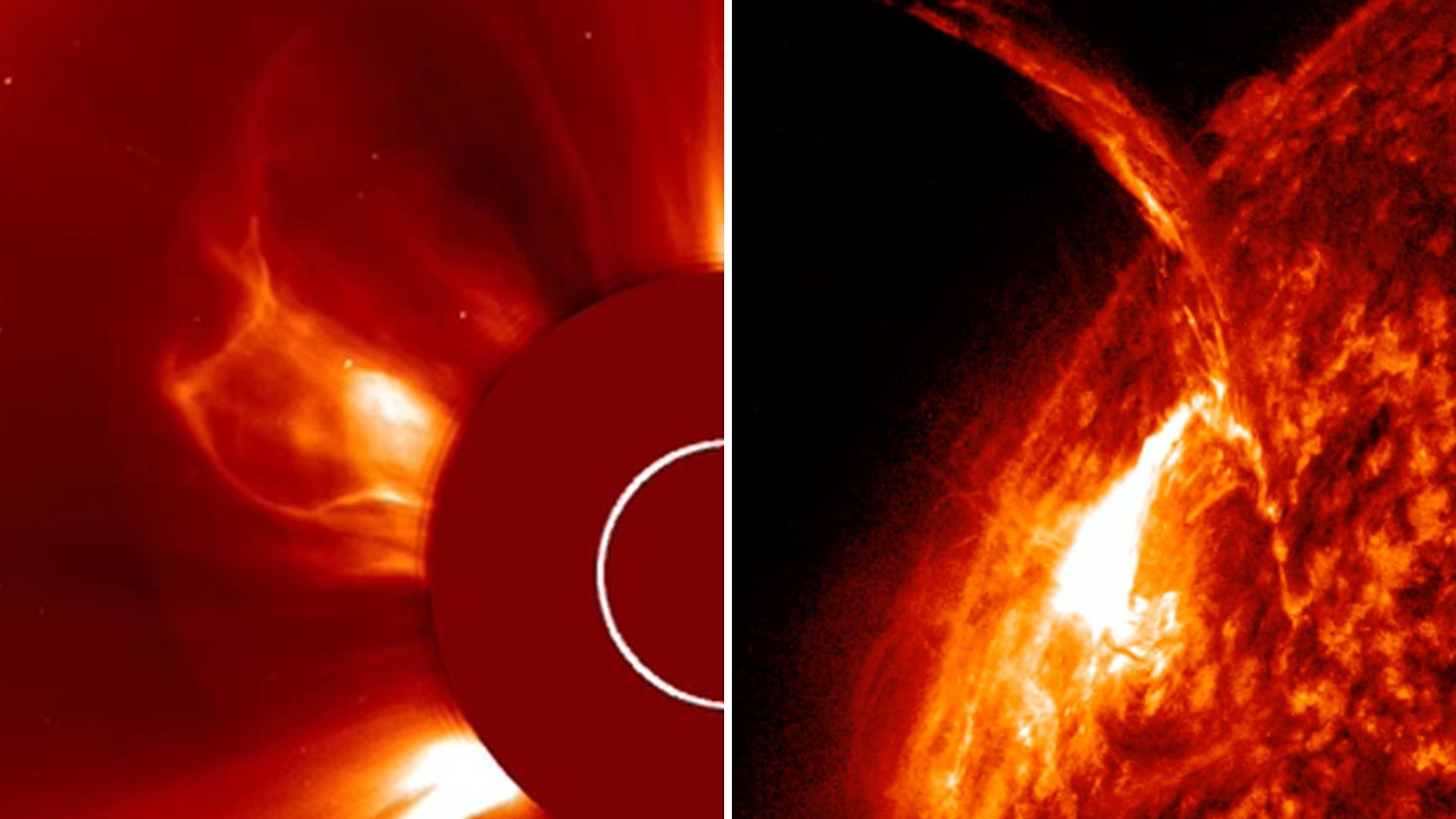
Solar flares are ranked using a scale A, B, C, M and X — the latter being the most powerful category. Each step represents a tenfold increase in energy output. The May 10 event reached M5.7 strength, making it a powerful flare capable of disrupting radio communications on Earth.
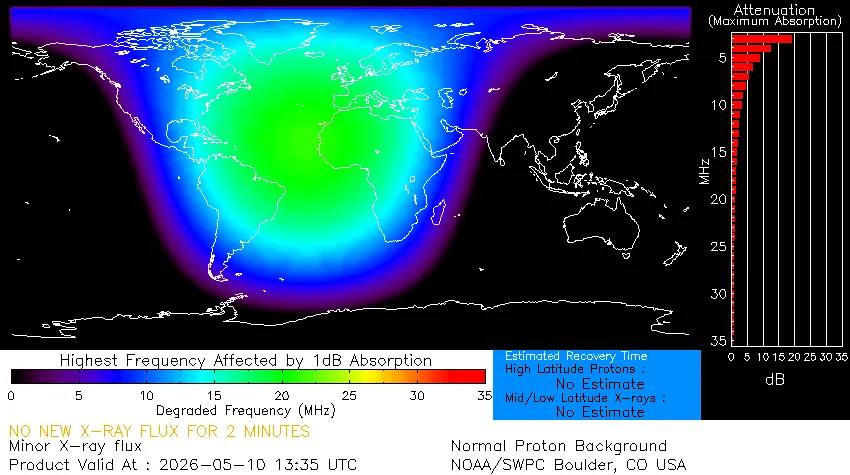
The solar flare eruption triggered a radio blackout over the Atlantic Ocean, according to NOAA’s Space Weather Prediction Center. These blackouts occur when intense X-ray and ultraviolet radiation from solar flares ionize Earth’s upper atmosphere, interfering with high-frequency radio signals used by aviators, mariners and amateur radio operators.
The timing of the eruption is especially notable for aurora chasers. Almost exactly two years ago, on May 10, 2024, Earth experienced the first “extreme” G5 storm since 2003 — the strongest in more than two decades. The historic event produced dazzling auroras visible far beyond their usual high latitude range, with skywatchers reporting northern lights deep into mid-latitudes such as southern Florida and Mexico.
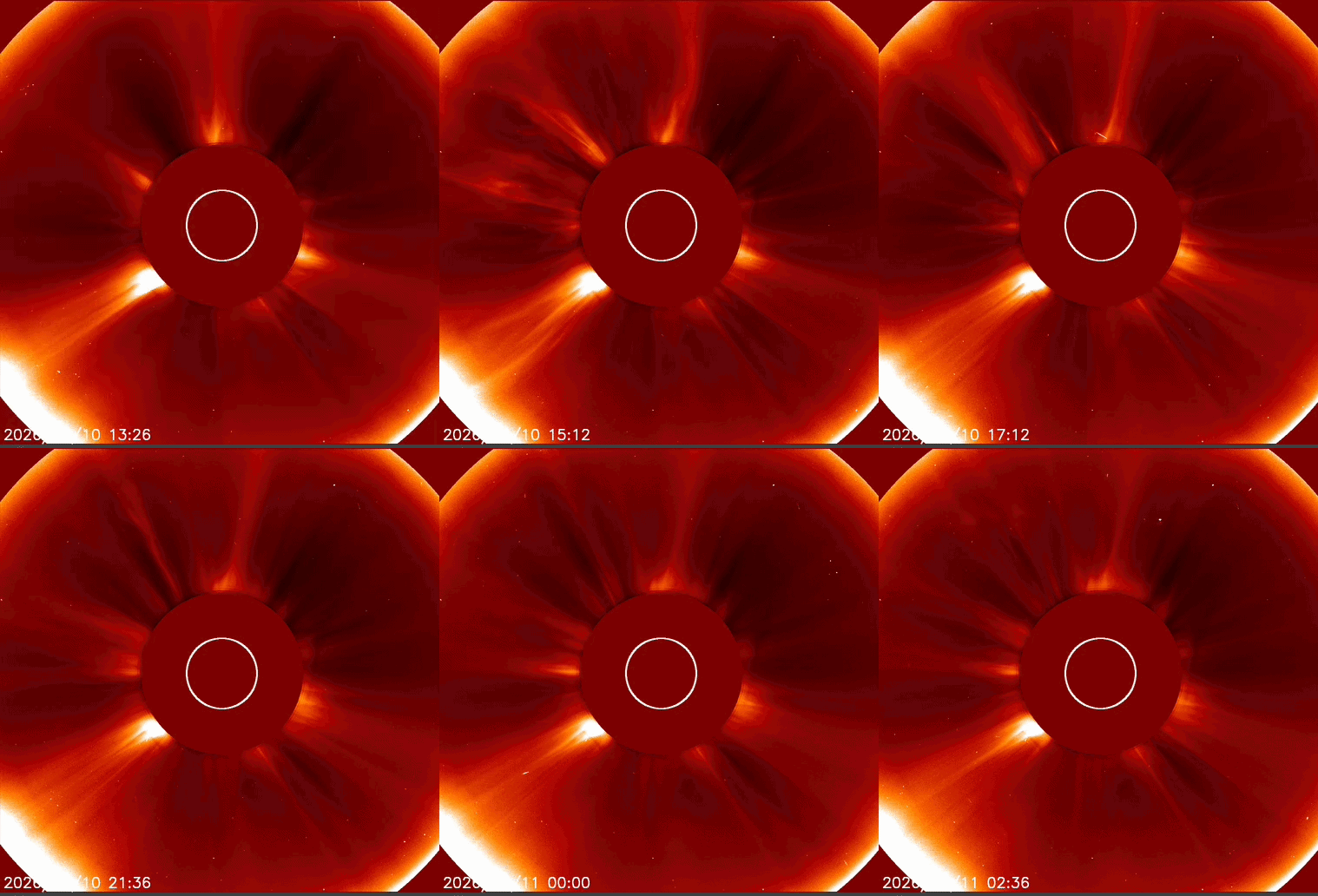
While the latest CME is not expected to produce anything close to the May 2024 storm, forecasters say a weak glancing blow from the May 10 eruption could still produce minor geomagnetic storm conditions later this week.
Looking ahead, both NOAA’s Space Weather Prediction Center and the U.K. Met Office are warning that more solar activity could be on the way. Both agencies agree there is a chance for additional M flares and maybe even X-class eruptions over the coming days as sunspot regions AR4436 and AR4432 continue to evolve.