



By Wen-Yee Lee, Faith Hung and Ben Blanchard
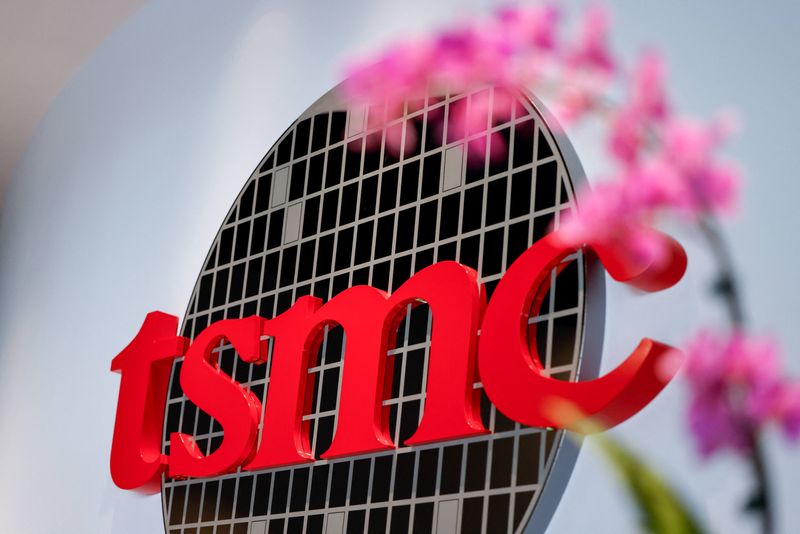
TAIPEI, April 16 (Reuters) – TSMC posted a hefty jump to record profit and forecast second-quarter sales would hit a historic high as the world’s biggest contract manufacturer of advanced AI chips scrambles to meet relentless hunger for its products.
The company, a major supplier to Nvidia, noted the world was in the midst of an “AI megatrend”, adding its capital spending this year would be at the high end of earlier guidance – remarks likely to ease investor concerns about the impact of the Iran war on AI chip demand.
Taiwan Semiconductor Manufacturing Co’s net profit for January-March surged 58% to T$572.5 billion ($18.2 billion), comfortably beating expectations and marking its eighth straight quarter of double-digit growth.
For the current quarter, it forecast sales between $39 billion and $40.2 billion. That compares with $30.1 billion in the same period last year and $35.9 billion in the first quarter.
“AI demand is extremely robust,” CEO C.C. Wei said at an analysts call on the results.
First-quarter results showed that revenue from advanced 3-nanometre chips now accounts for a quarter of the company’s sales, up sharply from just 6% in the third quarter of 2023.
The insatiable demand for high-performance chips required for AI workloads has driven Asia’s most valuable company to new heights.
Ahead of the earnings results, TSMC shares closed up 0.2% at a record of T$2,085. Its market capitalisation is now nearly double that of South Korean rival Samsung Electronics at around $1.7 trillion.
The war in the Middle East threatens to disrupt the supply of production materials for semiconductors such as helium and hydrogen, but TSMC said it had safety stock on hand.
TSMC is investing $165 billion to build chip factories in the U.S. state of Arizona.
The company has also revised its plans in Japan and is now set to manufacture 3-nanometre chips there, instead of focusing on more mature nodes.
TSMC’s Taipei-listed shares have gained 35% so far this year, outperforming the 28% rise for the broader market.
($1 = 31.5180 Taiwan dollars)
(Reporting by Wen-Yee Lee, Faith Hung and Ben Blanchard; Editing by Edwina Gibbs)